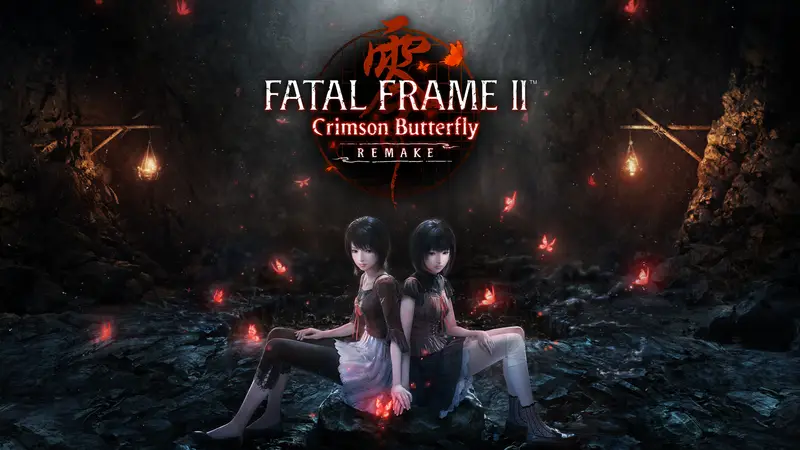
It’s been almost 12 years since Koei Tecmo last released a mainline Fatal Frame game, and the horror genre has changed a lot since then. Ever since Capcom’s 2019 Resident Evil 2, there has been no short supply of remakes of some of the most beloved and enduring horror games from previous generations, so it’s no surprise that Koei Tecmo has chosen Fatal Frame II: Crimson Butterfly as the series’ prime candidate for a full, ground-up remake treatment, – it’s second following the 2012 Wii version.
From a newcomer’s perspective, Team Ninja’s latest take on Fatal Frame II: Crimson Butterfly is a messy, uneven experience. While it succeeds in fulfilling the distinct J-horror appeal of the series and delivers a haunting atmosphere, many elements feel unnecessarily cumbersome, and the experience is frequently dragged down by poor technical performance.
Narrative
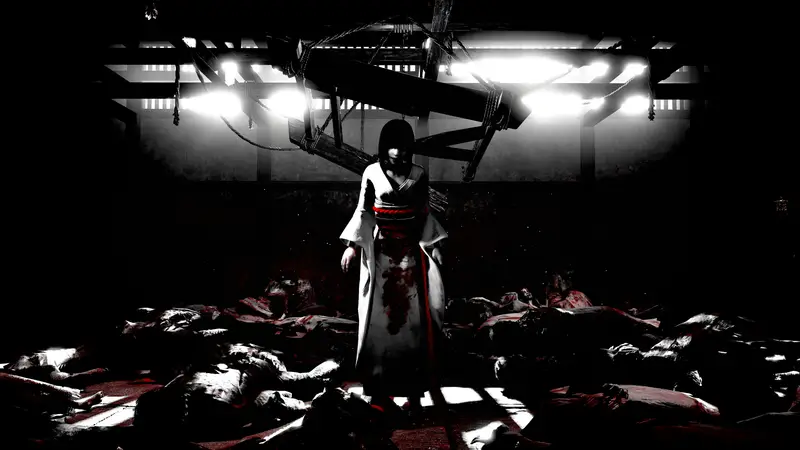
Fatal Frame II: Crimson Butterfly Remake follows twin sisters Mio and Mayu as they wander into a haunted village infested with lingering spirits following a failed ritual. After the two become separated, Mio discovers the Camera Obscura, a camera that allows her to fend off the spirits by taking photographs.
The story is told primarily through documents that Mio finds as she travels through Minakami Village, while also providing lore regarding the village’s history. Many of the big moments aren’t conveyed through cutscenes, but rather these documents and audio logs, which also occasionally provide side-quests that flesh out particular key characters.
I was surprised at how far Fatal Frame II manages to go in creating an engaging central mystery with very few on-screen characters. For the majority of the game, Mio and Mayu are the only major presented characters, with much of the supporting cast being detailed through text and other supporting material.
Despite this, I was engrossed in the mystery surrounding the haunting of Minakami Village throughout my entire 13-hour playthrough, even when the pacing was testing the limits of my patience. It’s unlikely to enter the halls of horror narrative giants, but it’s easy to see why it is a highlight in the Fatal Frame series, with a strong central relationship between the sisters.
Gameplay
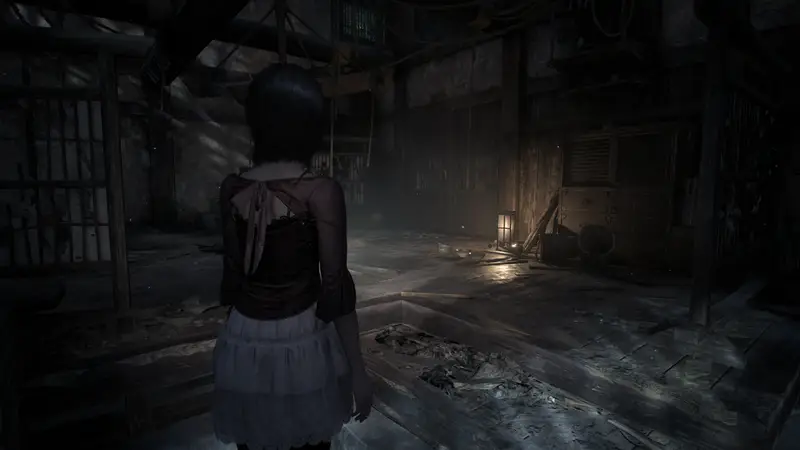
Like many remakes of classic horror games, Crimson Butterfly Remake changes the original fixed-camera perspective to a third-person, over the shoulder viewpoint. This isn’t new, as the Wii version also made this change to accommodate the pointer controls. While not all recent remakes have made this transition well, Team Ninja manages to maintain suspense despite this change with some clever perspective tricks.
While Minakami Village itself is a small and tightly designed environment, traversing it can often be frustrating. Mio’s default sprinting speed is very slow, which while appropriate for the tight corridors of indoor areas, creates some pacing issues when the game regularly asks the player to traverse across the entire map to complete objectives. This becomes a bigger point of frustration in the second half, where enemy encounters become more frequent.
Combat in Fatal Frame II: Crimson Butterfly Remake moves things to a first-person perspective. Here, players equip the Camera Obscura to snap shots of paranormal entities not too dissimilar to a traditional shooting mechanic. The key difference is that the camera uses different filters and film, each of which have different properties. While the filters are mainly used for environmental puzzle solving, and film functions as ammo, regardless of which combination is used every combat scenario is a slog to get through.
Encounters in Fatal Frame II generally consist of aiming the Camera Obscura at enemies while film reloads, and snapping a shot during the “Fatal Frame”, the moment at which the shot does the most damage. Once a certain amount of damage is dealt, the player can unleash a succession of shots at the spirits for extra damage.
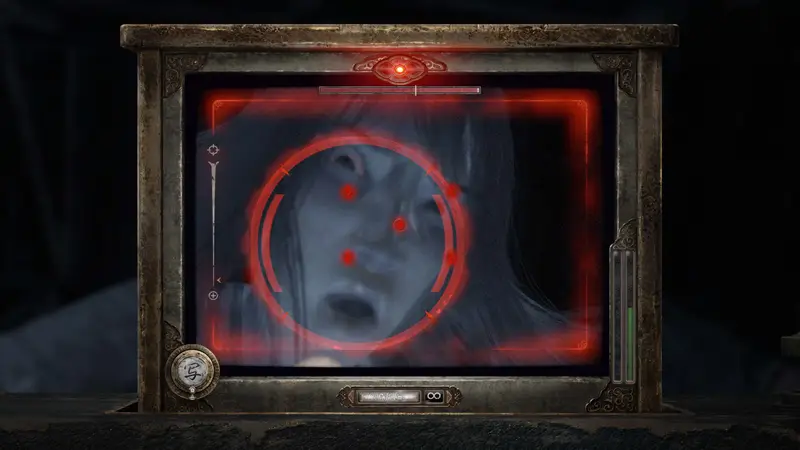
During these face-offs, the spirits whip around the screen regardless of how cramped an environment is, making it difficult to reposition Mio when switching from first to third-person. The Camera Obscura reloads film at an obscenely slow rate irrespective of how many times it’s upgraded, making each encounter a slow trudge as you watch enemies repeat their usual attack patterns and slowly wait for a chance to attack.
While this is certainly frustrating when facing single enemies, the back-half of the game ramps up the encounter rate to an intense degree, forcing the player to face multiple enemy types with different attack patterns, all in cramped environments with little space to maneuver.
These fights drag the game’s entire pace to a crawl, as many of them are unavoidable and block progression. This is exacerbated by the lack of enemy variety, meaning the latter hours are spent watching the same enemies repeat their usual attack patterns with no iteration or variance, with bosses even being blatantly recycled with no changes.
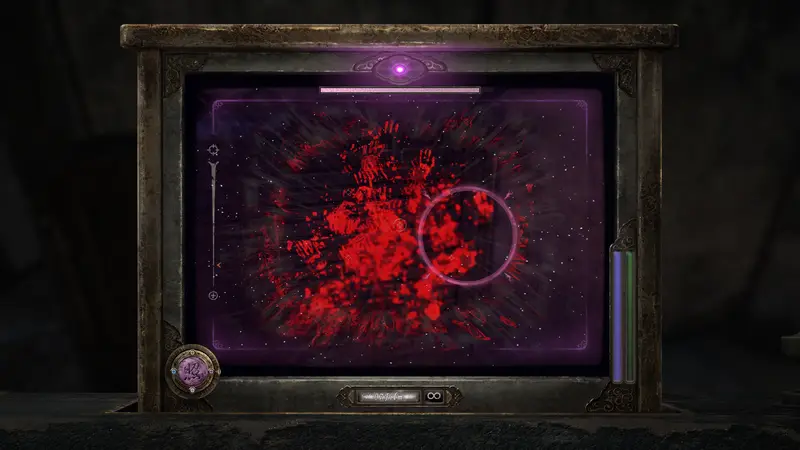
Puzzles thankfully don’t detract from the pacing nearly as much, with there only being a handful in the game that require actual analysis. None of these are particularly memorable and most repeat with different variations, making them feel like brief brainteasers than anything worth whipping out a notebook for, ultimately leaving them feeling unmemorable. The best thing that can be said for them is that they don’t feel like they pad out the runtime nearly as much as some of the multiple enemy confrontations do in the latter half.
Overall, Fatal Frame II: Crimson Butterfly Remake feels married to the series’ pre-existing idea of horror game design. While it wouldn’t make sense for a series like this to lean into Resident Evil: Requiem’s over-the-top action, the combat’s pacing feels deliberately weaponized to grind things to a screeching halt, a feeling that only becomes more pronounced as the ending approaches. Some more variety and more mechanical depth might have made these encounters less mind-numbing.
Visuals/Audio
Artistically, the Fatal Frame games have always appealed to me on the basis of their distinct J-horror influence. Playing off of the original game’s aesthetic strengths, Minakami Village is a well realized location that is made more memorable by the game’s strong atmosphere and particularly well implemented, unnerving sound design.
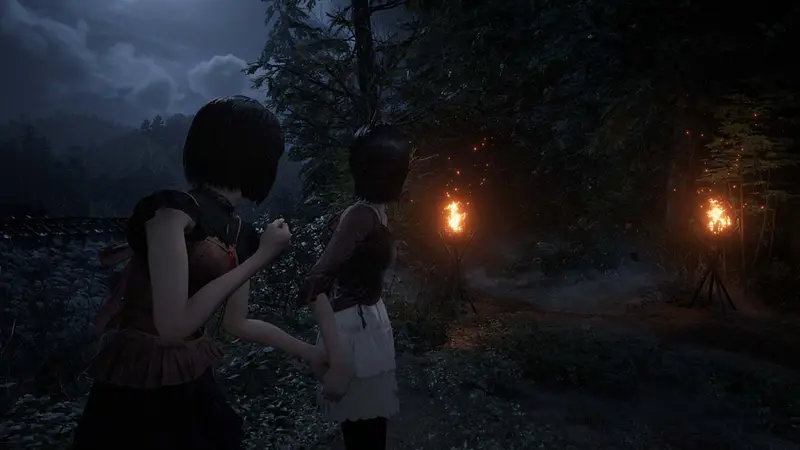
The main issue with Fatal Frame II Remake’s visuals are in its technical performance. While there is good art direction, the game isn’t particularly strong looking, which makes the fact that it frequently drops below 30 frames-per-second on a base PS5 all the more confusing. This is made worse by the fact that performance is capped at 30fps to begin with.
Furthermore, there is a hideous film grain effect that persists from the moment a new save is loaded, obscuring much of the image for the entire runtime. Upon first booting the game I was shocked by how much of an impact this has on the game’s overall look, with no toggle for it to be disabled.
Given reactions to the recently released demo, this is an issue that I can see Team Ninja tackling in a patch as the intensity of the effect severely detracts from the game’s presentation, but even aside from this the visuals and performance leave a lot to be desired.
Verdict
Fatal Frame II: Crimson Butterfly Remake indicates that there is still a lot of potential in the series’ unique flavour of occult paranormal J-horror. Unfortunately, this experience is marred by tedious combat encounters, inconsistent pacing, and technical issues that keep it from reaching the heights of its modern horror remake contemporaries.

Fatal Frame II: Crimson Butterfly Remake will release on PC, PlayStation 5, Nintendo Switch 2, and Xbox Series X/S on March 12. The game was reviewed on PlayStation 5.
Gamer Social Club would like to thank Koei Tecmo for the review code.