
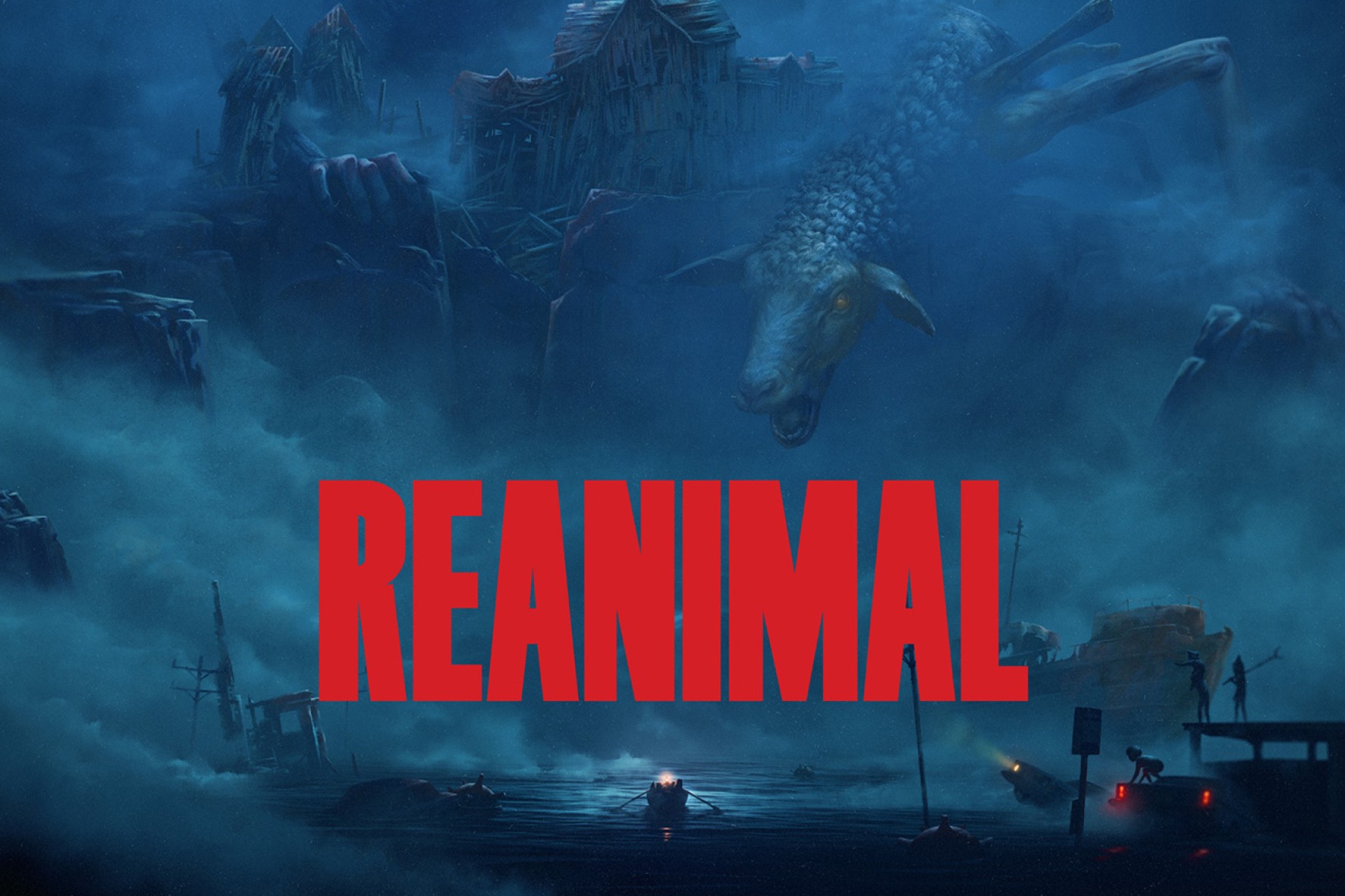
I’ll admit, when Tarsier Studios announced they were no longer working on the Little Nightmares series and instead were making a new game that looked strikingly similar to their previous work, I was worried. It wouldn’t be the first time a studio tried to recapture past magic in something new, only to fall short under the weight of comparison and disappear further into the shadow of what came before. Thankfully, REANIMAL, the Swedish team’s latest co-op horror puzzle platformer, is far from derivative. Even to call it a “spiritual successor” falls short of justice. REANIMAL is Tarsier Studios’ darkest and bravest game to date, splicing their most grotesque body horror with a more grounded, interactive world that is both brilliant and harrowing in its violence.

REANIMAL will initially feel familiar to those who have played Tarsier’s previous work. You play as two masked child siblings, the Boy and the Girl, as you guide them through an oppressive and dangerous environment in search of their friends. The core gameplay involves working together to solve puzzles and platforming challenges in spaces that feel intentionally constrained but daunting in their scale.
An early example tasks one of you with holding a switch down to stop a large rotating cylinder at the right time so the other can run to the other end and drop a wooden plank to create a bridge. The game is designed to emphasise your own size and fragility, a staple of Tarsier’s work. It’s a clever way to draw people in with familiarity, all while subtly introducing the new elements that distinguish REANIMAL.

As soon as you enter one of the larger areas, the game’s camera becomes more dynamic, following the player characters in far more intricate and cinematic ways than previously seen, keeping both players in view to the best of its ability. This further emboldens the player to search around for secrets, with the camera swinging around for a better vantage point, as well as amplifying the tension when needed, zooming in close to hyperfocus on the action or pulling out to reveal the full picture.
While the game does an excellent job of making sure you still feel constantly under threat and more often than not unable to fight back, the children in REANIMAL appear far more capable. There are more things for you to interact with in most environments, and more tools for the player to find and use to progress, like bolt cutters, a crowbar, and harpoons, to name a few. There is a lot more action than I anticipated, adding even more variety alongside the stealth and chase sequences. There are several occasions where I had to defend myself and my friends, but no matter how epic these encounters got, they never felt like a moment of empowerment, but of survival. The children even speak to one another, albeit very little, during cutscenes throughout the game. I love the fact that Tarsier has given the player and their characters more agency without diminishing REANIMAL’s unsettling and oppressive atmosphere.
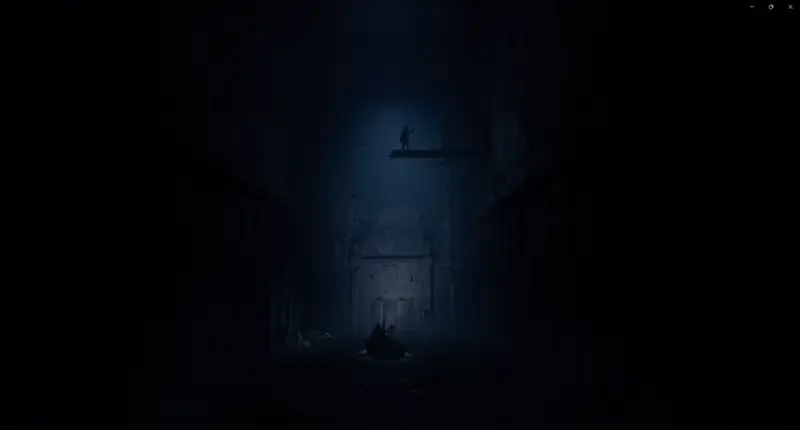
Even the ominous opening, which has you sail a small wooden boat towards a domineering cliff, is a hint of what is to come. The developers have effortlessly blended the new elements introduced in REANIMAL with what is familiar, seeding them early on before expanding on them, lowering the risk of pushing away old fans without limiting the team’s vision.

REANIMAL is a game about the cycles of violence, from small moments of cruelty to large-scale devastation, and how these acts of violence affect us all: humans and animals, the young and the old, the guilty and the innocent. What starts as an intimate journey shrouded in mystery and haunted by grotesque entities steadily grows to a magnitude that feels almost overwhelming, and yet unavoidable, with still enough unanswered questions to have me starting a second playthrough immediately after finishing.
The gruesome body horror that Tarsier Studios has become known for is at its most twisted, with REANIMAL incorporating animals into the monstrous mix. While I loved encountering each new abomination, what I found most impressive was how the developers use their unsettling designs and reveals to not only shock you but also work as worldbuilding. Each creature’s place in the world, their introduction, appearance, and even their behaviour, tells so much, and none of it is good.
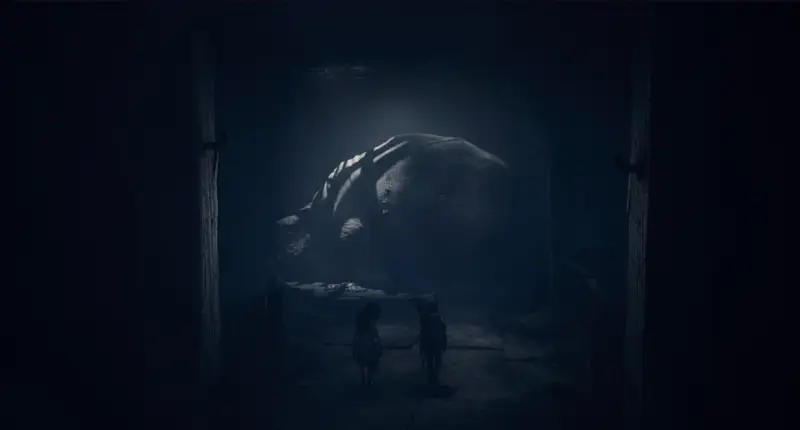
Alongside the body horror is a more grounded, dread-inducing side to REANIMAL’s story and world that slowly comes to the fore as you progress. It was this other side to the game’s horror that surprised me the most, and I was shocked just as often at what I witnessed as I was repulsed by it. This change in narrative structure and worldbuilding is the perfect example of the team’s confidence, as they address more uncomfortable and real horrors, forcing the player to confront them despite their diminutive size and the seemingly insurmountable odds.
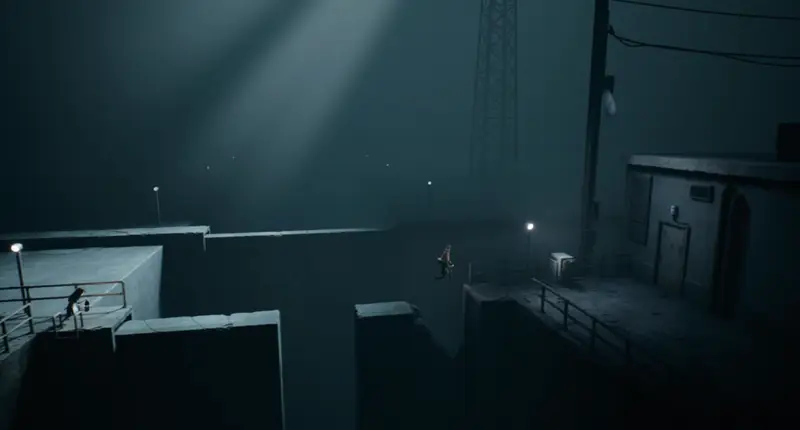
All of this is brought together in a far more realistic-looking world than Tarsier Studios has made before, moving away from the surreal and exaggerated to design somewhere that matches the grounded nature of REANIMAL’s themes. Gone are the warped buildings cluttered with teetering stacks of furnishings and detritus, peeling walls, and the general appearance of a nightmare. I only really noticed this until I was about an hour into my 6-hour playthrough, which immediately answered the question I posed to myself. Does the more grounded, realistic art direction for the world design heighten the horror? The answer is yes, very much so!
The reason for this is that while REANIMAL’s world may not feel strangely alive and conscious of your existence every step of the way, instead, it is cold, vast, and uncaring. It’s easy to feel lost in the dense fog, awash with dark blues, greys, and browns. Light is used strategically to guide the player through the thick, suffocating dust and fog, one of the few reassurances to be found in this grueling world. REANIMAL is a place of concrete, metal, mud, and endless ocean; you are not just made to feel small and vulnerable, but inconsequential.
The visceral and stress-inducing sound design of REANIMAL completes the sensory assault, with more of a soundscape than a soundtrack. Most of the time, there is just the ambient sounds of the world to listen to, the gentle patter of your footsteps, the crashing of waves, a sudden shifting in rocks, or the whine of metal scraping. I still shudder when I remember certain moments during my playthrough, almost entirely due to the gross sounds that accompanied them; every squelch, snap, and crack hitting with unexpected force.
Haunting Horns and strings are used to great effect, piercing the eeriness at a significant reveal, or accompanying a heart-pumping boss fight or chase sequence. Like low, sorrowful moans and panicked shrieks of animals, these sounds follow your every step, echoing out like a tortured orchestra, mirroring the pain ever-present in REANIMAL.
While the AI partner you have in single player worked well for the majority of my playthrough, there were a handful of moments where it would get caught in a loop or stuck on the environment, either needing me to try and recorrect its pathing or leading to our demise. Thankfully, checkpointing in REANIMAL is very good, and loading from dying takes a matter of seconds. Other than a couple of “points of no return” that weren’t particularly clear, my gripes with the game are very minimal, and my time with REANIMAL was smooth sailing.
Final Thoughts
REANIMAL feels like the work of a studio unshackled. While based on the foundations originally designed and created by Tarsier Studios, the team has built on them with confidence and creative conviction. This is a game that understands what made the studio’s earlier work resonate, while refusing to be defined by it. Through its confident mechanical evolution, grounded and oppressive world design, and a thematic focus that’s as unsettling as it is confrontational, REANIMAL establishes its own identity; one that’s harsher, more ambitious, and more emotionally affecting than anything Tarsier has made before.

REANIMAL releases on February 13th across PC, PlayStation 5, Xbox Series X/S, and Nintendo Switch 2.
The game was reviewed on PlayStation 5. We would like to thank Tarsier Studios and Embracer Group for the review code.
Are you looking forward to REANIMAL? Let us know in the comments below, and join the Gamer Social Club Discord to chat with others about your favourite games, play in community game nights, take part in giveaways, and more!