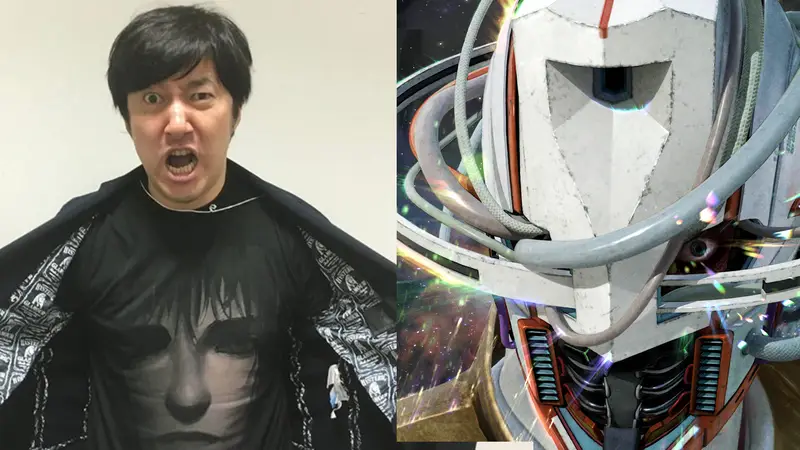
If you’re a fan of cult classic Japanese action and adventure games, Goichi “Suda51” Suda is a name that doesn’t require much introduction. The auteur punk director has been working in the industry for over 30 years, after making the career pivot from undertaker to directing his first title, Super Fire Pro Wrestling 3 Final Bout for Human Entertainment in 1993.
Suda’s studio, Grasshopper Manufacture, was founded in 1998 and has gone on to develop an eclectic range of stylish games that play with established genre conventions such as the iconic Killer 7 and No More Heroes series.
In anticipation of the studio’s latest release, Romeo is a Dead Man (which you can read our review for here), I had the opportunity to interview Suda51 about how Grasshopper Manufacture’s self-publishing debut, his collaborative works, and the process by which he and his team go about realizing their insane stylistic ambitions through the medium of video games.
Can you define what, in your view, a “Grasshopper Manufacture game” is as best you can?
“I feel that a ‘Grasshopper game’ is a game that is totally original, not a clone or a copy of anything else. That’s the most important thing. When we make “Grasshopper game”, we make sure to use as many all-new ideas as possible, and to make it something that always brings something new to the player. For our latest title, Romeo Is A Dead Man, we decided to bring back a lot of our own “classics” for the game. By that, I mean not only characters from our past games, but all the know-how and techniques we’ve picked up over the years, and everything – we put it all into this title. I feel that this also makes it a very “Grasshopper game”.“
Each Grasshopper Manufacture game is unique and special in its own way, where did your ideas for Romeo is a Dead Man stem from?
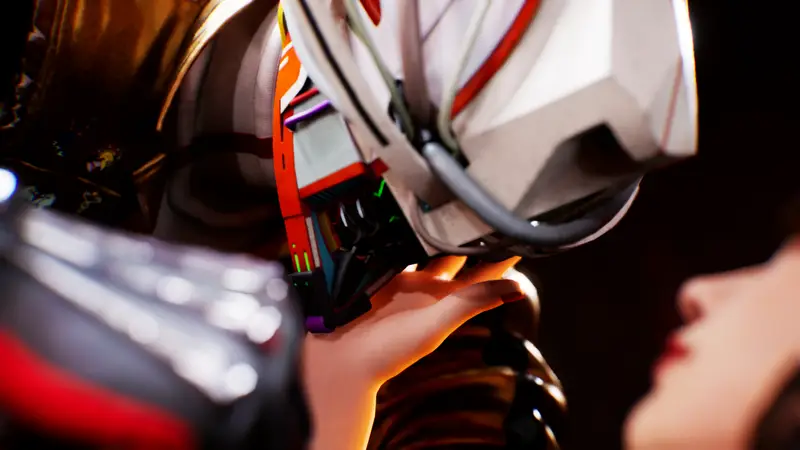
“The ideas for Romeo Is A Dead Man came from several places. First, as you can probably tell just from the trailers, it was heavily inspired by Back To The Future and Rick & Morty – particularly the dynamic between Romeo and his grandfather Ben, and then obviously the space-time travel parts as well. While the game contains both “Romeo” and “Juliet”, it doesn’t actually take much from Shakespeare’s original play; it’s pretty much just the characters’ names, but other than that, they’re two completely different characters with a very different relationship from the original.
Some of the ideas in the game also came from previous projects that never made it to fruition, or from ideas that we had for previous games where that one particular theme or mechanic or whatever ended up getting scrapped for one reason or another, but it had stuck in my head, so I wanted to use it somewhere. Another heavy bit of inspiration came from zombie movies from over the years, all the way back from Dawn Of The Dead up to the present day. I liked the idea of having different types of zombies in different time periods with different abilities, etc.”
The game blends many mediums and art styles – How do you go about capturing the vision for a project like Romeo is a Dead Man? What does the process look like?
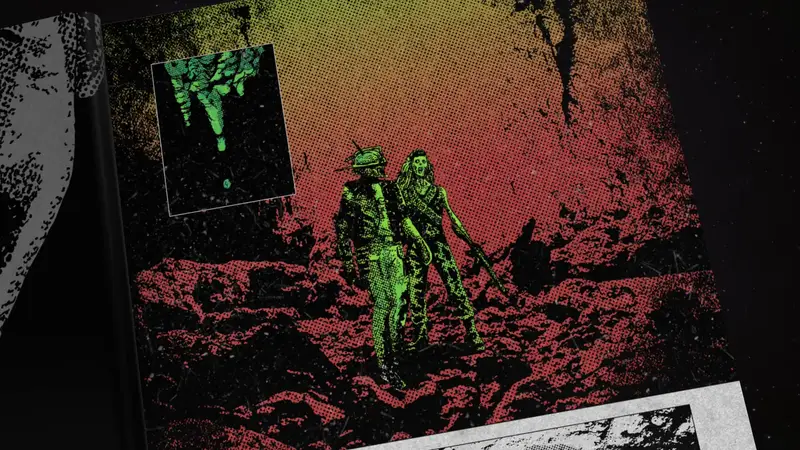
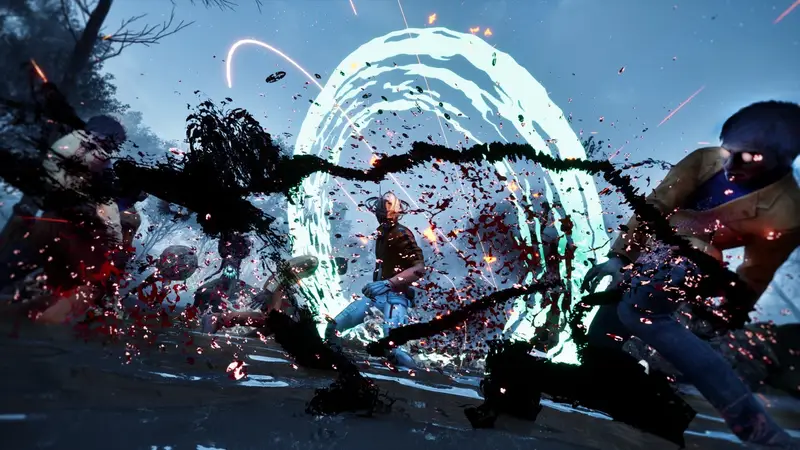
“At first, we had planned on doing the entire game with full 3D polygon graphics. At some point in development, we realized that this would not only push development way behind schedule, but that it would also cause us to go way over budget as well, and so we had to take a long, hard look at everything we had planned and figure out how to keep both the schedule and budget in check. While trying to figure out how to do this without simply cutting out huge chunks of the game, I had the idea to use the various specific skills and abilities of both the staff here at Grasshopper and the external collaborators with whom we are working, and to mix things up visually in a way that would still keep the story and gameplay coherent, but would also look cool, too.
For example, we have people who are really good at Western comic-style art, some who are good at more photo-realistic illustrations, some who excel at more Japanese manga-type art, etc. So I went to each of these people – and some of our collaborators, like Shirogumi and Kamikazedouga, who both did some of the animated sequences in their own distinctive styles – and asked them to do the visuals for specific scenes or parts of the game, and in the end I feel it turned out looking even better than it would have if we had gone with our original plans, so I’m really pleased with that happy turn of fate.”
From the time I’ve spent playing Romeo, it seems to blend and incorporate a lot of ideas from Grasshopper’s past in a way that feels very self-referential but also distinct. Do you see the game as a culmination of the studio’s legacy or an anniversary title of sorts?
“I hadn’t really thought of it as an anniversary title – even with our 30th anniversary coming up next year – but as I mentioned earlier, I did make sure to stick in a lot of the “cool stuff” from our previous games, significantly more than usual. We took ideas from past games that didn’t simply work at the time, but that would look and feel cool even today, and tweaked some of them to fit better with the current title.”
I spoke to Swery a few months ago for Hotel Barcelona, a game that you were involved with creatively. Given that you’ve worked with the likes of him, Shinji Mikami, and James Gunn in the past, do you see collaborations with other industry figures as another creative outlet going forward or are you happy focusing on current projects with the team at Grasshopper?
“I actually don’t normally think, ‘Hey, let’s make this game a collaboration…’ Sometimes the games just happen to end up getting made like that, really. So it’s not that I think “OK, I want to work with this specific person on a game” and then start planning from there. The only times I’ve actually reached out with a request to collaborate were to Shinji Mikami for Killer 7, where we teamed up as producer and director, and again for Shadows of The Damned, where he joined on as producer. Apart from those, it’s always just sort of happened naturally. Like with Swery, we were just talking and bouncing ideas back and forth, and the idea for Hotel Barcelona was born. I never think about “who I want to work with” on a particular game – I just try to figure out how to best staff each individual project I work on, and sometimes I’ll end up collaborating with someone.”
Are there any specific collaborators on Romeo is a Dead Man you’d like to bring attention to?
“I think that people who played No More Heroes 3 are already aware of how awesome Nobuaki Kaneko’s music is, so if I had to choose a collaborator from Romeo, I think I’d go with Hattori Graphics, an external collaborator who did all the pixel art from inside the spaceship and some other places. Hattori Graphics really stood out even among the lineup of amazing collaborators with whom we worked this time.”
Grasshopper Manufacture turns 28 this year. It’s been a long road to get to the point where you’re finally self-publishing your own game. How do you reflect on the studio’s journey so far?
“Our upcoming 30th anniversary is certainly a big milestone, and I prefer to think more of our future rather than our past, so to answer this in my own way, I want to keep on planning for the future and putting all of my focus and energy into each individual game we make from here on out.”
How are you approaching Romeo as a self-published title in terms of creative freedom and, unlike past projects, as an IP wholly owned by the studio?
“It isn’t really so much a matter of creative freedom, honestly. Usually, when we have a publisher ask us to do a game for them, they know what kind of games we make and they know what to expect, so we don’t normally get many restrictions or requests for changes. As far as creative freedom is concerned, I’d say it was actually more of the scheduling and budget issues that I mentioned earlier that allowed us to really get creatively free this time.”
Are there any plans for a Romeo is a Dead Man physical edition?
“We’re currently doing everything we can to make a physical release happen.”
Huge thank you to Suda-san for responding to our questions and the Grasshopper Manufacture PR team for facilitating the interview.
Romeo is a Dead Man releases for PC, PS5, and Xbox Series X/S on February 11.
Are you looking forward to playing Romeo Is A Dead Man? Let us know in the comments below, and join the Gamer Social Club Discord to chat with others about your favourite games, play in community game nights, take part in giveaways, and more!