When Planet of Lana launched back in 2023 I was still in my intense achievement hunting phase. I had just joined the 1 million Gamerscore club and was in the middle of another long run in my yearly achievement contest over on Trueachievements. I was looking for games that were short and easier to complete and knew Planet of Lana was just that so I jumped in. By the end of my time in Nova I was in awe of what I had just played and fell in love with such a stunning indie game.
Fast forward to 2026 and while my gaming habits have certainly changed, while I still go for achievements I don’t hunt like I used to, my love for Planet of Lana is still there. Now as we sit here mere months (maybe less?) away from a sequel I cannot wait to head back to Nova and recapture the magic that Lana and Mui made me feel in 2023.
Everything we’ve seen so far from Planet of Lana 2: Children of the Leaf suggests that developer Wishfully is kicking it up a notch from the original game as they build upon a solid foundation and take that next step.
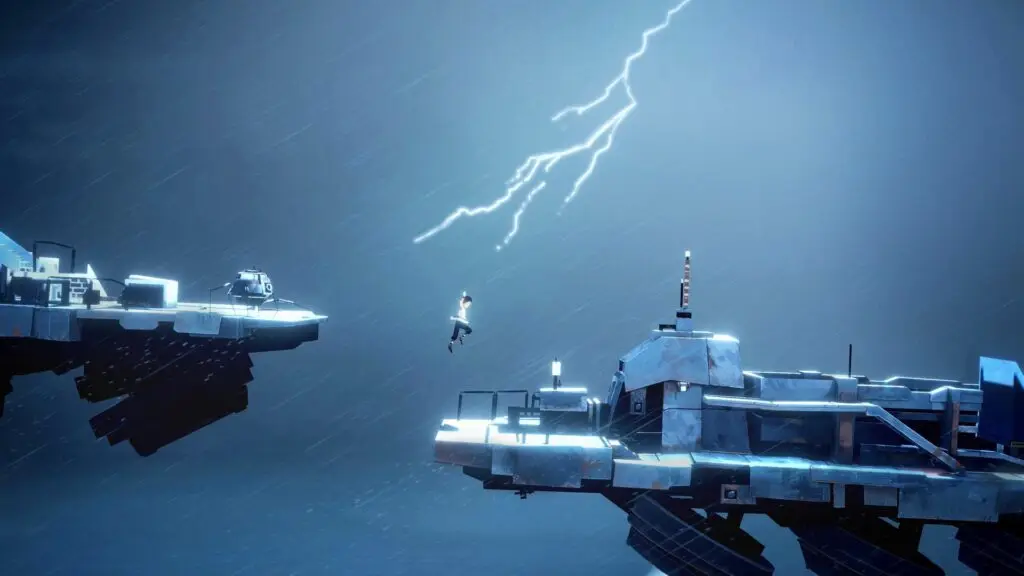
The most recent look at the game came earlier this month as a 10 minute video was released, showcasing some gameplay and showing off a much darker theme. It’s a stark contrast to the vibrant world we saw 3 years ago, but it is very fitting given the theme of Children of the Leaf.
With so much intrigue and mystery surrounding Children of the Leaf I was able to have a moment to speak with both Game Directors for the title, Adam Stjärnljus and Klas Martin Eriksson and ask some questions. During our chat we talked about the reaction to Planet of Lana, the ambitious nature of the sequel, their relationship with Xbox and much more.
Planet of Lana 2: Children of the Leaf is a direct sequel to the first game and see’s us reunite as Lana and Mui. Where are we in terms of a timeline from the ending of the first game to now in Children of the Leaf?
Adam: The passing of time is an elusive concept not often discussed on Novo, but in earth terms – nearly two years has passed since the events of Planet of Lana.
Was the plan always to do a sequel? Did anything really change for the team after seeing the incredible response Planet of Lana got?
Klas: While we were definitely encouraged by the reception of the first game, we knew that there was more to Lana and Mui’s story already during the process of writing it. The world – its history and scale – just seemed to grow with every beat, and that feeling followed into production organically as the team started adding to it. Lana and Mui kept discovering secrets about Novo that WE were just as desperate to learn more about as them. Ultimately, “Children of the Leaf” is the result of that curiosity, the support of our publisher Thunderful, as well as the overwhelming response from fans of the first game.
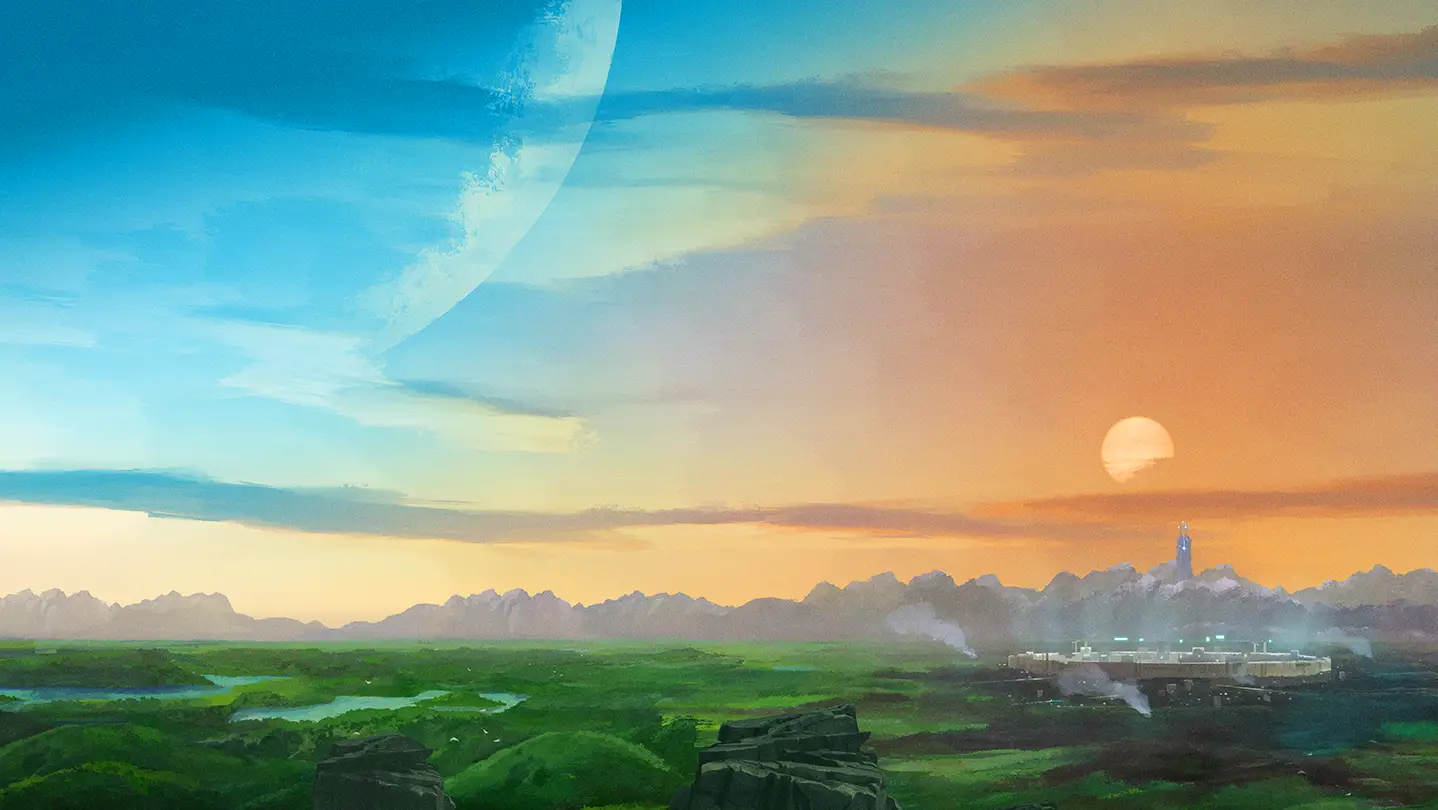
While Planet of Lana was known for its vibrant visuals what we’ve seen so far of Children of the Leaf is much darker visually, while still looking stunning. We’ve so now that there will of course be much more vibrant areas as well, but did you put an emphasis on making some more dreary areas of the game considering the darker tones of the narrative?
Adam: Let’s first preface this by saying that while there is a lot of established lore at the foundation of Planet of Lana 2, it is a self contained story and new players will be able to jump into the sequel without playing the first game. For any gaps that need to be filled between the games, we have included a short prologue as a refresher for old and new players alike.
Klas: And for the question; Yes, the environments are definitely a natural reflection of the slightly darker narrative in the sequel. In ‘Children of the leaf’, Lana and her home planet are at a bit of an impasse, both facing their own identity crises; Following the robot invasion of the first game, the people of Novo are now faced with overnight access to technology vastly superior to their own, and different tribes have very different ideas of what role that tech should play in daily life; While some are hostile to the very notion of coexisting with it, others are all too happy to exploit it for their own greedy purposes, setting the scene for inter-tribal conflicts.
As for Lana and Mui, their discoveries about their planet’s past during their first adventure has had a profound impact on them, and Lana in particular longs to learn more about her people’s origins – a desire that often lands her, and those close to her, into trouble.

This time around Lana and Mui have to deal with both humans as well as robots. I know you are keeping this close to the vest in terms of the stories, but what can you tell us about the humans that we will be seeing?
Adam: As Klas touched on before, the different tribes of Novo have vastly different ideas of how the new robot technology should be implemented, and one of them; The Dijinghala, are hell bent on using it to exploit Novo’s precious natural resources – something that has far reaching consequences for the whole planet – including Lana and Mui. But while the Dijinghala have managed to manipulate their robots into doing their greedy bidding, Lana and Mui are still the planet’s original ‘robot tamers’, and won’t give up without a fight.
You’ve talked a bit about how Children of the Leaf will be bigger than the original. More varied puzzles, more environments and more in depth game mechanics. As a studio how do you balance that desire of wanting to expand on a game while also maintaining what made the first game so good in the first place?
Klas: Short answer; Very very carefully 🙂 But in all seriousness I think when you live with a project for as long as you do with a video game, the realities of production mean you’re constantly forced to compromise and abandon a lot of good ideas along the way. So by the time you reach the end you’ve gathered hundreds of little things you wish you could have included in the first game, but for whatever reason couldn’t. So between those, a bit of distance to it all, and tons of player feedback – you get a pretty clear picture of what could be improved and what should be left alone. Maybe that’s why video game sequels are often (not always!) better than their predecessors?
Is there one specific area of Novo that you are really looking forward to seeing fans enjoy?
Adam: We’re really excited for players to explore ALL the new biomes in Planet of Lana 2, but even more so for them to discover the different creatures that inhabit them. One mechanic we are heavily expanding on is Mui’s hypnotic ability (which was very limited in the first game), and this time around she will be able to take full control of a range of different creatures that the player can then use to solve puzzles and progress through the game.
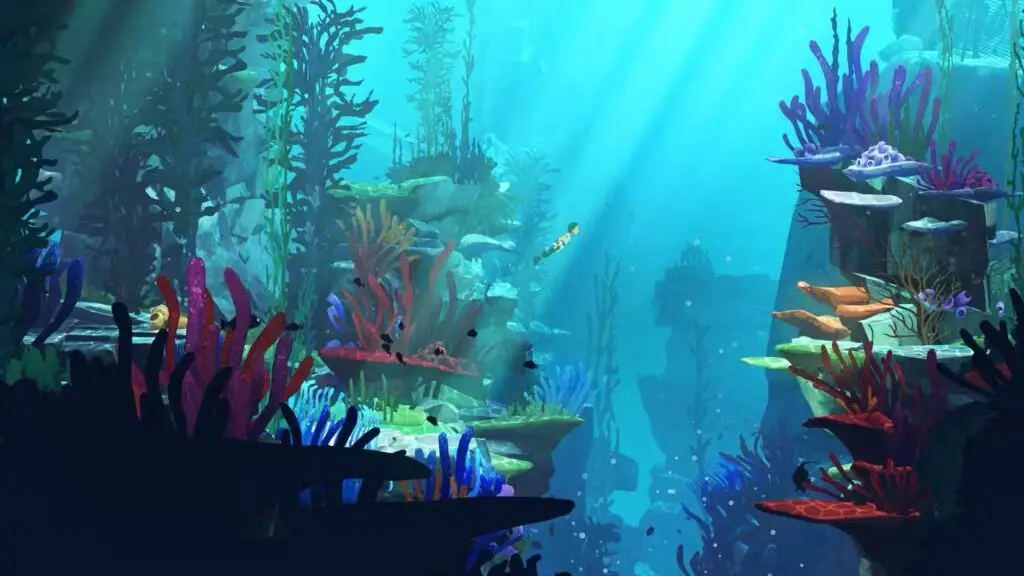
Klas: Yeah agreed, but also very excited to showcase Novo’s underwater world, courtesy of Lana’s new ability to swim!
I’m always curious about games that either don’t feature any dialogue, or in Planet of Lana’s case, features a language that isn’t real. It opens up a whole new type of storytelling through the world and through the players eyes and their own interpretation. What goes into deciding something like that, and how difficult is it to actually succeed in doing so? Do you ever have any fear that you want a specific piece of the story to be interpreted one way but it ends up going in another direction in the players eyes?
Klas: It’s both a blessing and a curse at the same time. On one hand you’ve got the cardinal rule of storytelling that says ‘Show, don’t tell’, and of course by completely removing your own ability to ‘tell’ (IE intelligible dialogue) you automatically tick that box because showing becomes your only option. But on the flip side, just ‘showing’ can be very challenging. Inventing our own language is sort of a happy middle – because at least we still have access to tone of voice to convey emotion.
Ultimately though I think it pays off to challenge yourself- and your audience to create story immersion. Unfortunately we are now living in a storytelling environment driven by algorithms and viewer-retention that insists on catering to waning attention spans, rather than challenging them. Like, apparently streaming services are intentionally adding more dialogue exposition to reinforce plot now because they KNOW that people are on their phones while watching?!
But perhaps that’s where we have an advantage as game creators; A certain level of focus and engagement is built into the experience because you need both hands on the controller. And for the Planet of Lana series specifically – with our focus on puzzle solving – we want the story to be open to interpretation, not only to challenge players to derive their own meaning of the narrative, but to give them another puzzle to solve.
Looking at the business side of things now, Planet of Lana originally released only on Xbox and PC. This go around you are launching simultaneously on all the consoles at the same time. What went into that decision and does that change much in terms of development, or did the previous experience of porting make it a pretty seamless transition?
Adam: The primary drivers of that decision were a combination between our production capacity in the studio at the time – a day one cross-platform release is a very complex dragon to slay for a small indie studio – but also the enormous support we received, and continue to receive, from Xbox. They’ve been massive fans of Lana and Mui from day one which is why we are stoked to have Planet of Lana 2 on Gamepass from release, as well as on the rest of the platforms this time around.
And yes, our experience from eventually porting the original game to Switch and Playstation enabled us to do the cross-platform release this time around, making sure as many fans as possible get to play from day one.
We here at Gamer Social Club are a big advocate for physical games and keeping the art of video games alive through physical media. Planet of Lana received a physical release and sold out rather quickly which is great to see. Are there any plans to do a physical release for Children of the Leaf, and any chance that might include Xbox this go around?
Adam: If there is enough demand for it we would love to do a physical release again for sure! Last time we teamed up with the awesome crew at Super Rare Games for a limited edition run with a ton of bonus content which was really well received and super fun to put together. Because the Planet of Lana universe is so rich and full of lore – and because we really love what we do – we relish every opportunity to give die hard fans access to limited edition stuff that offers a peek behind the curtain!