
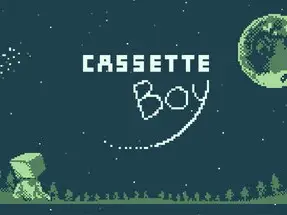
While this may sound like hyperbole, I do believe that playing the perspective-shifting FEZ back in 2012 irrevocably changed the way I look at video games, as well as what I look for in a video game. The execution of such a simple yet mind-blowing mechanic filled me with a sense of giddy excitement, as for the first time I thought about what lay beyond the borders of my screen. There was a sense of permanence I had not felt before, and only I had the power to see it and bend it to my will. It’s safe to say I was in awe, and it’s a sensation I have not had since, that is, until I played Cassette Boy.
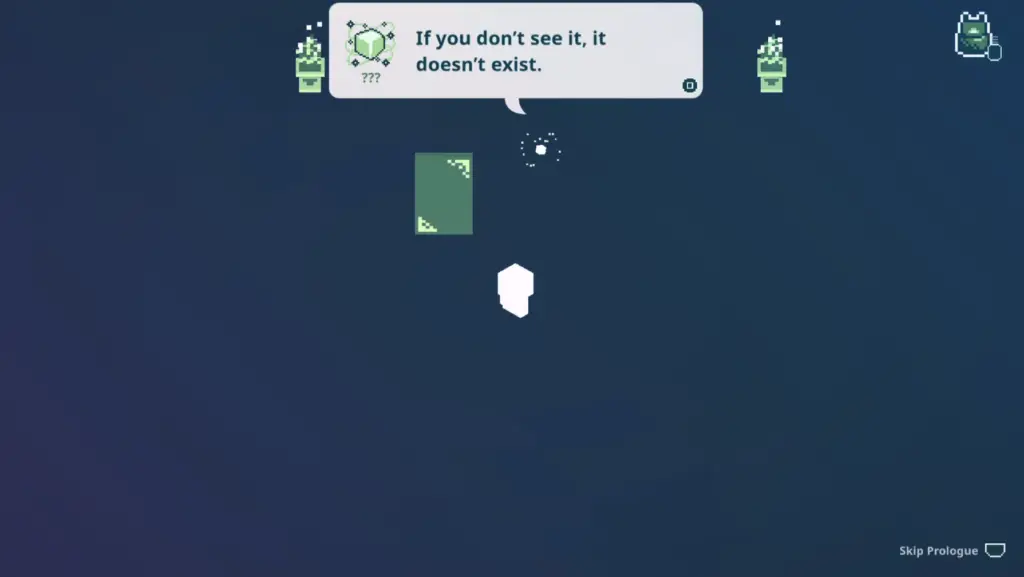
Made by solo developer Kiyoshi Honda, Cassette Boy opens with the player character, a pale square-headed figure, being visited by a shimmering cube in a dream-like void. The cube states that the moon has disappeared because we stopped looking at it, and it is up to us to gather the moon’s fragments and bring it back. It goes on to explain, using some simple examples, the first and most fundamental rule of Cassette Boy’s world: If you can’t see it, it doesn’t exist. All manner of objects and creatures can now be pulled in and out of existence, based entirely on whether we, the player, can see them on our screens.
The premise and narrative of Cassette Boy feel deliberately uncomplicated, working more as a framework for the gameplay to be built around. It’s fun, functional, and restrained, giving Cassette Boy a relaxed, almost whimsical feel that invites players to satisfy their curiosity and explore this world without too much urgency. It’s a game that doesn’t take itself too seriously, at least narratively, but that still ends with a satisfying and delightful conclusion.
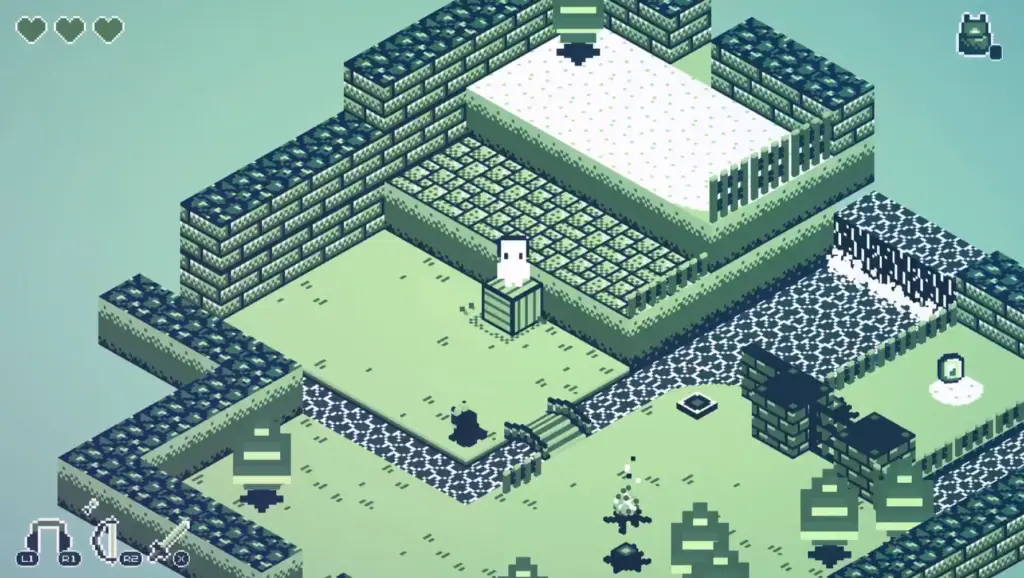
The old school, monochromatic green pixel art, and soft but diverse chiptune soundtrack of Cassette Boy do an excellent job of reinforcing the laid-back and approachable nature of the game, as well as introducing a healthy dose of nostalgia for those of us who grew up playing original Game Boy games through the 90s. Despite the limited colour palette, Cassette Boy is easy on the eyes, with simple shapes and limited detail used to build up a variety of locations throughout your adventure, with music tracks that give each of them a distinct feel, whether it is the gloomy stone chambers and halls of a dungeon, or an airy forest clearing.
This particular use of dated sound and visuals, as well as its simple premise, does more than establish an atmosphere; it cultivates a feeling of “smallness” in Cassette Boy, reminding us of the scope and familiarity of those older Game Boy titles. Collectively, they act as a sort of gentle disguise of the game’s deeper systems, allowing players to feel safe while experimenting with the creative and world-altering mechanics Cassette Boy is designed around. The best example of this is the village you live in, which acts as a type of hub for you to return to after finding each moon fragment. I became very familiar with this little hamlet, much like I did with locations like Celadon City from Pokémon Red/Blue, and it was a comfort to just be in that space.
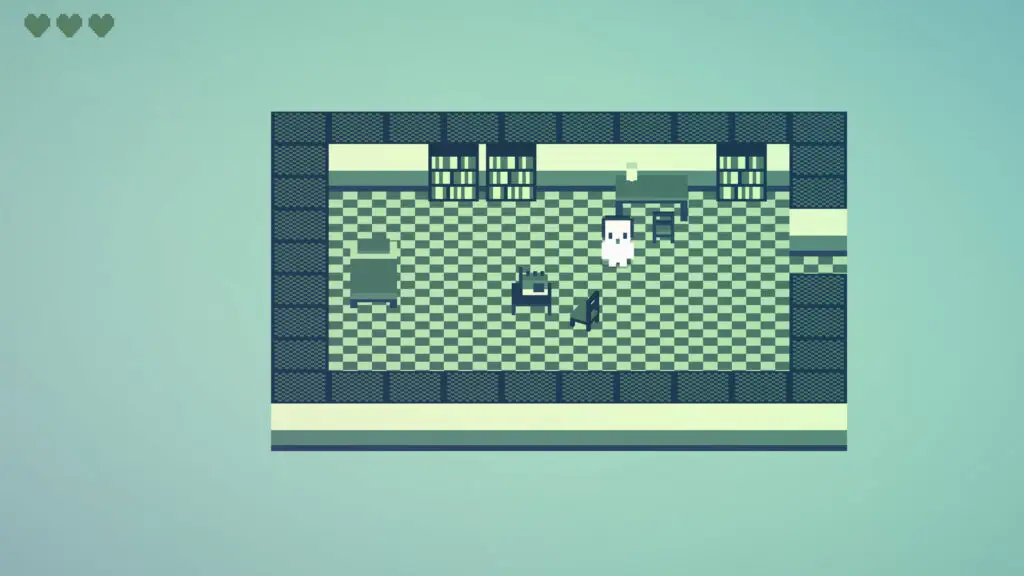
You awake in your home village after having your strange but very literal task laid out, where you finally get to see the seemingly 2D, top-down Zelda-like world of Cassette Boy. Again, the game’s familiar movement and spatial logic feel right at home with its visuals, sound design, and premise, further setting up the surprising revelation of the game’s perspective-shifting mechanic.
Cassette Boy’s design is linear, with you seeking out each of the moon fragments in a particular order, but often without giving explicit instructions as to where to go next. This further emphasizes the game’s invitation to explore and experiment, although there were a couple of times when I found myself lost for what to do next. Thankfully, there are only so many places to search and NPCs to chat to, so even by process of elimination, I was able to find my path forward. Often, it comes down to noticing an NPC has moved, which, in a static world like this one, is a telltale sign of something worth investigating. Cassette Boy is a game steeped in old-school sensibilities but shaped by modern execution, evoking classic game design while avoiding opacity or frustration, maintaining Cassette Boy’s relaxed flow.
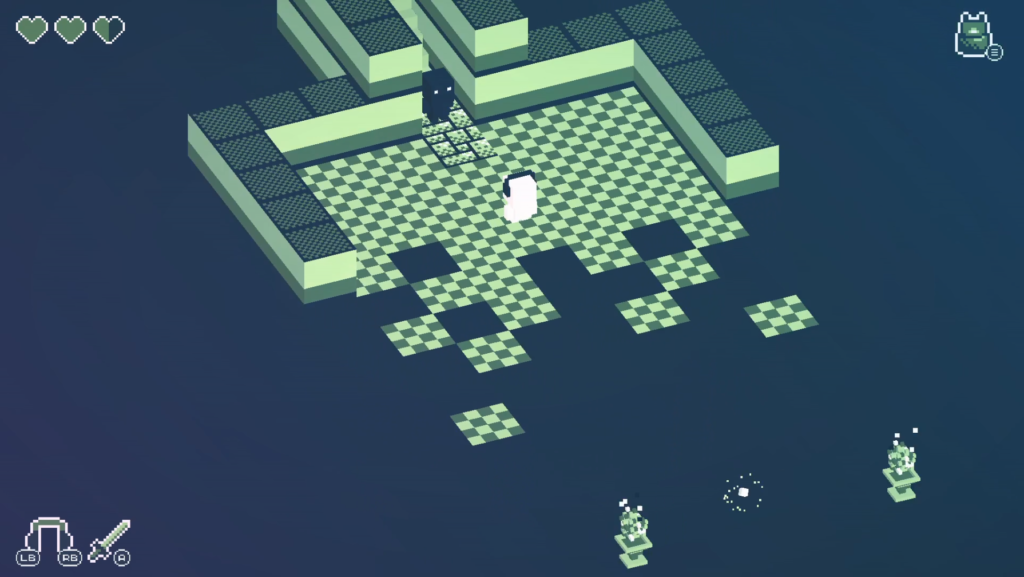
After the game’s mysterious intro and acquiring a sword while exploring, a second encounter with the floating cube results in you receiving a pair of headphones with a special power. With a simple tap of one of the shoulder buttons, the game’s camera swings around our avatar, letting us view the world from 8 distinct perspectives. The world has become 3D, or always was, but now we can see that. Suddenly, buildings that were previously inaccessible can now be entered, while enemies and traps can be hidden from view, removing them as obstacles. Standing on a button to open a gate, only to then hide the button behind a wall, will mean the door will stay open even if you step off where the button once existed. Turning the camera for the first time, it felt as though the world of Cassette Boy was growing in scale and complexity, all while opening up to me and revealing its secrets. It’s an empowering feeling to be given this level of control over a genre that, up until now, we have experienced from a fixed perspective.
What I found so impressive about Cassette Boy’s design was the many ways the game’s perspective-shifting mechanic was incorporated, from traversal and puzzle solving to combat. There is a versatility that is slowly introduced over the course of the game, whether through your own intuition or through solving puzzle shrines found across the world. Hiding buttons to keep doors open evolves to firing an arrow behind a pillar to make it disappear, only for it to reappear and hit a far-away switch once I have repositioned myself and then turned the camera. Basic platforming leads to reaching points that almost feel out of bounds, like climbing on the interior walls of houses to find secrets. Combat is quietly transformed, starting with hiding enemies to avoid conflict, to hiding yourself to avoid damage or being seen. The game also has certain objects that are activated by spinning the camera enough, revealing chests or raising blocks from the ground. They are also implemented in boss battles, offering the player more options for ways to tackle these larger foes. I can’t help but applaud the many creative uses of the camera shift mechanic, and can only imagine the many other ones that didn’t make their way into the game.
The growing scale and depth of Cassette Boy’s world are perfectly in sync with its key mechanic; both present as something simple, almost humble, only to reveal a depth and comprehension that is seldom seen in video games, yet stays approachable.
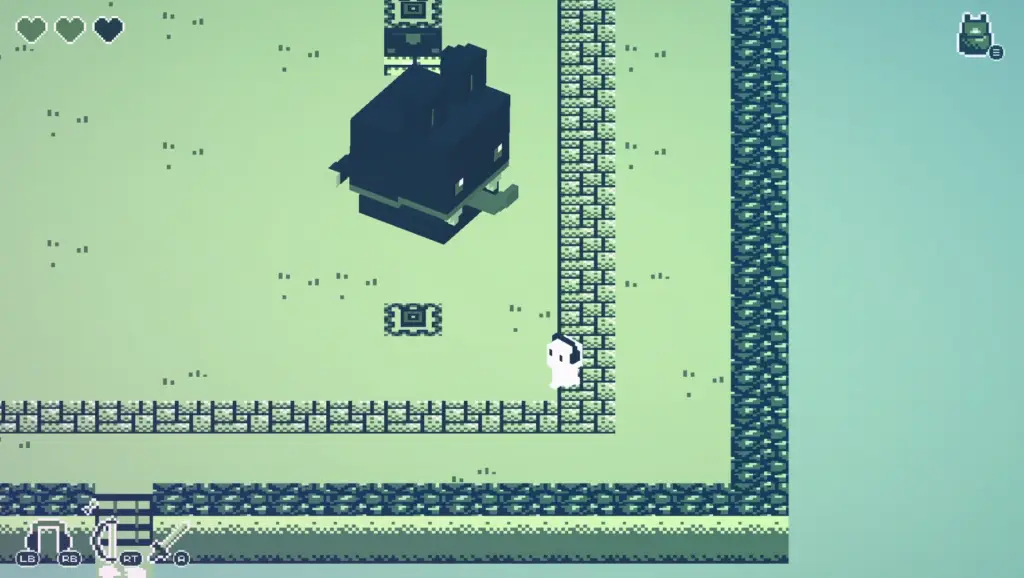
Cassette Boy’s use of a familiar, Zelda-like adventure framework does more than make the game approachable; it grounds its more abstract ideas in a genre language most players already understand. The top-down perspective, the silent protagonist, and the gradual unfolding of a mythic quest all recall classic adventure games, but Cassette Boy is quietly playful with these conventions. Our character never speaks, but we can read his thoughts, like little bubbles of self-awareness. Likewise, the presence of a “legendary hero” who exists outside of the player character gently reframes the usual power fantasy, shifting the focus away from destiny and toward observation, curiosity, and problem-solving. It even has EXP and leveling, with stats you can increase with items you find, and hearts for health; more of the familiar trappings of the adventure RPG genre, and yet never the focus of your progress. Let me be clear, Cassette Boy is not a deconstruction or satirical take on the genre, but more of a tongue-in-cheek homage, acknowledging the genre’s tropes while confidently doing its own thing within them.
In much the same way FEZ once did, Cassette Boy reminded me that perspective is not just a mechanical trick, but a way of thinking. By asking the player to actively look at the world differently, to question what exists, what doesn’t, and why, it creates moments of quiet wonder that feel increasingly rare in modern games. Cassette Boy may present itself as small, nostalgic, and unassuming, but beneath that familiar surface lies a game deeply interested in curiosity, perception, and the joy of discovery. Cassette Boy isn’t just about how changing our perspective can be important; it can also be incredibly rewarding.

Cassette Boy is available now on PC, Xbox One, Xbox Series, PlayStation 4, PlayStation 5, and Nintendo Switch.
The game was reviewed on PlayStation 5.
If you are looking for more, be sure to check out our Cassette Boy Demo Impressions.
Are you thinking of picking up Cassette Boy? Let us know in the comments below, or come and join the Gamer Social Club Discord and chat about Cassette Boy and all your favourite games, play in community game nights, take part in giveaways, and more!