Death Howl is one of those games that sneaks up on you. At first glance it looks like a moody little deckbuilder with a grim aesthetic. Described by the devs as a deck-building soulslike, it definitely leans into the broken decaying world and trial and error gameplay expected of a souls game. It’s a game about grief, survival, and clawing your way through a hostile spirit world that seems determined to break you at every turn. That’s part of what makes it so compelling. The grief your character is experiencing is reinforced constantly through the beautiful visuals, the melancholy creatures you meet on your journey and the absolutely brutal difficulty.
Gameplay
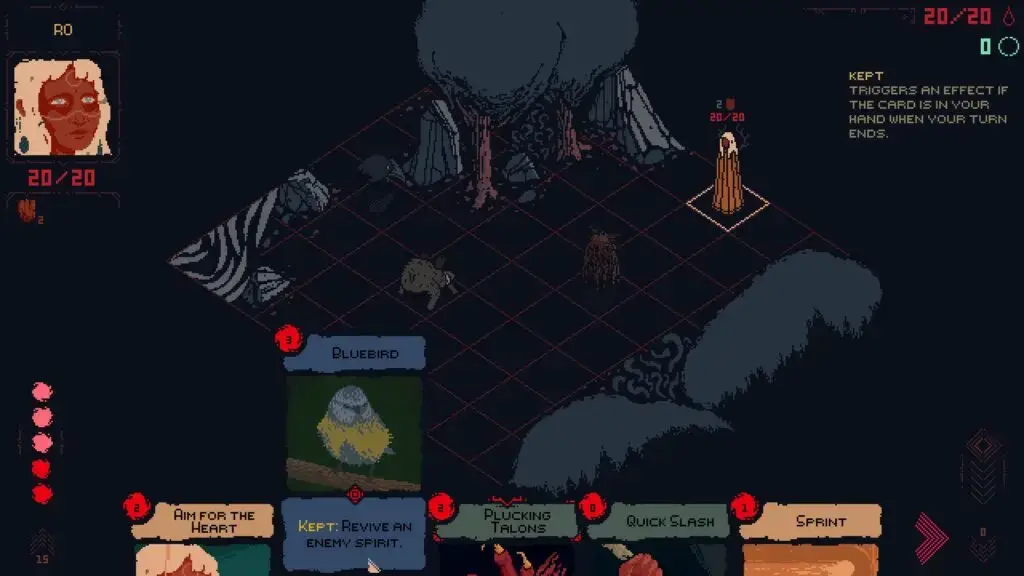
If you’ve played deckbuilders before, you’ll recognise the bones of Death Howl: you build a deck, you draw cards, you play them to attack, defend, or trigger abilities. But the game doesn’t stop there. Instead, it layers a grid based tactical system on top, turning every encounter into a little puzzle box where positioning matters just as much as the cards you’re holding. Unlike most deckbuilders, you don’t choose new cards at the end of a combat encounter, you gain resources from the animals you defeat and you combine them with howls to craft new cards. This makes the game seem incredibly overwhelming at first – what’s a good card anyway? But it also means you’re never really at the mercy of any RNG. You can always rest, refight enemies and use your howls to craft different cards.
This trial and error permeates through the combat too. You’re constantly juggling movement, enemy patterns, and the timing of your buffs. Some cards only work if you’re standing in the right place. Some only work well in the realm they’re crafted in, where they have passive effects and bonuses. Others ask you to make the most of your totems or to plan your movement and play order with expert accuracy. Totems are permanent upgrades you collect during the game. Once you’ve equipped one, it activates immediately at the start of each battle, without you needing to play a card or spend a turn. They’re essentially your “opening hand buffs”, shaping your early momentum and giving your deck a consistent baseline. Because enemies hit hard; really hard, you can’t afford to play sloppily. Every misstep feels like it costs you half your health bar, and every victory feels like you’ve just barely scraped through.
The difficulty is absolutely part of the experience. Death Howl doesn’t coddle you. It expects you to experiment, fail, adjust, and try again. Early fights can feel brutal, especially when you’re still figuring out how different card archetypes interact. But once you start to understand the rhythm – how to bait enemies, how to chain abilities, how to build a deck that actually synergises instead of flailing around – the game opens up beautifully. That’s not to say there aren’t roadblocks. A few of the boss fights feel particularly brutal and the nature of gathering howls and animal parts to craft new cards can make you feel stuck in a corner of your own design at times.
Speaking of boss fights, they are where the game really flexes its design muscles. They’re proper set pieces with unique mechanics that force you to rethink your approach to the game. The first major boss immediately adds hazards that you need to deal with fast, lest you start losing health rapidly to poison, all the while adding enemies that push you into tight corners and away from the limited attacking windows you have. Others have similar unique mechanics that I won’t spoil, but will have you rearranging and rethinking the cards you’ve become familiar with, pushing you quickly out of your comfort zone. They’re tough, but they’re fair (mostly), the kind of fights where you lose, swear loudly, and then immediately hit “retry” because you know you can do better.
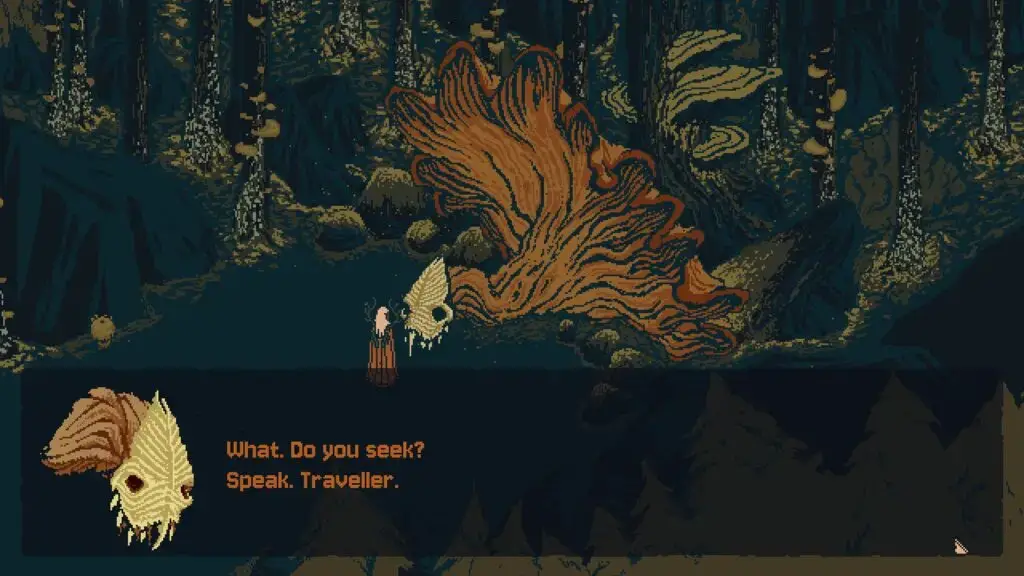
It’s worth saying that Death Howl rewards patience more than aggression. If you’re the sort of player who likes to rush in and bruteforce your way through encounters (as I tend to be at times), you’ll get flattened. But if you enjoy slow, deliberate strategy you’ll find a lot to love here.
Visuals
The art direction in Death Howl is one of its strongest assets. Everything feels drenched in this eerie, mournful atmosphere – like the world itself is grieving alongside the protagonist. The colour palette leans heavily into muted tones: greys, deep blues, sickly greens, and the occasional splash of red that feels almost violent in contrast to the simple palette of each realm.
Character designs are sharp and memorable. Enemies look unsettling without being grotesque, leaning more into folklore inspired weirdness than outright horror. You’ll run into skeletal beasts, twisted spirits, and creatures that look like they’ve crawled out of some forgotten myth. The designs stick with you; twisted versions of the familiar, a facsimile of something that at some point may have been comforting.
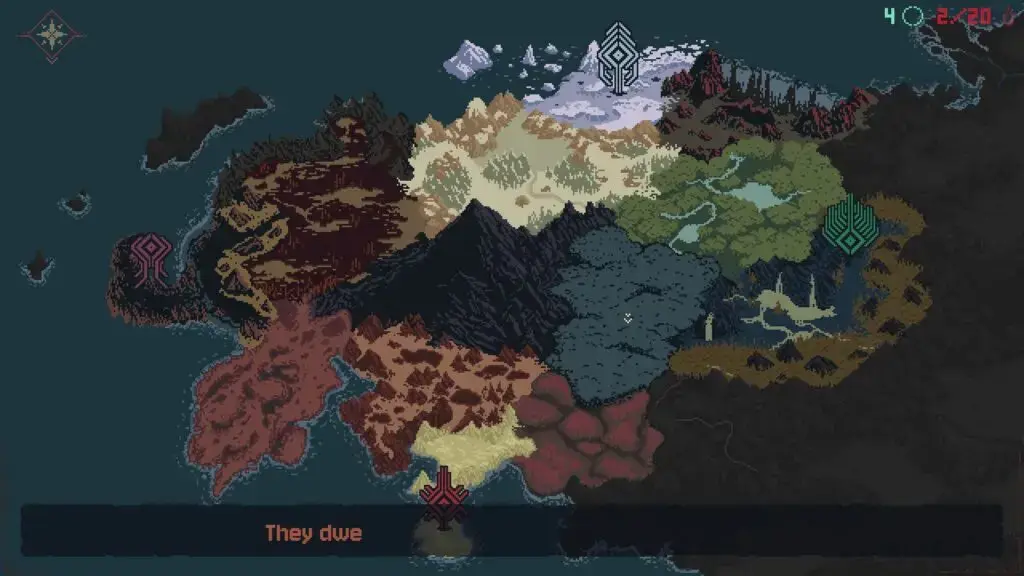
The animations are subtle but effective. Attacks have weight, movement feels deliberate, and the grid-based combat is easy to read at a glance. Nothing is overly flashy, which fits the tone perfectly, the game feels like trying to unsettle you just enough to keep you on edge, like you’re just barely keeping your head above the roaring tide of grief waiting to drown you if you give it the smallest chance..
The UI deserves a shoutout too. Deckbuilders can easily become cluttered or overwhelming, but Death Howl keeps things clean and readable. Cards are well designed, with clear iconography and flavourful art that adds personality without sacrificing clarity. Some of the menuing could do with one or two less button presses, maybe an easier way to see what cards you can currently craft without having to scroll through all the options, but it’s not much of an issue. Overall, the visuals do a brilliant job of reinforcing the game’s themes. Everything feels cohesive, intentional, and just a little bit haunted.
Story
At its core, Death Howl is a story about grief – specifically, a mother’s grief. You play as Ro, a woman who has lost her son and refuses to accept it. Instead, she descends into a spirit world to drag him back, no matter the cost. It’s a simple premise, but the game handles it with surprising nuance. The world Ro travels through feels like a reflection of her emotional state: bleak, hostile, and full of echoes of the past. You encounter spirits who speak in riddles, fragments of memory, and creatures that seem to embody different facets of loss. The writing is understated, never melodramatic, which makes the emotional beats land harder when they do come.
Ro herself is a deeply relatable protagonist. She’s not a traditional hero; she’s driven, stubborn, and often reckless. Her determination is admirable, but the game doesn’t shy away from showing the toll it takes on her. You get the sense that she’s not really fighting the monsters of this hellish spirit world – she’s fighting herself, her guilt, and the weight of what she’s lost.
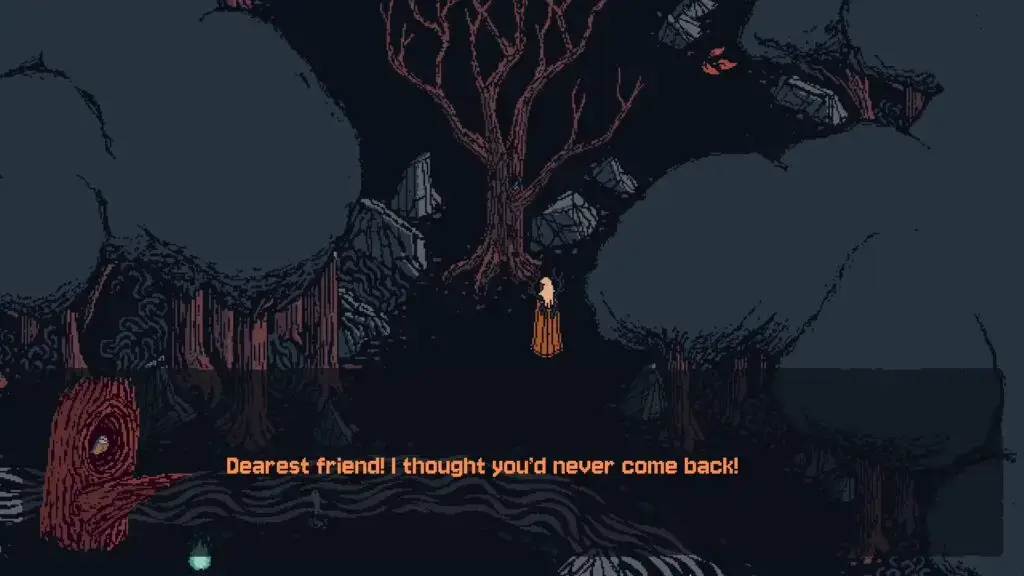
The story unfolds gradually, mostly through environmental storytelling and short narrative interludes rather than long cutscenes. It trusts the player to piece things together, which fits the game’s overall tone. By the time the game reaches its conclusion, the emotional arc feels earned. It’s not a cheerful story, not by any means, and if you’ve ever dealt with grief you’ll recognise its ebbs and flows, its eventual bone settling permanence; the inevitability of loss that lingers with you after the credits roll.
Final Thoughts
Death Howl is a tough, atmospheric, and surprisingly emotional experience. Its blend of deckbuilding and tactical combat is clever and demanding, its visuals are hauntingly beautiful, and its story hits harder than you might expect from a game built around cards and grids. It’s not for everyone – the difficulty alone will put some players off – but if you enjoy games that challenge both your strategy and your resilience, it’s absolutely worth your time.
Death Howl launched on PC via Steam and GOG on 9 December 2025. Console versions are scheduled for release sometime in 2026 on PlayStation 5, Xbox Series consoles, and Nintendo Switch.
Gamer Social Club Would like to thank the developer for the code.