
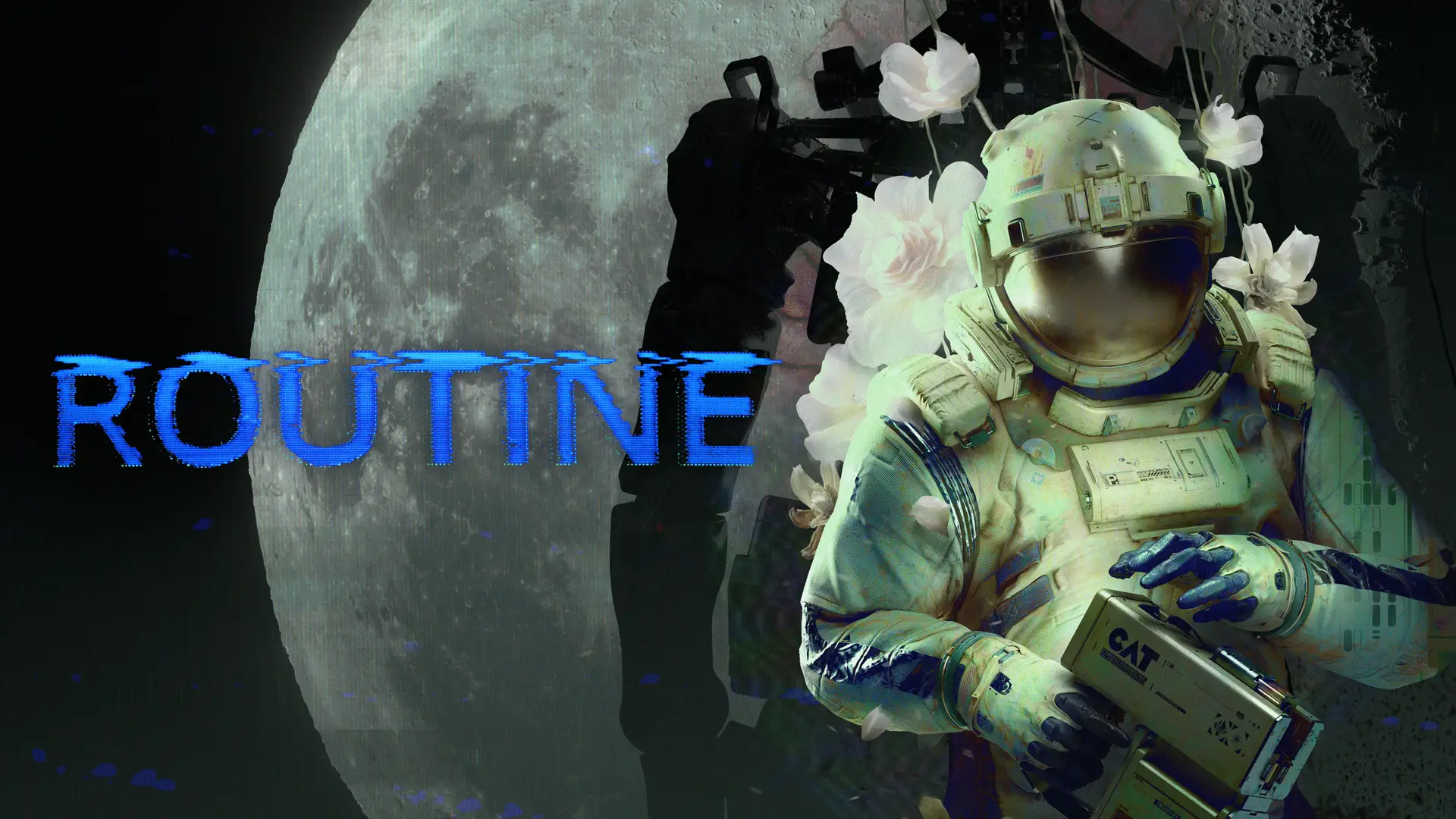
A distress beacon drifts through the void of space, its signal once strong, then mysteriously fading into silence, only to reappear more than a decade later. That’s the story of ROUTINE, a sci-fi horror game first announced way back in 2012.
At Gamescom that year, Lunar Software unveiled a moody, retro-futuristic vision: an abandoned lunar base, analog technology, and a creeping dread reminiscent of Alien: Isolation. But after a brief burst of attention, the game went dark; no updates, no release, just faint echoes.
Now, thirteen years later, that signal is back. ROUTINE has quietly resurfaced, stronger and more refined, with a December 4th release date on PC, Xbox Series, Xbox One, and day one on Game Pass. With only weeks to go, it feels like we’re finally on the verge of making contact.
All of the information about ROUTINE has been gathered from the official ROUTINE Steam Page, where the developers have been posting trailers, gameplay footage, updates, and Q&As.
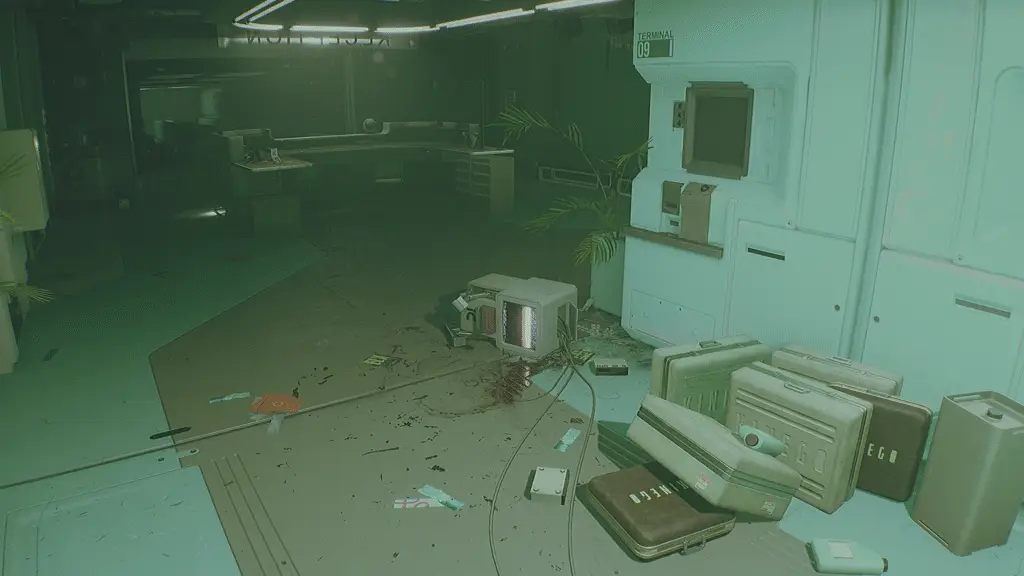
ROUTINE is a first-person sci-fi horror game that puts you in the boots of an astronaut who has just arrived at an abandoned lunar base. As you explore the different sectors of the base, from empty shopping malls to deserted living quarters, you’ll need to investigate your surroundings to uncover details of the events that took place before your arrival. Equipped with your Cosmonaut Assistance Tool [C.A.T.], use it to access critical terminals, navigate the environment, and identify clues. But be careful, because you are not alone, as something on this station has decided that you are a threat and must be removed.
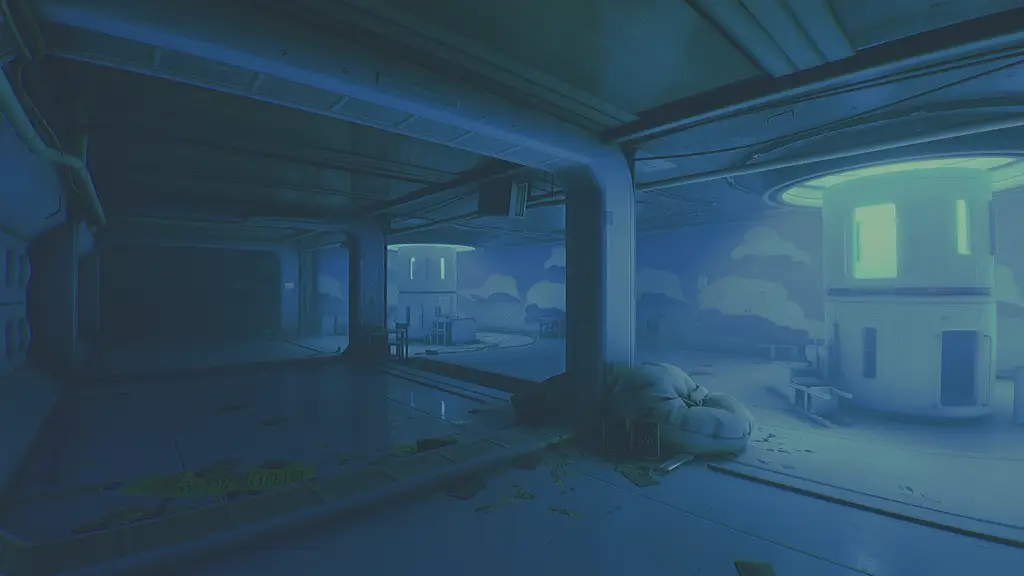
From what we have seen from trailers, the world, or at least the Moon of ROUTINE, is built distinctly around a 1980s view of the future. Think chunky PC monitors, tactile switches, CRT displays, and analog tech pushed to its limits, all accompanied by a pervasive low hum. That retro-futuristic aesthetic shapes much of the hallways, terminals, and pieces of equipment inside the lunar base, washed in fluorescent lighting or hidden in stark shadows. If you’re unfamiliar with this retro-futuristic aesthetic, expect a lot of off-white panels and screens, each surface designed to be functional, but eerily lifeless.
It’s a place built for a purpose, with cold surfaces, static-filled screens, and long, silent corridors that offer no warmth or solace as you piece together what transpired here, always aware that something is watching.

While many will watch gameplay trailers of ROUTINE and immediately imagine a jump scare behind every corner, the team at Lunar Software wants the game to be more of an atmospheric slow burn, with players taking their time and planning their next move. To help reinforce this and fully immerse the player, the devs have opted for a minimal UI on screen alongside diegetic audio and full body awareness. What this means is little to no visual clutter, like health bars and maps, while your in-game body takes up physical space, knocking into objects, and the sound design creates a fully 360-degree soundscape. ROUTINE wants you, nay needs you, to pay attention to everything going on around you, because except for your C.A.T. device, that’s all you’ve got. The developers did clarify that there will be some controls displayed early on, which are unique to the game.
The tactile nature of ROUTINE doesn’t stop there, though. Every piece of equipment, from your C.A.T. to computers and control panels, must be interacted with manually. Good thing you’re playing as a software engineer! Based on footage shown so far, interacting with a monitor shifts your POV seamlessly to focus on the screen, and you move the mouse as you would in real life, clicking tabs to navigate and opening files to read their contents. Using your C.A.T. device, which looks like a cross between a radar speed gun and a camcorder, is an involved process that involves installing and switching between different modules that you find during your playthrough. During IGN’s hands-on experience with ROUTINE’s demo at Gamescom in August, Matt Purslow and Dale Driver describe switching from your flashlight to your electrical discharge taking several button presses: you have to hold up the device, turn off one function, flip it over, and turn on the other before you can use it. It’s lengthy and methodical, and we can only imagine how stress-inducing it will be when your life is at risk.
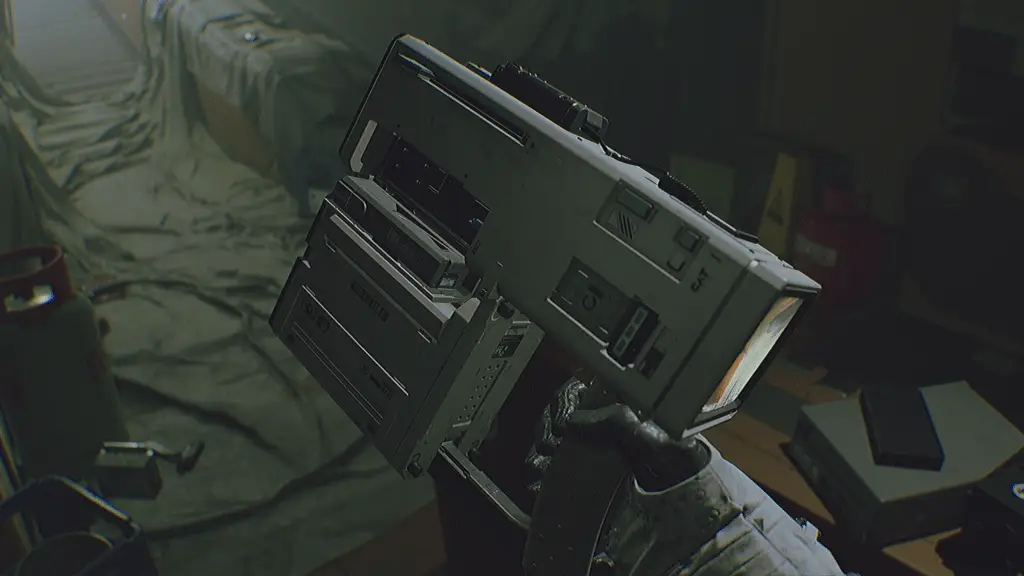
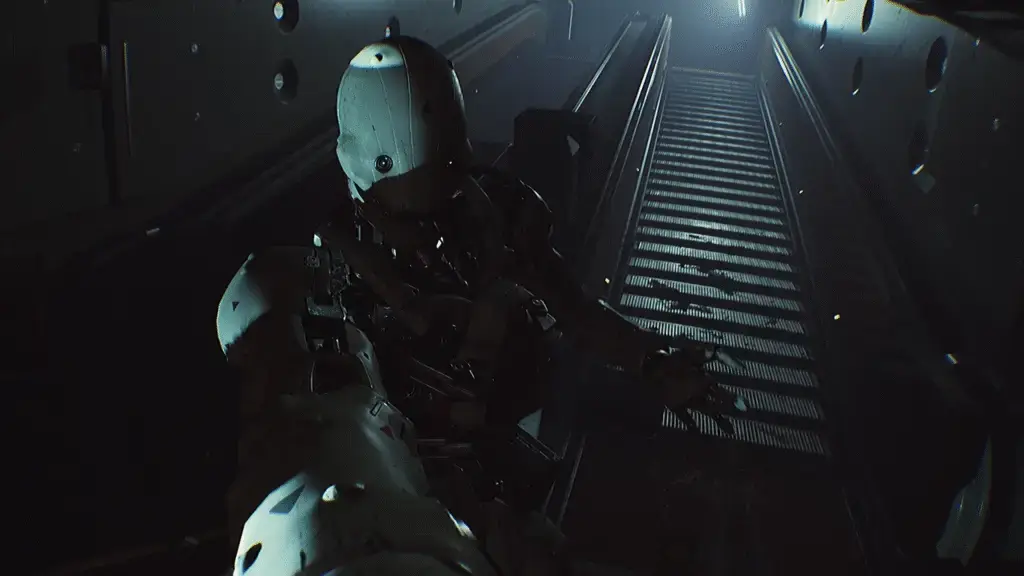
Speaking of which, don’t expect to be hauling around an arsenal of weapons or stealthily taking down enemies. Your C.A.T.’s electric stun attack is the only thing you have to temporarily stop the large, menacing security droids that still monitor the lunar base. If one of them spots you, it will hunt you down without hesitation, grabbing you in its vice-like grip and revealing a mechanical maw lined with razor-sharp teeth. Who designed the robots to have teeth? Why do they have teeth?! Perhaps that’s something you’ll learn as you explore the station, but maybe we’d sleep better if we never found out.
Running may be your best course of action, and while you may be able to outrun one, your best option is to find somewhere to hide. You see, the robots are part of a hivemind of sorts, meaning that if you run into the proximity of a hibernating robot while fleeing another one, the AI will leap from your pursuer to the droid closer to you. It’s a devilish piece of design by the devs, adding an extra layer of menace to these machines.
All of these design choices, from in-depth interactions to omnipresent stalkers, look set to make ROUTINE an experience that is less of an electrical shock that jolts you out of your seat, but more of a low, unsettling drone, whose source you cannot find, and it’s getting louder.
While the game’s eerie lunar setting and retro-futuristic design are compelling on their own, the story behind the game’s creation is just as intriguing.
ROUTINE was first announced in 2012 as a small indie project from UK-based, three-person studio Lunar Software. What began as a modest first-person horror game built in Unreal Engine 3 quickly grew in ambition, but the team struggled with limited resources and development pressures. Over time, updates slowed, and the game quietly slipped into hiatus, leading many to believe it had been cancelled.
Rather than release something they weren’t proud of, the developers made the difficult decision to step back and rebuild the game from the ground up. The project shifted engines multiple times, first to Unreal Engine 4, and later to Unreal Engine 5, as they refined the game’s systems, visuals, and overall scope.
In 2022, ROUTINE resurfaced during Summer Game Fest with a new trailer and an updated look, alongside the announcement that indie publisher Raw Fury had joined the project. Composer Mick Gordon (DOOM, Prey) contributed early work to the reboot, though he later departed due to other commitments; Lunar Software has confirmed that his music will still appear in the final game.
After more than a decade of reworks, restarts, and quiet progress, ROUTINE is finally nearing release, with its long development shaping much of its identity as a polished, atmospheric sci-fi horror experience.
The very fact that ROUTINE is arriving at all feels remarkable. Games that disappear for months, let alone years, rarely return, and when they do, they often emerge in a compromised form. ROUTINE’s reappearance and eventual completion are something worth appreciating: a project that weathered doubt, burnout, and silence, yet still found its way back into the light. It’s rare to see a game survive a journey like this, and rarer still for it to look stronger because of it.
Now, though, we’re just weeks away from touchdown. After all this time, the beacon we thought had faded is shining brighter than ever, and soon we will be moonside to find the answers hiding in the dark.
ROUTINE launches December 4th for PC, Xbox Series X|S, and Xbox One, and will be available day one on Game Pass.
Are you looking forward to the atmospheric sci-fi horror of ROUTINE? Have you been waiting for this game since its first appearance in 2012? Come and join the Gamer Social Club Discord to talk all things ROUTINE, horror games, and more!


