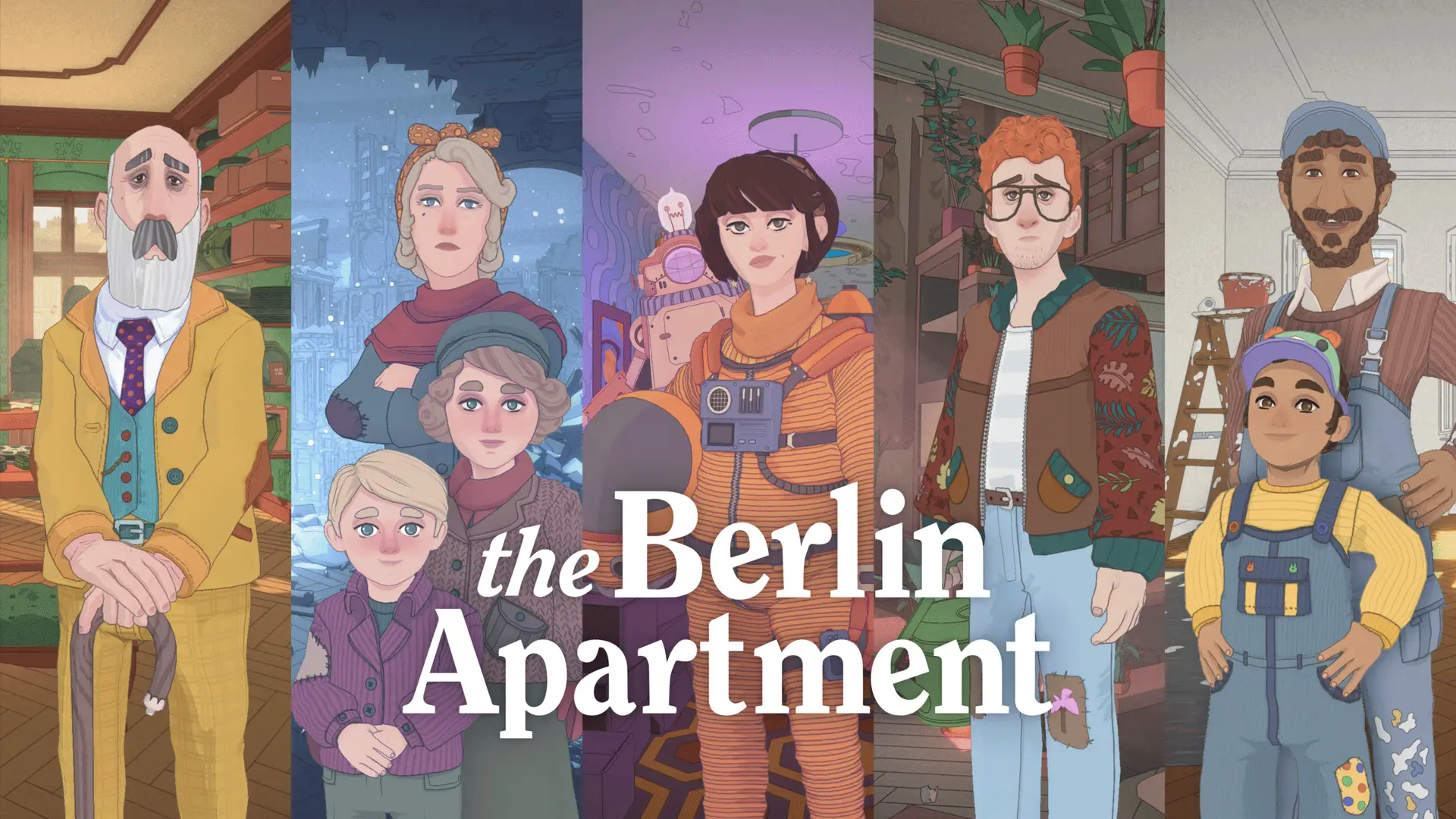
As someone who is a huge fan of story driven games, I have been looking forward to The Berlin Apartment. Since hearing that ByteRockers’ would be publishing this at Pax East 2025, it’s been a game I’ve been eagerly awaiting. We’ve also covered it as part of our September Demo Disc to ensure more people were aware. Now, we’ve received a copy to dive into the history of this humble abode.
It’s an interesting concept to explore the lives of people who have all lived in the same apartment at different times. The developers at btf take it a step further when they explore Berlin, Germany during difficult periods of German history. It’s a humanizing look into turbulent periods of time in history and one that speaks to the soul in a variety of ways.
It Begins At a Time of Disruption
The Berlin Apartment begins in 2020, a disruptive year for many in and out of Berlin as we all know. We begin as Dilara, a young inquisitive child who joins her father, Malik as he begins renovating an apartment. School is clearly closed and her learning is about to take place through the found items scattered throughout the apartment. The first comes when Malik instructs Dilara to help by tearing down the wall paper. Preserved underneath the wall paper is a letter and a map which leads us to our first story.
The first story is simple, optimistic, and even a bit brave. This is also where our perspective changes and we travel back in time to 1989. We are no longer Dilara, we are Kolja, a man who loves his plants but doesn’t seem to love his life. We awaken on the floor, our roommate has left, and Kolja is not quite sure what comes next. That is until a paper airplane makes its way through the window. From here an unlikely friendship begins to take shape. Separated by the wall that splits Berlin, Kolja befriends an artist named Lu.
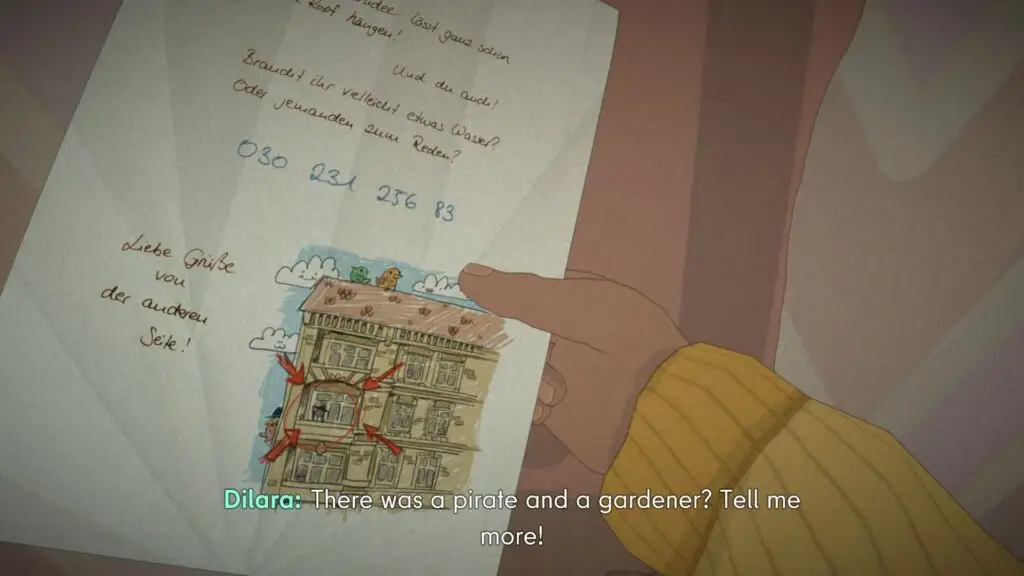
The friendship these two share blossoms very quickly with Kolja wanting to seem interesting, fun, and perhaps even a bit flirty. Lu has already sent Kolja his phone number but they can’t connect this way so the letters sent via paper airplane will have to suffice. Yet through this we hear Kolja light up and find a new meaning to life beyond just the plants. As those playing the game we get the opportunity to ensure all his plants are watered, he’s well fed as is his fish, and we craft the airplanes. The game mechanics are minimal, but at this point it is more about the story than anything.
Of course not all stories are quite as optimistic. While Kolja is about human connection, our next story is about the things we leave behind. Now we are getting ready to leave the apartment behind and can only bring what fits in a suitcase. Yes, we are in Nazi Germany and the world is unkind to us. Thankfully Esther is ready to help us flee before it is too late. Once upon a time we owned a movie theater, we provided entertainment, and now we are seen as the enemy. This section of the game is a point and click scavenger hunt of sorts. Will you find everything, including the optional camera before the police tear down your door?
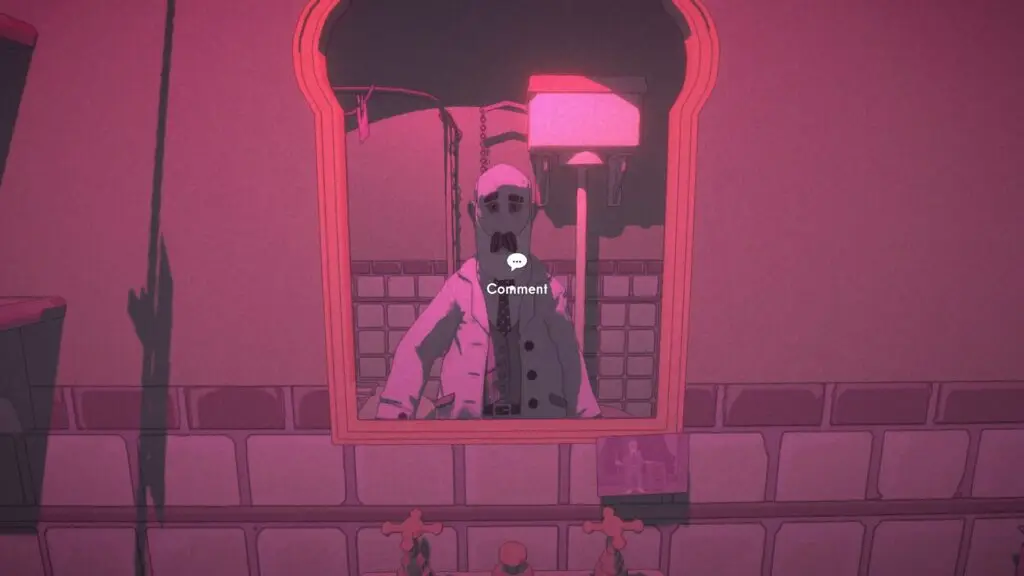
This story was difficult to go through as we see the memories of a man who has lived a good life, at least until now. Everything stolen from him minus what he can carry to begin again at his age is unthinkable. Yet, we know it was a reality for people at the time. It’s the juxtaposition of the first story and Josef’s story where we start to understand what four walls truly sees. How does one choose what to bring forward? Where Kolja was just beginning life anew, Josef is fleeing a past life and not because he wants to, but because he must.
While we may never know what happens to him, we do know the apartment does not fare as well. In the aftermath of World War II, Christmas is about to begin. A young family is trying to find their way to some semblance of a happy holiday. A mother with two children navigating the aftermath of the war is no easy job. Yet she must while she navigates the questions the player chooses to ask. Here we see the stories diverge a bit based on player choices. Will the young child accept the mothers instructions and stay quiet or how exactly will you push to try and learn the truth of your father’s role in the war?
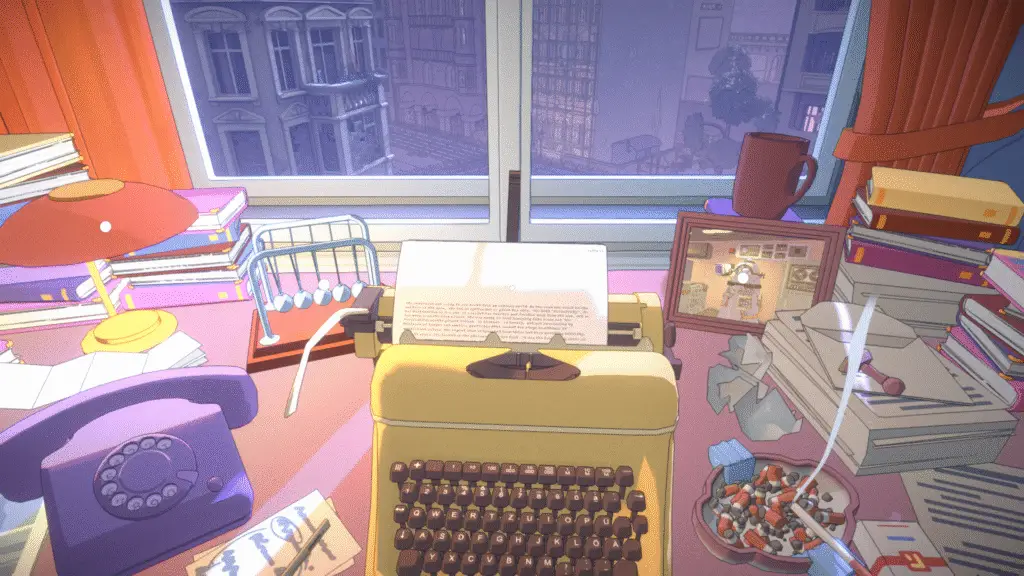
Our last story is the most intensive and has two different endings for players to enjoy. Dilara learns what a type writer is and we travel back in time to hear from an author. Unfortunately the story is also very edited and censored by those in power. How will this all play out? Well this reviewer must leave you something to explore so you’ll have to play to find out.
Do I Get to Take A Breather?
It’s worth noting you do not need to quickly jump from one story to the next. After all, you are a young girl stuck in an apartment your father is renovating. Before each story begins it is worth taking the opportunity to interact with everything in the apartment. Crayons provide you an opportunity draw on the wall as Dilara, something perhaps your own parents never let you do. Other times you’ll see a ball to kick around or even play a sort of bowling with. In the bathroom at one point you even have the opportunity to play a version of Minesweeper by breaking tiles. Dilara is very much about making her own fun when not learning about the past. It can become a welcome reprieve from the darkness the apartment has within its walls.
The overall gameplay mechanics vary only slightly from chapter to chapter but at it’s core, it is very much a point and click exploration. Not every story has a happy ending and it is up to the player to determine how bleak or not the game ends. By the end of the renovations on the apartment, Dilara and Malik have found enough to honor the stories by creating a time capsule. Through this time capsule, should players want to revisit core moments of the story or revisit an era to perhaps make different choices, they can. Thankfully this is not a game where you must replay from the very beginning. It would be rather difficult to start out so hopeful only to revisit the tragedies of war.
Flawed, Like Humanity
One flaw may be that at certain times, the stories feel unbalanced. We spend a lot of time in the first chapter full of hope, yet by the time we join the small family, their story feels too short. While I want to truly try to feel for what they are grappling with, there isn’t enough time to do so. The final story also had moments that seemingly dragged on a bit too much making me want to wrap up the story quickly. With this feeling like the longest story, it also runs the risk of making players not want to revisit to see how other choices impact your ending. However, for these flaws, it does still get to the core of it all, what it means to be human during difficult times.
Throughout my time playing, I had just a handful of strange issues, but nothing too serious. There are moments of the game where pieces would tear into each other. This isn’t anything game breaking but it is quite noticeable overall. It isn’t anything that can’t be fixed with time but is unfortunate with quite a few assets being cut off or overlapping with others.
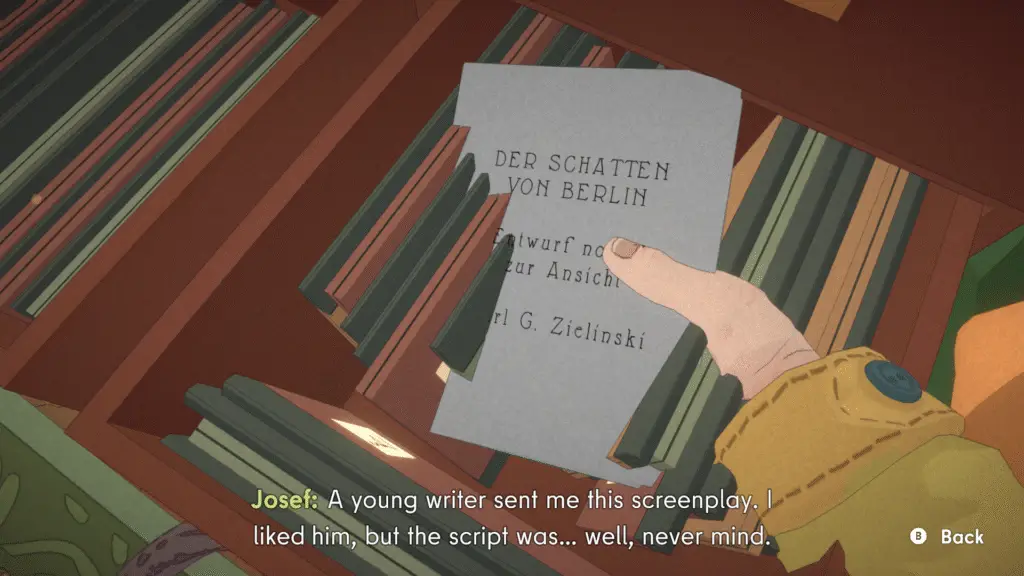
Occasionally you’d see an icon pop up that belonged on the other side of the wall. In one scene while trying to user the hammer, occasionally it would not hit the area correctly or the option would not appear. Thankfully nothing was game breaking and did not interrupt the overall flow of the story. My three hours with the game was fairly smooth. Since completing the game it appears additional patches have been implemented to ensure players have a positive experience.
Conclusion
The Berlin Apartment is an interesting experiment in historical fiction told in a static setting. We hardly ever see outside the apartment and when we do it is difficult to watch. The moments outside the apartment are reminders of what was and what was taken from us. It is a glimpse of a war torn country trying to reshape itself into something new. It is also a look at humanity at its best and its worst. For fans of visual novels and shorter games, this is a great addition to a collection. How do we humanize our history for better or worse? The Berlin Apartment tackles this while being sensitive and yet vulnerable about the history of a city and what not only it, but those who live within, can endure.
They also try to answer questions we may never have definitive answers to. How do we connect to those around us in times of separation? How do we wrestle with what our loved ones have done when sometimes that feels at odds with who we are? The Berlin Apartment is not afraid to ask these questions and provide an answer, even if at times it is unsettling. For that, it gets high praise from this reviewer.

The Berlin Apartment is out on November 17th on PC, PlayStation 5 and Xbox Series X|S. Gamer Social Club would like to thank the developers, the publishers, and their PR team for the code. The Berlin Apartment was reviewed on Steam.