
I’m sure I’ve said it before, and I’ll definitely say it again, but I’m a big fan of roguelites. Wizard of Legend, Slay the Spire, Dead Cells – it’s probably my most played genres over the past few years. Even then I do think we might be hitting a little bit of saturation point in the genre. Especially in the Vampire Survivors (or Magic Survival for the OGs) Bullet-Hell Survival vein. Just this year we’ve had Soulstone Survivors, Deep Rock Galactic Survivor and now Devil Jam. So let’s dive in to this new addition to the pool and see how it differentiates itself from the others on the market.
Heavy Metal
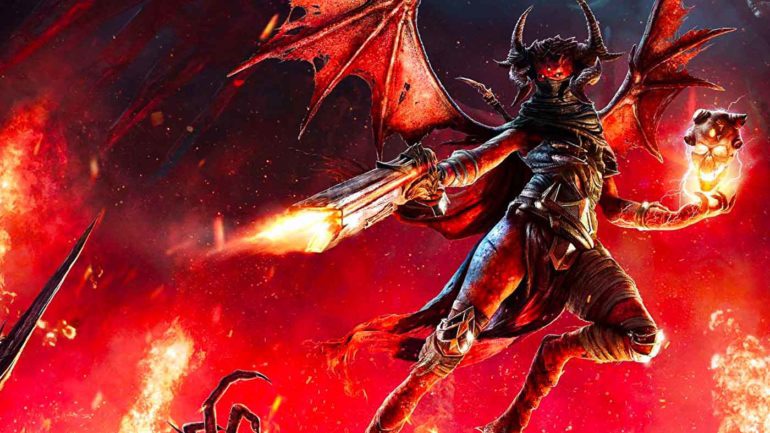
Devil Jam takes place in a rock and roll version of Hell. You’re contracted by the Devil to kill Death (they’ve got a bit of a rivalry on the go) and you need to fight your way through hordes of musical themed demons to get there. You play as a metal musician battling through hell using a music-driven auto-battling mechanic. Your character uses possessed instruments that attack automatically in time with the beat, meaning you don’t manually aim or strike (you can sim you’re standard attack, but I wouldn’t recommend it). Instead, success depends on how you equip and position your gear in a unique 12-slot inventory grid. Each slot activates in a set sequence, so placing offensive, defensive, or buffing items in the right order is key to maintaining momentum and surviving enemy waves. However, the beat-based attack system often feels more like a gimmick than a meaningful mechanic.
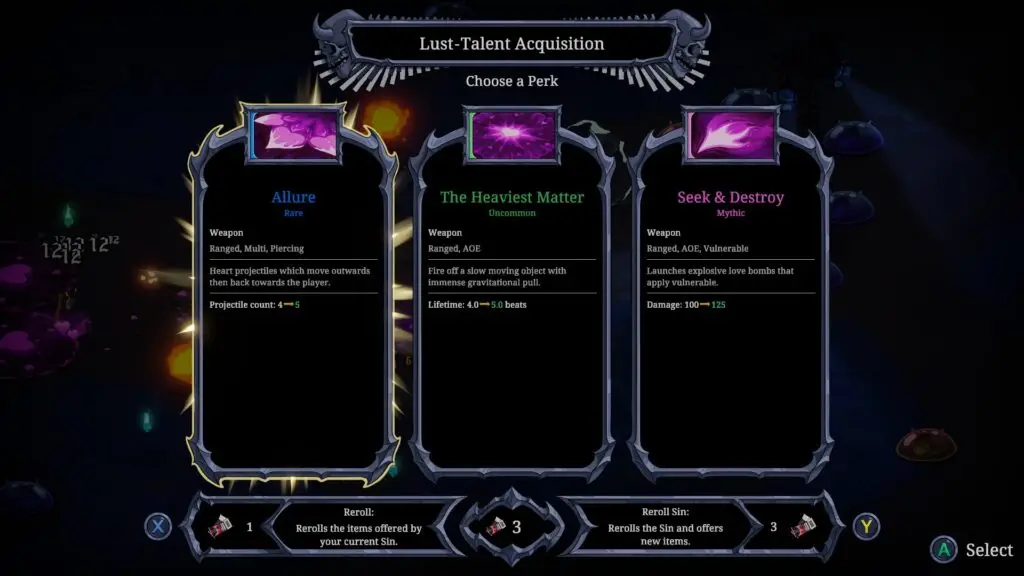
The 12-slot inventory system offers some customisation, but it’s easy to fall into ineffective builds due to unclear synergies and a lack of meaningful feedback. Choosing from different sins adds a layer of choice, but the restrictions on how many you can use per run feel more limiting than tactical. For example, buffs affect a specific pattern of squares on your grid, but you can’t move anything once you’ve placed it – so if you don’t find any good buffs that suit your attack placements early, you’re really going to struggle to build any significant damage. The attacks also lack any of the big powerful upgrade moments you’d expect from a game like this. You’ll get an extra projectile here and there, but one of the satisfying things about “Survivor” games is evolving a weapon of passive into something bigger and flashier.
Backstage Pass
Devil Jam’s level design centres around a single stage, which quickly becomes repetitive due to its lack of variation and environmental depth. The entire game unfolds in one looping arena, with waves of enemies spawning in predictable patterns. While the rhythm-based combat adds some flair, the static layout and recycled visuals make each run feel increasingly monotonous. There are no distinct biomes, evolving hazards, or spatial challenges to keep players engaged; just the same backdrop and enemy formations, which dull the sense of progression over time.
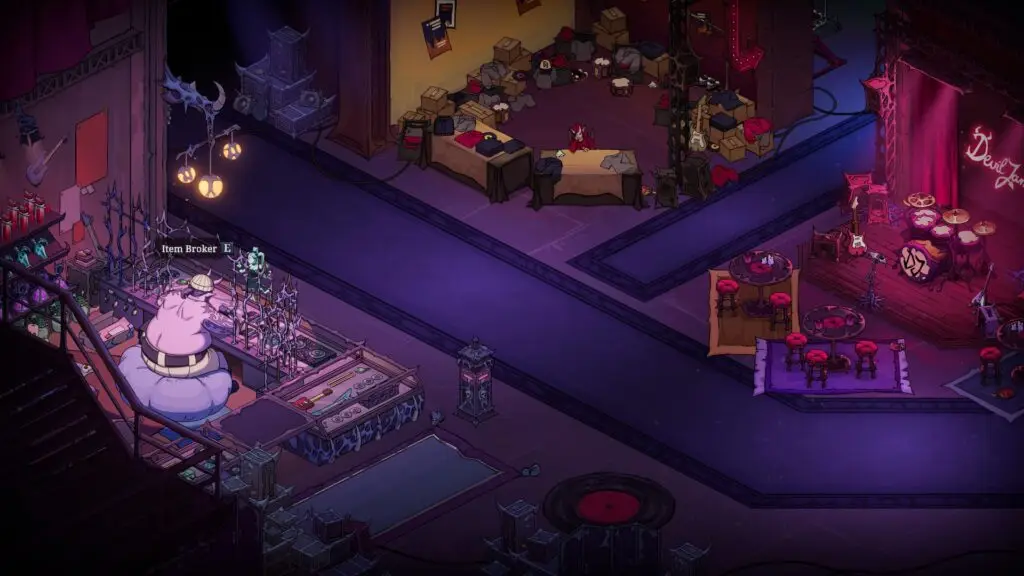
The backstage area, intended as a hub between runs, feels particularly underdeveloped. It’s visually sparse and functionally limited, offering little more than basic upgrades and menu access. There’s no meaningful interaction, lore, or atmosphere to make it feel like a lived-in space. As a result, it lacks the charm or utility seen in other roguelikes, and ends up feeling like a missed opportunity to deepen the game’s world or reward exploration. It’s worth noting the the game did receive a few updates during my review period, and some tweaks to the vendors. Previously meta progression was very limited, but this has been addressed due to feedback, and you do feel like you’re getting stronger run to run.
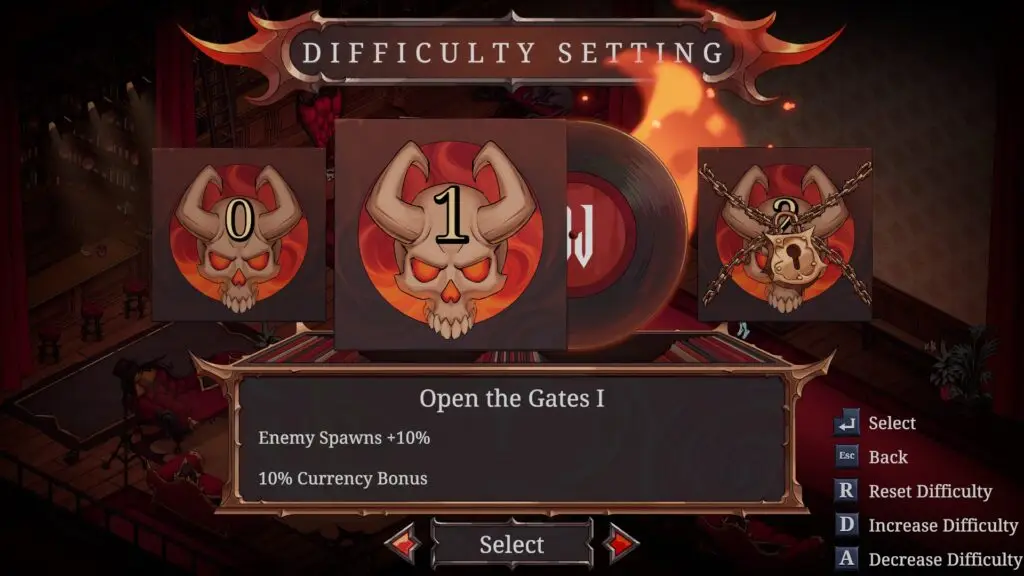
There’s also a difficulty system, where you can add modifiers to your run – but given there’s only one biome and the combat doesn’t ever really feel different, I struggled to meaningfully engage with it.
Boss Rush
Something that does change run to run are the bosses. Apart from the 3rd boss (which is always Death) the 10 minute boss and 20 minute boss come from a random pool, so you’ll want to make sure you’ve got attacks on hand that help with all of them. There’s a big Demon called Brutus that has a particularly nasty tracking fireball, so a reliable way of healing is useful (thank you Sun Eater), and a annoying little Priest that does massive AoE attacks that definitely benefits from some range to consistently land hits on. Like the enemies, they have really fun designs and I’d like to see more of that variety in a few new biomes.
Bosses themselves tend to feel a little tanky, dragging out encounters that already demand tight rhythm execution. Their high health pools often turn fights into endurance tests rather than skill showcases, especially if your build isn’t optimised for sustained damage. Combined with the visual clutter, these battles can feel more exhausting than exhilarating, dampening the payoff of reaching a climactic showdown. While the game’s style is undeniably distinctive, its clarity and pacing could use refinement to better support its rhythm-based combat.
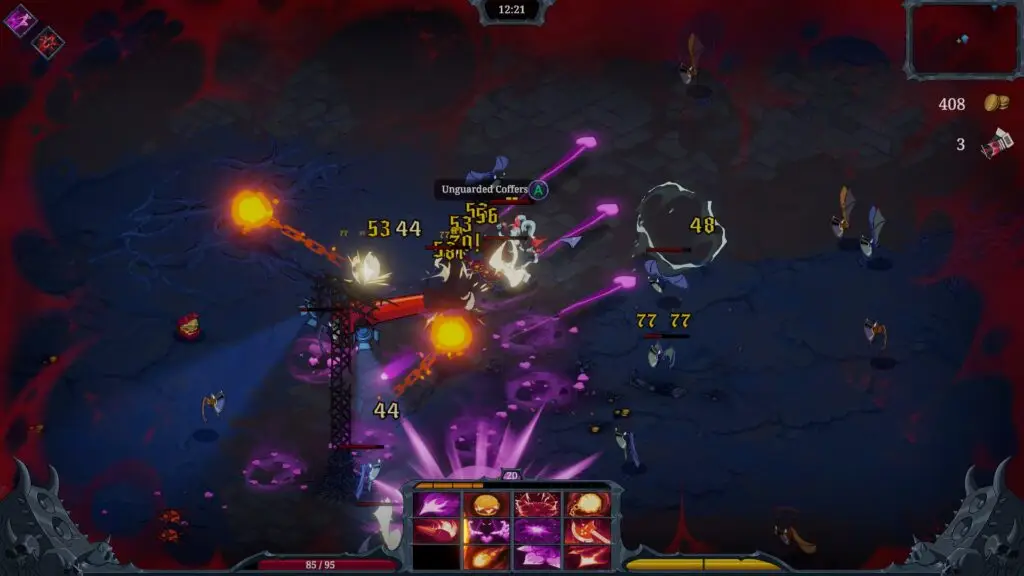
The game’s heavy metal aesthetic leans into bold colours, flashy effects, and hand-drawn animations, which look great in isolation but quickly become overwhelming when the screen fills with enemies, projectiles, and ability triggers. With attacks firing in rhythm and gear activating across multiple slots, it’s easy to lose sight of your character or miss incoming threats. This lack of visual distinction between foreground action and background art can lead to frustrating deaths, especially during boss fights where precision matters.
Final Thoughts
Devil Jam enters an already crowded arena of “Survivor” roguelikes and auto-battlers, but struggles to carve out a lasting identity. While its beat-driven combat and metal-inspired aesthetic offer a fresh twist, the lack of stage variety, limited boss roster, and underwhelming progression system make it hard to stay invested beyond a few runs. The single looping arena and sparse backstage hub contribute to a sense of repetition, and without meaningful unlocks or evolving challenges, replayability suffers. In a genre overflowing with inventive alternatives, Devil Jam feels more like a novelty than a staple – fun in short bursts, but unlikely to hold attention for long.
Overall, Devil Jam has ambition, but its execution leaves a lot to be desired.

Devil Jam releases on 3 November 2025 for PC via Steam, with console versions coming later. Gamer Social Club would like to thank the Devs and Publisher for the code.