
Introduction
Playing Wander Stars is like watching an old-school anime that’s equal parts dazzling and dense. It captures the serialised energy of the era, right down to its episodic flow. But just like trying to keep track of every subplot and power in a long-running series, the game’s layered systems can be hard to juggle all at once.
Premise
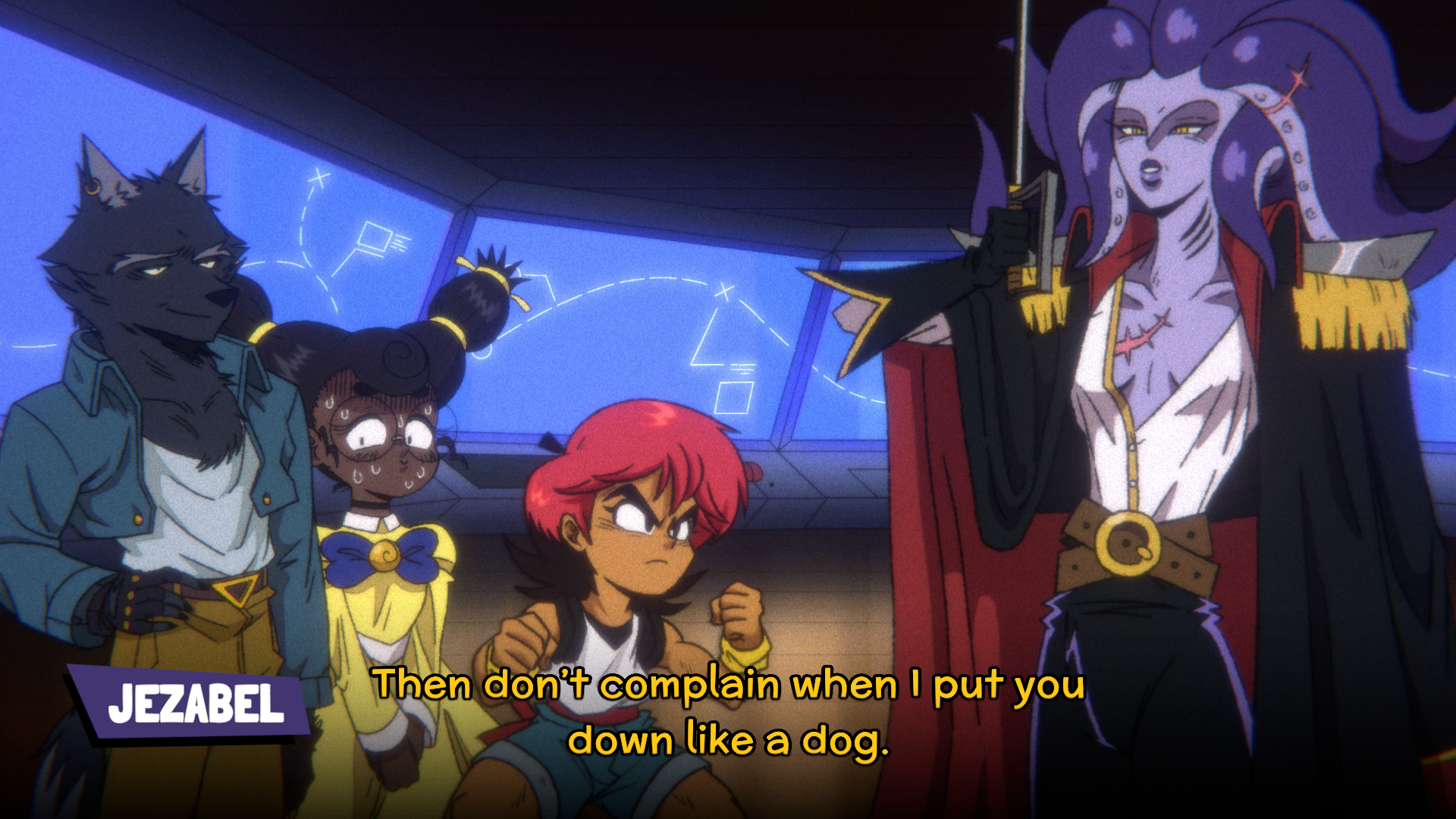
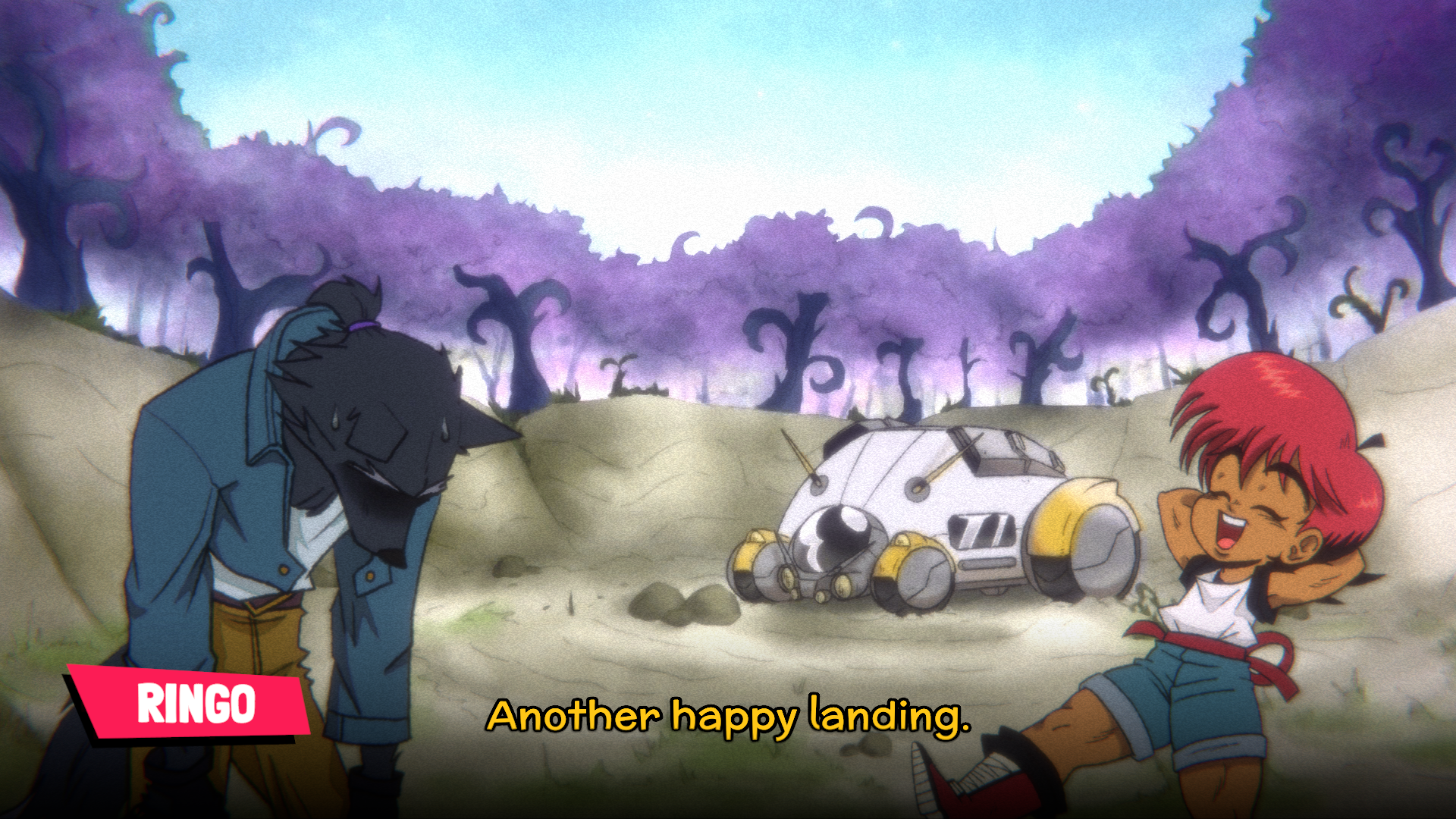
The second title from Venezuelan indie studio Paper Castle Games, Wander Stars, is an episodic, turn-based roguelite RPG inspired by 80s anime. The story follows Ringo, a young martial artist searching for her brother, and Wolfe, a secretive scoundrel, as they form an unlikely duo in pursuit of the Wanderstar Map. Told across 10 “episodes,” their journey introduces a colorful cast of allies and enemies, from witches to space pirates, while spanning a vibrant galaxy.
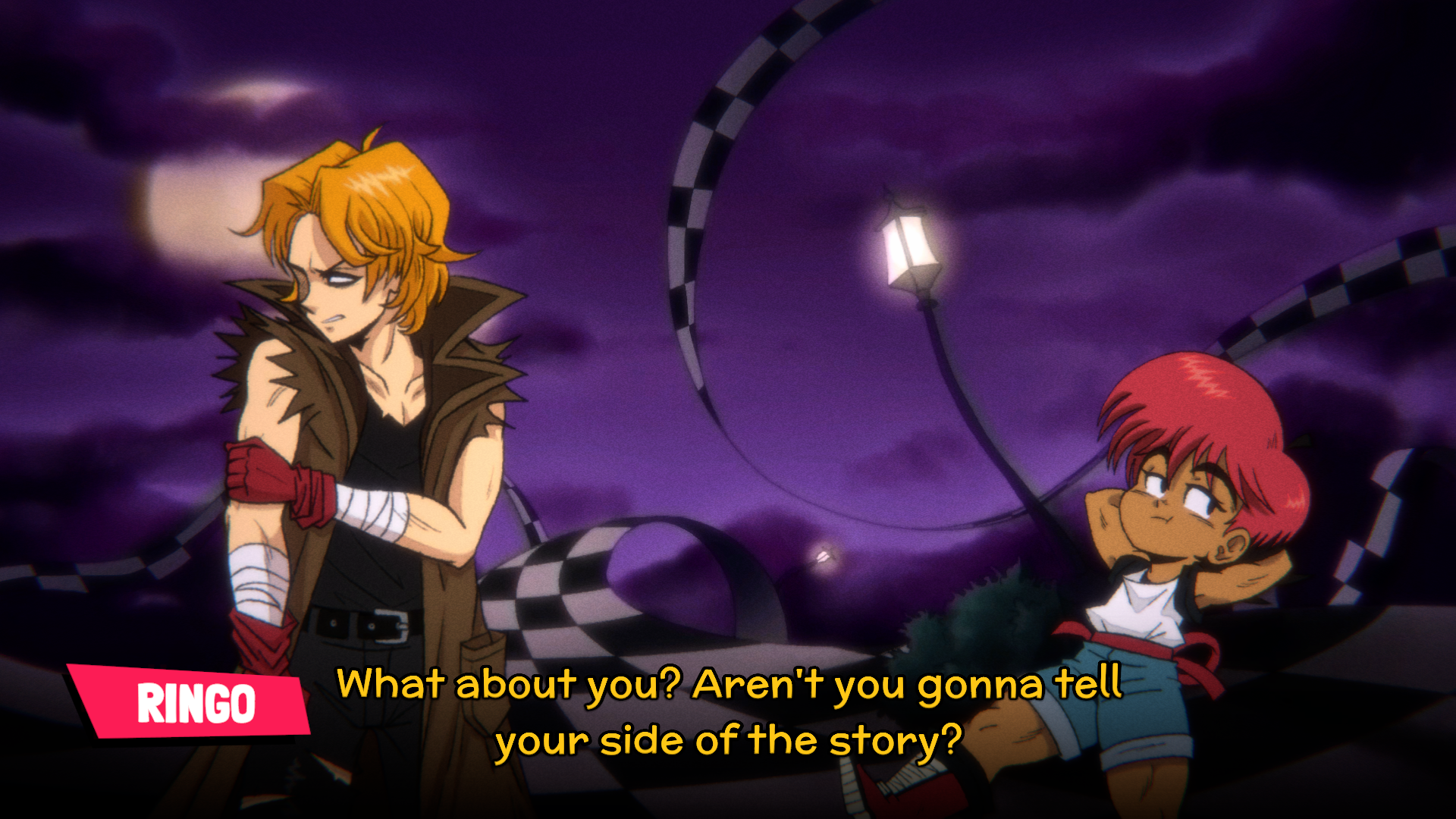
The anime influence is more than skin-deep. The cast leans into familiar archetypes: the cheerful, hungry fighter (Ringo), the brooding loner (Wolfe), characters you could describe to someone and have them swear you were talking about a real series. The story and dialogue feel plucked from an obscure VHS find, and I was always curious what twists the next “episode” would bring. Paper Castle deserves credit for pulling off a narrative structure that genuinely feels like a serialized show. No easy feat in a game.
Gameplay
What sets Wander Stars apart from other RPGs is its combat system, built around a fictional martial art called Kiai. While it uses turn-based mechanics at its core, every action is constructed from words: Action words like Punch or Spell, Modifiers like Wide or Fast, and Elemental words such as Fire or Ice. Ringo’s limited number of word slots per turn, combined with word cooldowns, forces you to think carefully about your combinations. With over 200 words to discover, the possibilities are vast, ranging from simple one-word attacks like Kick to wild combos like Super Extra Fast Ice Stab. Both Ringo and her foes have weaknesses and resistances tied to certain words, adding another layer of strategy.
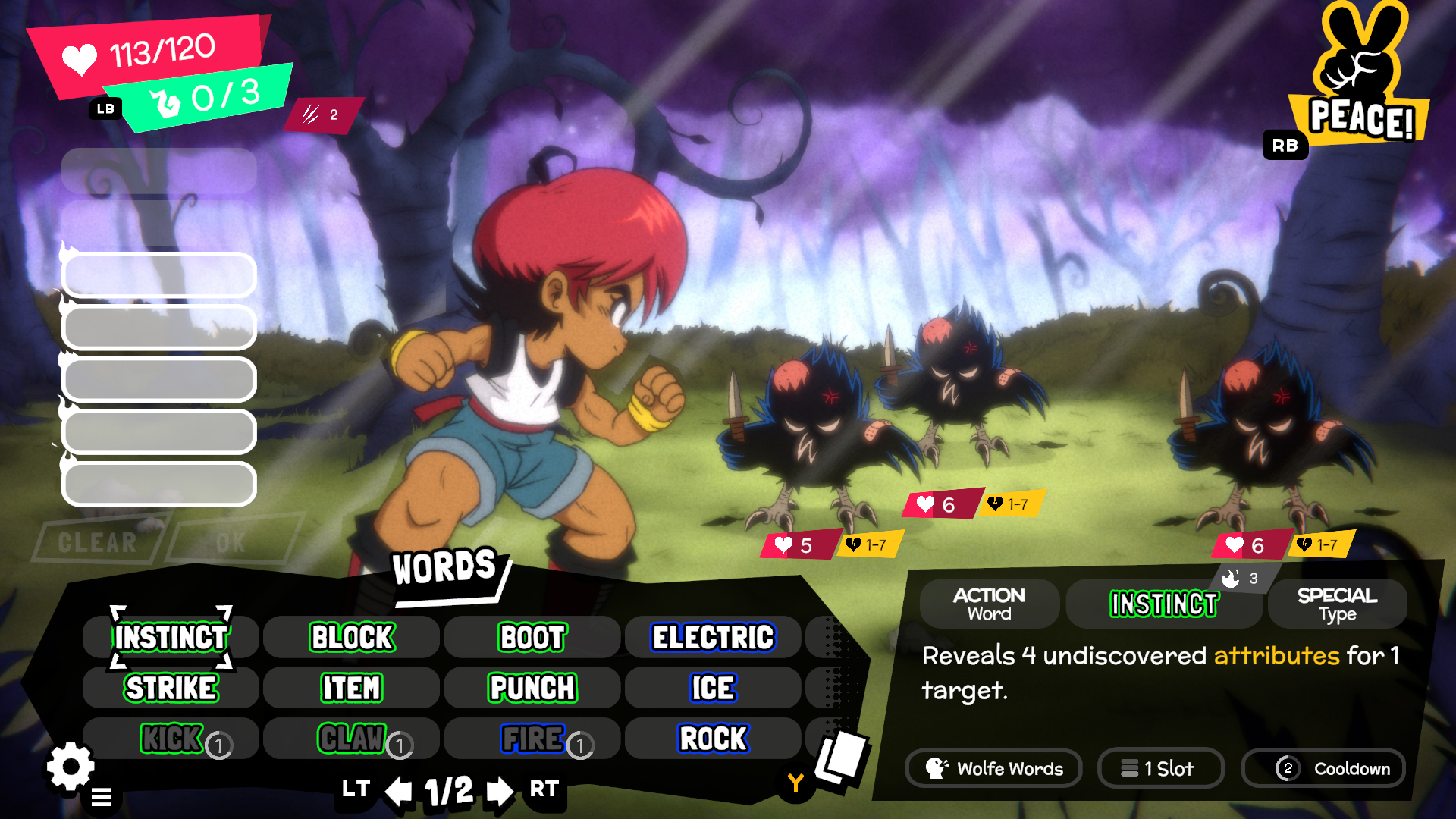
What I think is so clever about this system, alongside its depth, is the way that it embodies one of my favorite tropes from anime: characters shouting the names of their attacks! While you may just be picking the words and seeing them appear at the bottom of the screen when executed, it is even stated in-game that characters shout their attacks to give them power: that is the nature of Kiai. What an ingenious way to translate such an iconic, if slightly cliché, element of anime into a video game!
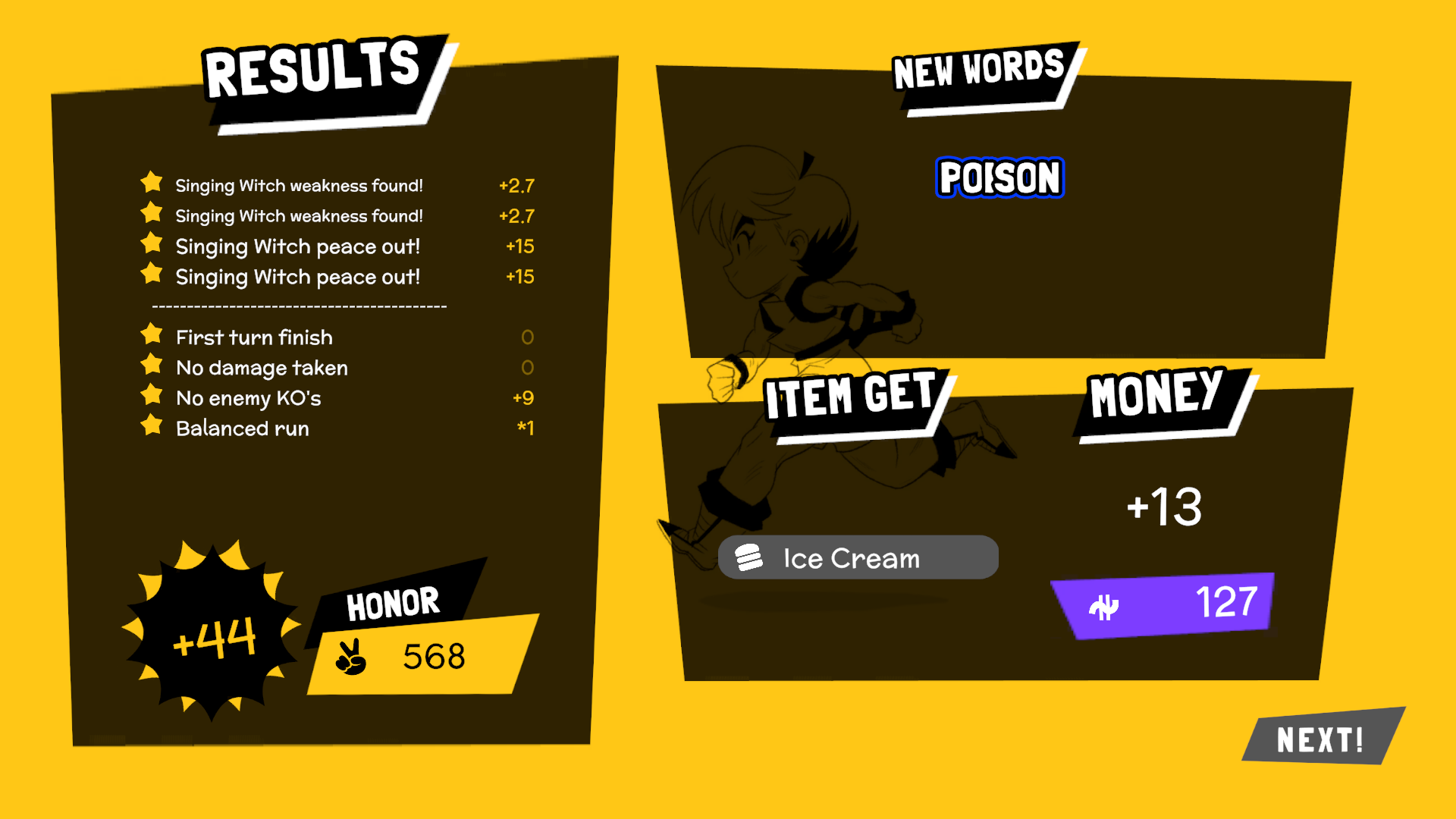
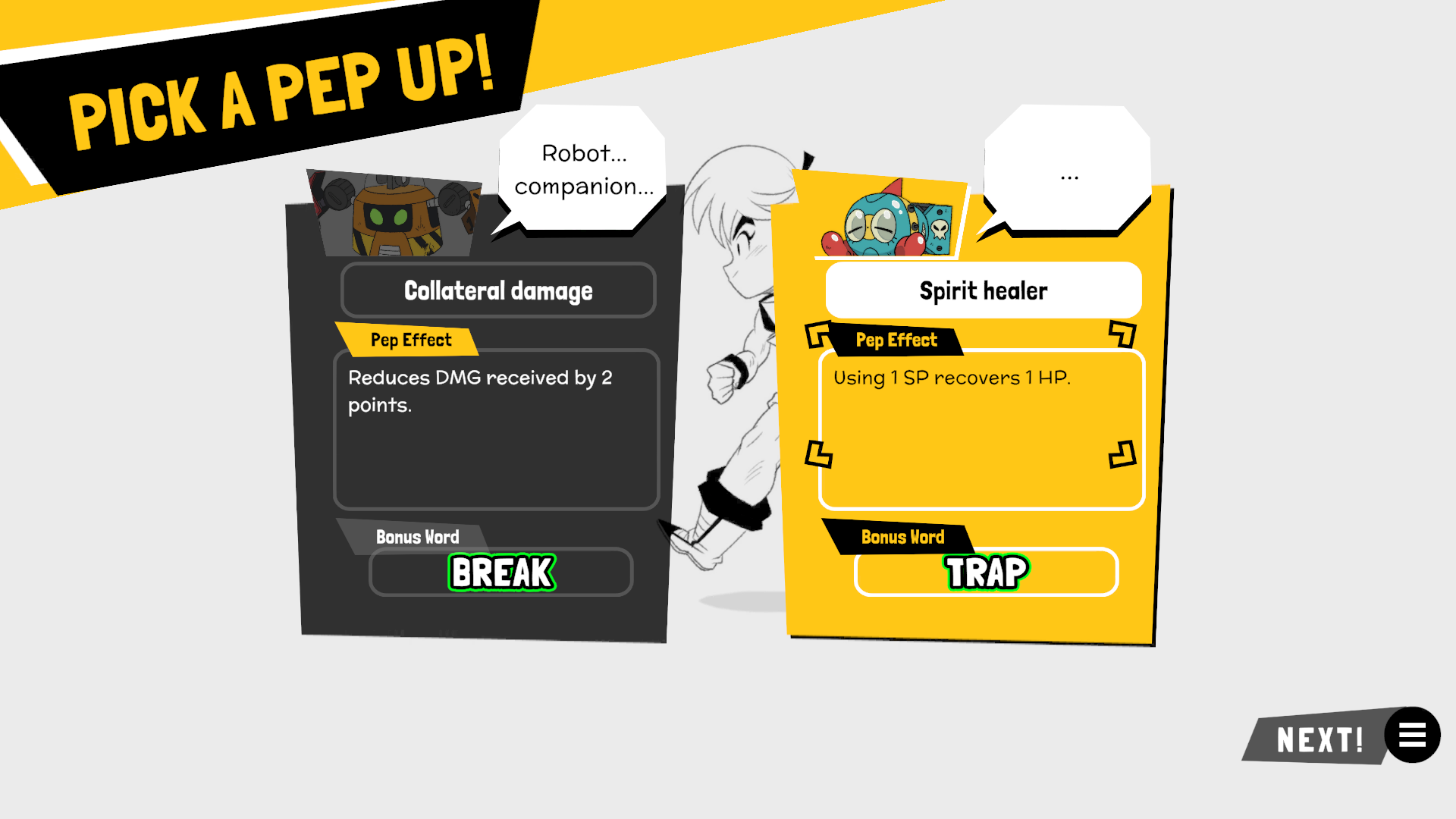
Combat also offers a choice: finish an opponent off or spare them. Sparing enemies rewards you with Pep-Ups, passive abilities that grant perks like revealing weaknesses or granting immunities, which can be equipped for each episode.
Victories award Honor points, plus a chance at new words and items. Honor acts as your progression currency, permanently improving Ringo’s stats – health, word slots, inventory space, and more. But Wander Stars leans on roguelite rules: if you lose, you either restart the episode from scratch or start the current map over while losing half your Honor. Neither option is painless.
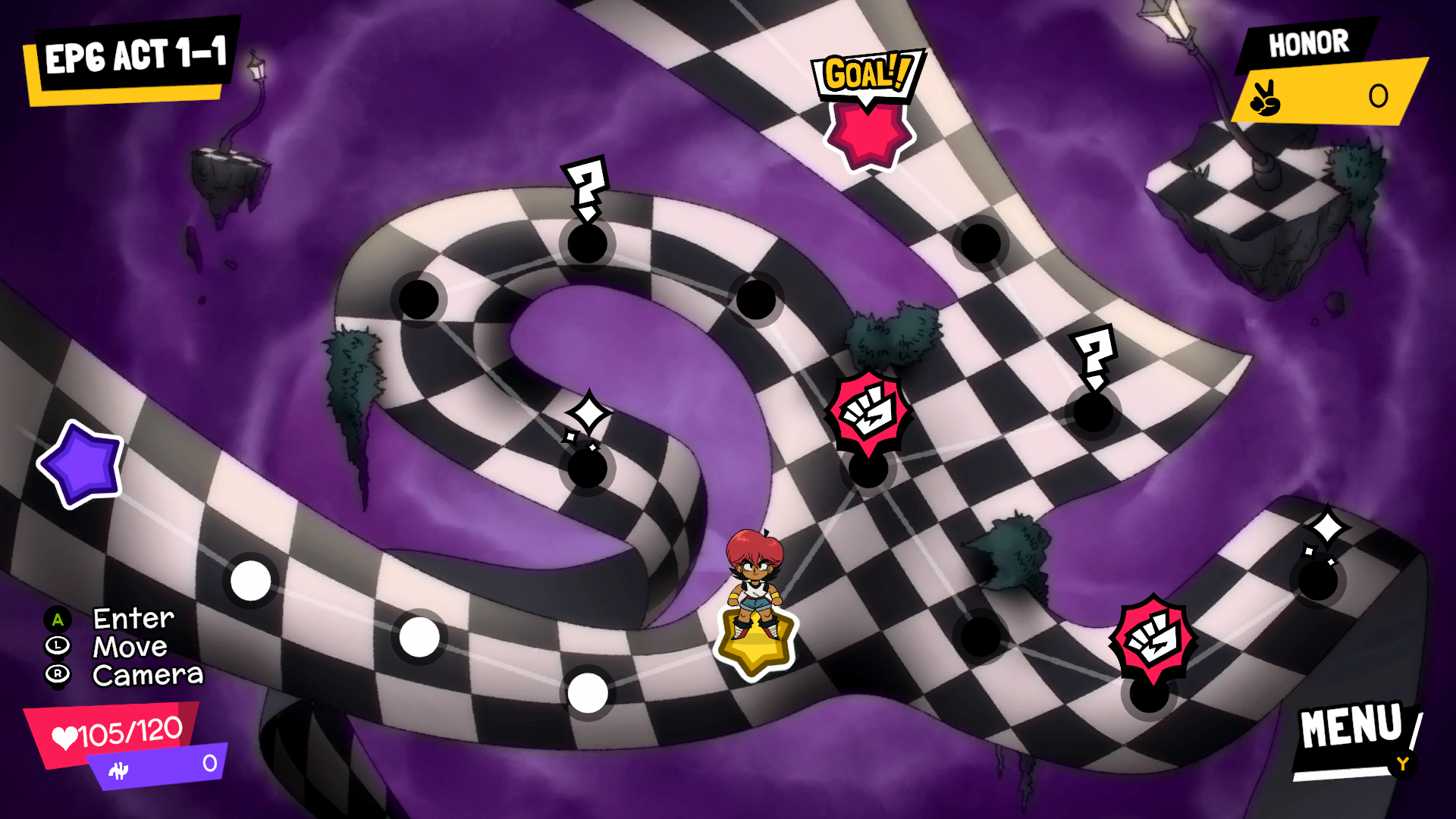
Episodes are split into acts, each using a node-based roguelite map. Battles, NPC encounters, and shops populate the nodes, and you can often choose your own route with stat-based rewards at the exits. Random events also crop up, but I found these “risk/reward” moments frustrating; too often, they punished me with lost health or setbacks based on decisions I didn’t actually control.
The problem is that Wander Stars tries to do too much at once. Multiple overlapping systems, paired with restrictions like reduced Honor on easier modes, make the game less approachable. Each episode has a star rating, but I rarely felt compelled to replay them.
Compounding this is the lack of a reference system for NPC dialogue. Many characters drop useful information that can improve your understanding of mechanics, but these encounters are random and not guaranteed to appear in a run. Unless you make multiple visits to every NPC, you risk missing key details. At times, I felt like I’d dropped into an anime mid-season, confused about the rules and left scrambling to catch up.
Visuals
Wander Stars nails its 80s anime aesthetic, from exaggerated character expressions to distinct designs that reflect each personality. Animations are simple but effective, with extra flair for elemental effects. A standout detail is the freeze-frame just before hitting the boss with a finishing blow, where the screen drains to monochrome for maximum drama.
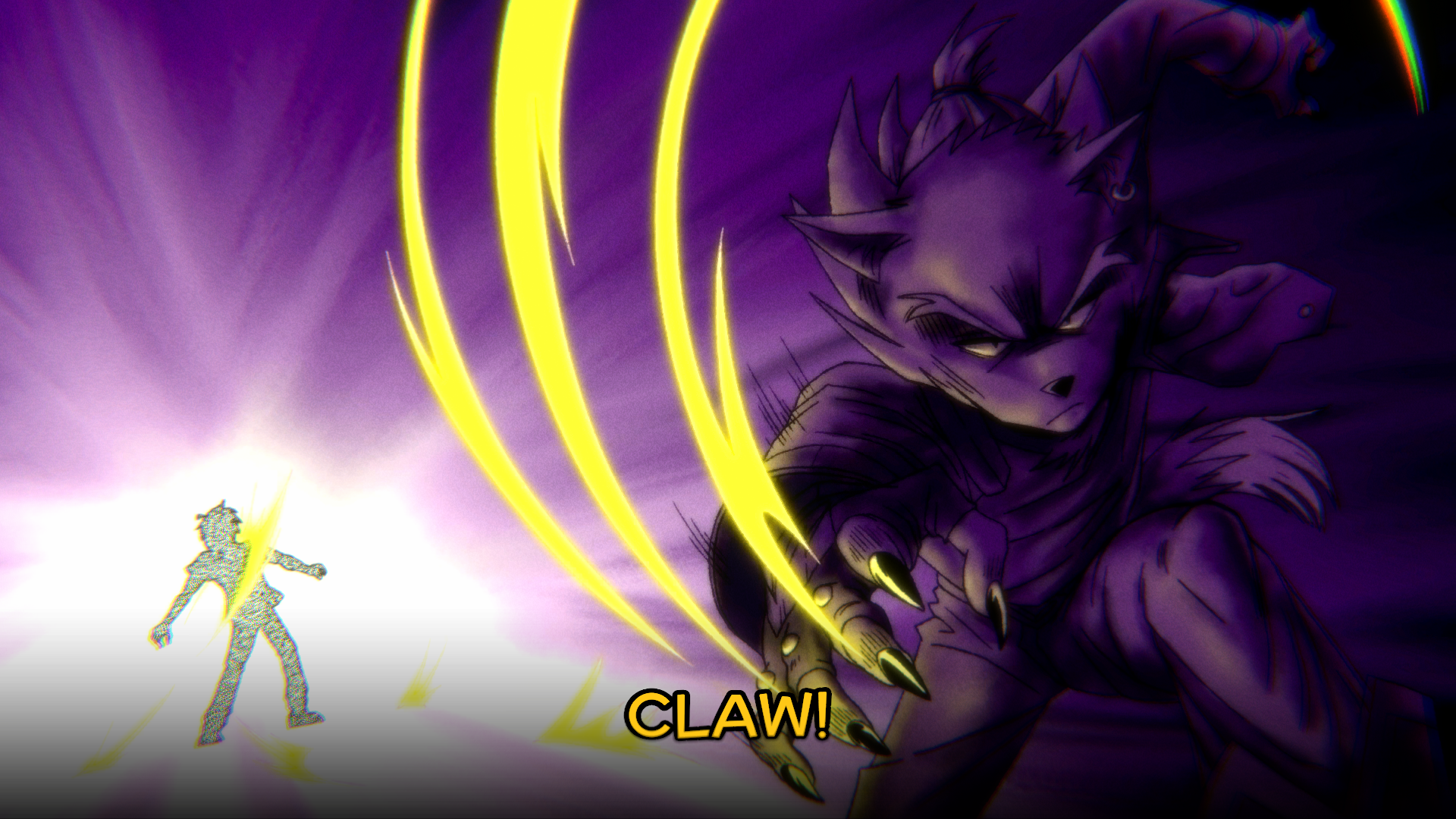
The galaxy itself is richly illustrated, with maps and environments bursting with color and texture. Brief cutscenes punctuate the action, and they’re so well executed that they feel like clips from a real anime episode.
But what really stands out is how much work Paper Castle Games put into replicating the episodic anime feeling. From the end of the episode splash screens reading “To Be Continued…”, to the way it fast forwards through cutscenes and dialogue when you choose to skip them. The developers went above and beyond, and I greatly appreciated that.
Audio
The only thing missing from the anime illusion is voice acting, which certainly would have heightened combat with characters saying the names of attacks that players have created. But Wander Stars makes up for it with an excellent score and sharp sound design. The music spans genres, from bouncy big-band jazz in combat to sweeping orchestral pieces during dramatic story beats. Several tracks were strong enough that I added them straight to my playlist.
Conclusion
Few games commit to an idea as boldly as Wander Stars, and its anime-inspired episodic structure is a triumph in style and ambition. Yet, the weight of overlapping systems and limited difficulty options makes it harder to love than it should be. A lighter touch on restrictions or a greater spread between difficulty levels could open the door for more players to enjoy what Paper Castle Games has built. For now, it remains a dazzling but demanding journey; rewarding for some, frustrating for others.
We’ll see you in the next exciting review from Gamer Social Club!

Wander Stars is available now on PC(Steam), PS5, Xbox Series, and Nintendo Switch.
The game was reviewed on PC(Steam) with a controller.
We would like to thank Paper Castle Games for the review key.