

In 2025, there has been a trend of games inspired by or based on other creative media, and I am not talking about TV and film. We have seen several titles that utilise the aesthetic of handicrafts, ranging from paper and cardboard to paint and clay. For some, it’s used to create a unique visual style, and others use it as part of the game’s worldbuilding and narrative. Hirogami is one such game, using the Japanese art of Origami (folded paper models) as the basis for its world and mechanics. However, not every fold and crease in Hirogami matches up, resulting in a paper crane that isn’t quite as majestic as I had hoped for.
Premise
Hirogami is a 3D action-adventure platformer, developed by Bandai Namco Studios Singapore Pte. Ltd. and Bandai Namco Studios Malaysia Sdn. Bhd., set in a beautiful and fragile world constructed entirely from paper. You play as Hiro, a master at the technique of “folding” who weilds a magic fan. A malevolent digital force called “The Blight” has invaded the land, corrupting fauna, desecrating protective shrines, and it is up to Hiro to rid his world of this destructive force.
Hiro is not originally from the tribe he hails from, and was taken under the wing of the crotchety Ruz Pappy. Shiori, another member of the tribe, looks down on our hero and doesn’t trust him, seeing him as more of a liability. However, Hiro is a master of “folding”, a technique that lets him transform into several creatures. Unfortunately, with the arrival of The Blight, Hiro has lost his other forms and will have to fight back against The Blight to retrieve them.
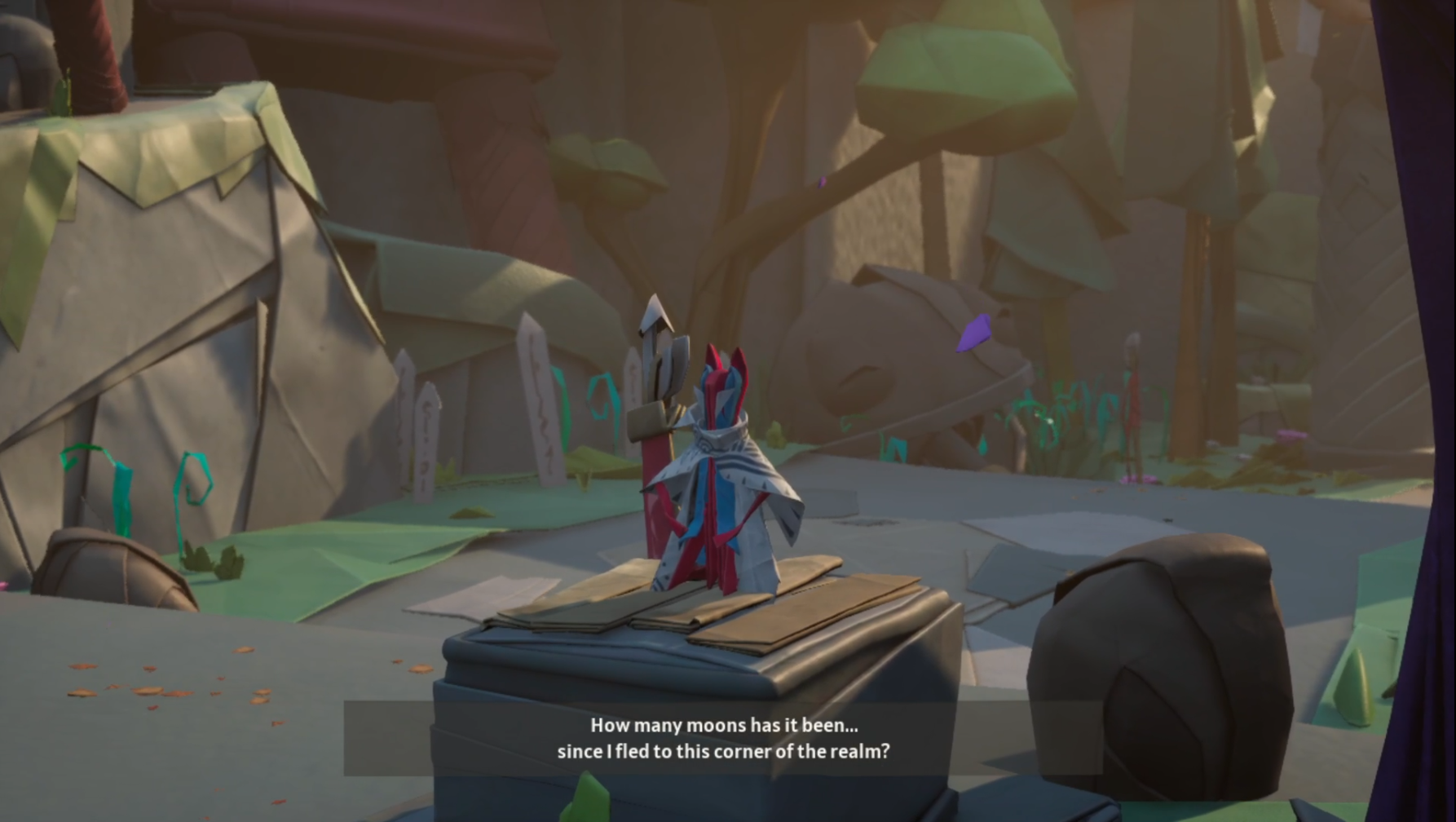
A solid premise that establishes the theme of modernity versus tradition right out of the gate. This delicate, imperfect paper world is under threat of being completely replaced by the digital “Blight”, the old, handcrafted ways being lost in the unstoppable march of progress. It’s a familiar narrative that is well-paced and present in many aspects of Hirogami’s design, particularly its art direction and sound design. I cannot say the same for the more personal “Hero’s Journey” that Hiro goes on, which felt simplistic and somewhat rushed, ultimately adding little to the game’s narrative in any meaningful way.
It’s a fun story to play through, with twists that can be seen from a mile away, but I felt let down at the end by what felt like a lacklustre finish leading into a potential sequel. The main theme isn’t really addressed in any way except for its visual usage, and Hiro’s personal journey happens without much resistance, culminating in a long final boss fight. The banter between Ruz Pappy and Hiro got a chuckle out of me here and there, but otherwise, most of the characters you interact with don’t really leave much of an impression.
Gameplay
The folded paper world of Hirogami actually exists within a leatherbound book, which lies open with a map across its pages. It’s an interesting take on a video game world map, with quite a lot of it protruding from the pages like a diorama or pop-up book. The game is structured across over 20 levels, which appear on the map once the previous level has been beaten. But to access the next level, you need to have collected enough paper cranes from previous levels.
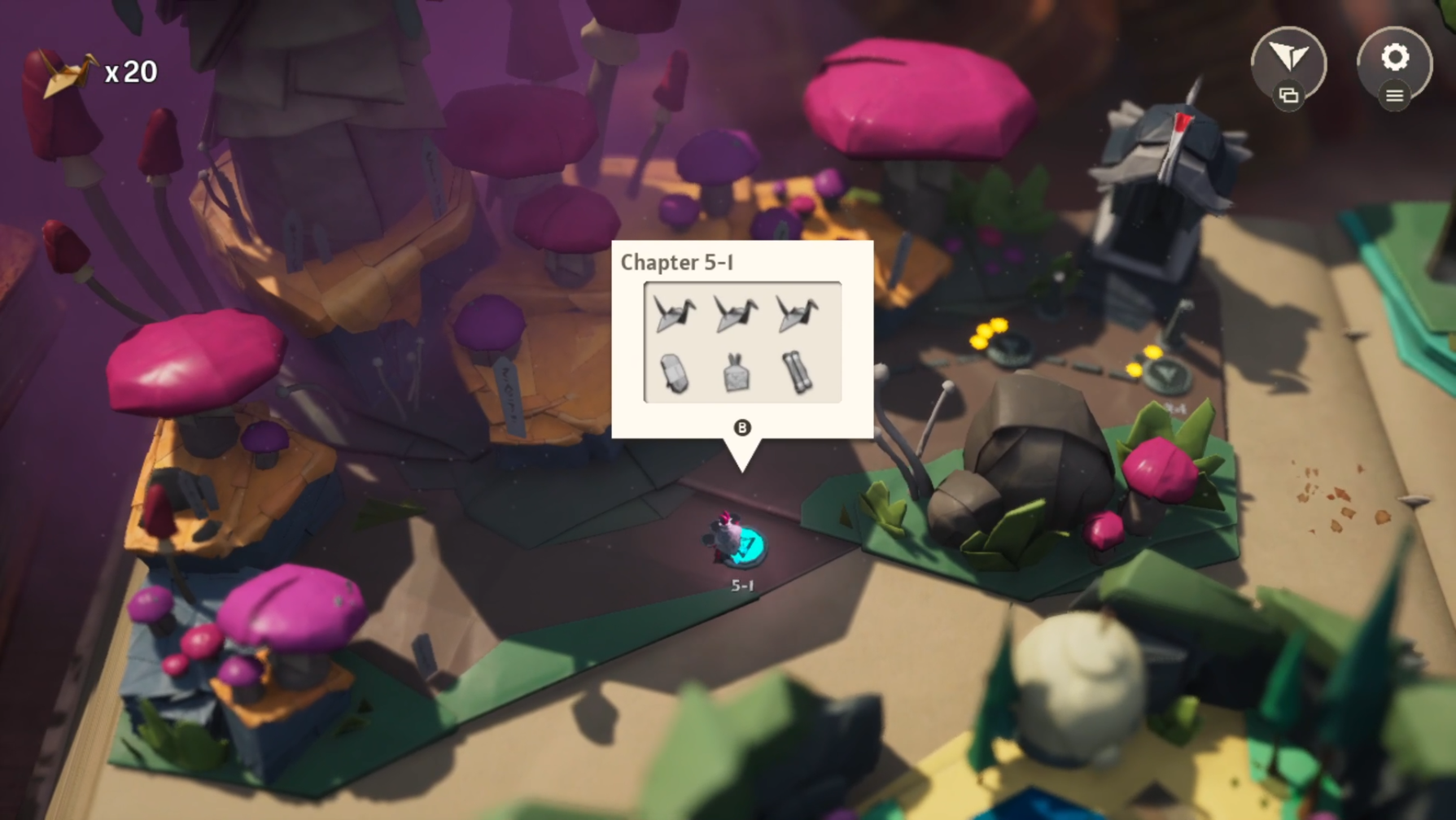
Each level has two sets of three challenges. These challenges range from completing the level in a certain time, not taking damage throughout the level, defeating a certain number of enemies, collecting a certain amount of paper, etc. One set of challenges rewards you with the paper cranes needed to progress through the levels. Completing the challenges in the second set unlocks rewards like gold and confetti paper, as well as relics. Some of these can be quite difficult, especially the “no damage” challenges, and they add a good amount of replayability. Funnily enough, I didn’t realise what I needed the paper cranes for until I couldn’t access the last level. I had been unlocking enough of them as I had been playing, so I didn’t need to replay a level until the end of my 6 and a half hour playthrough.
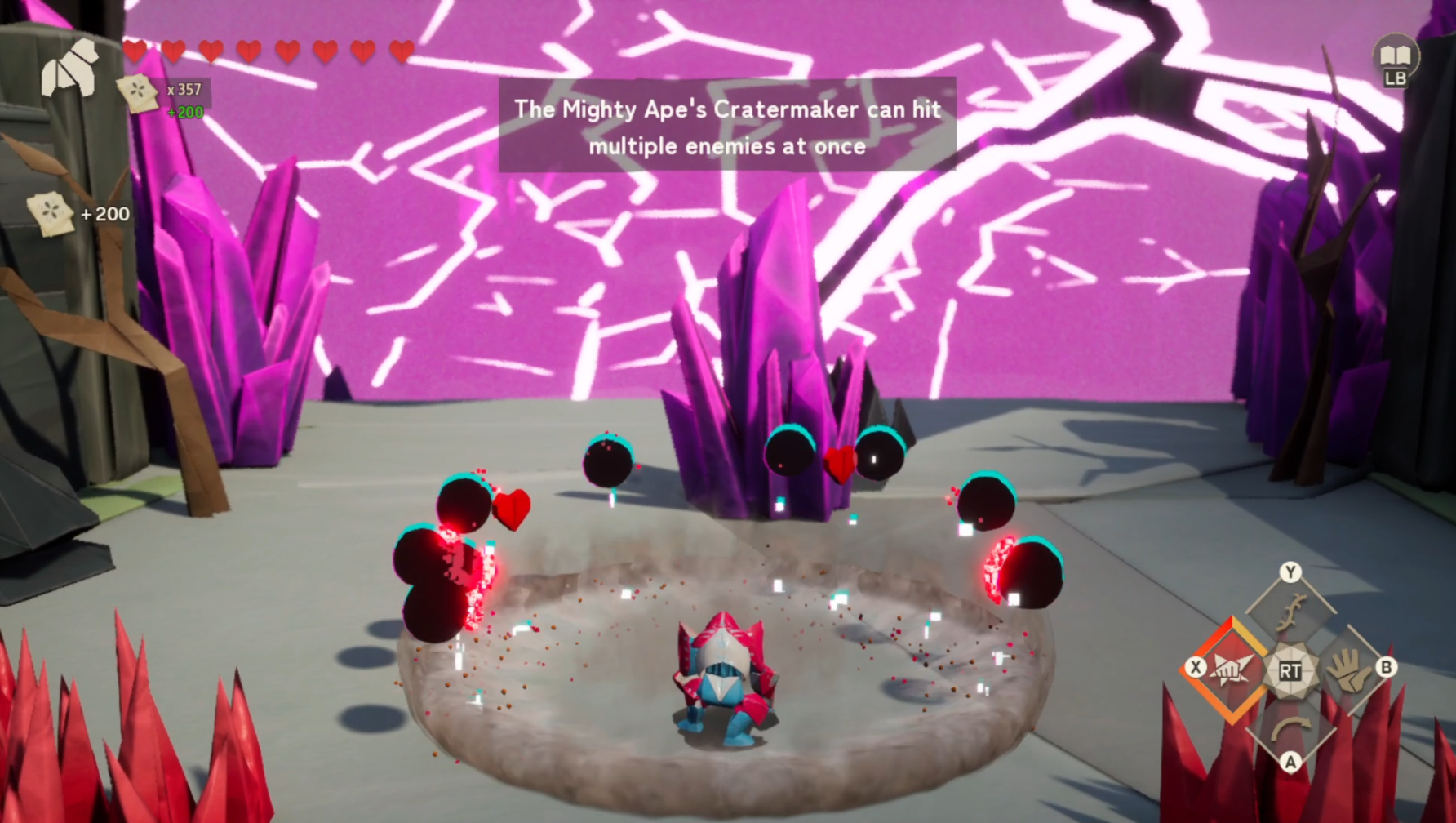
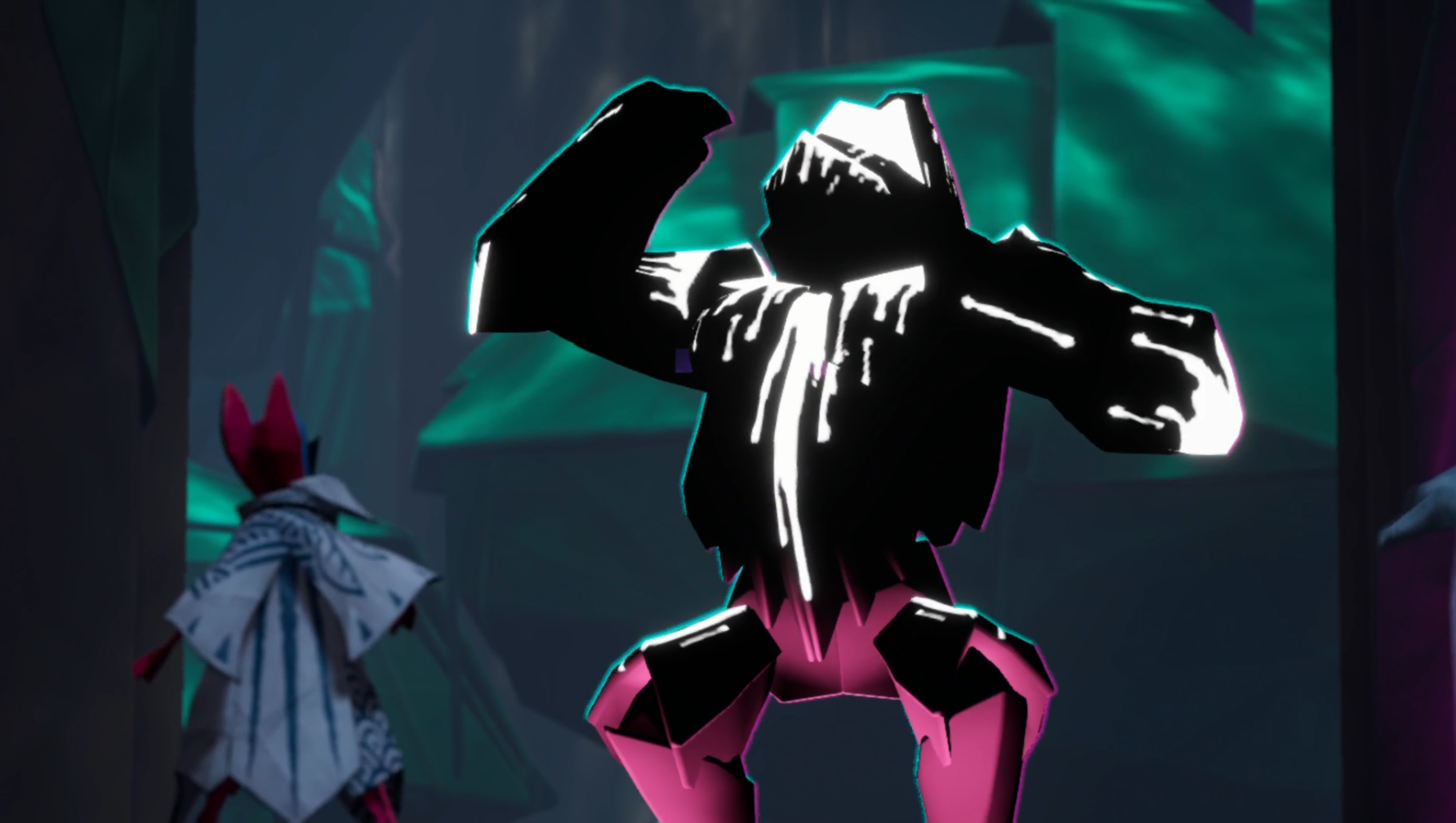
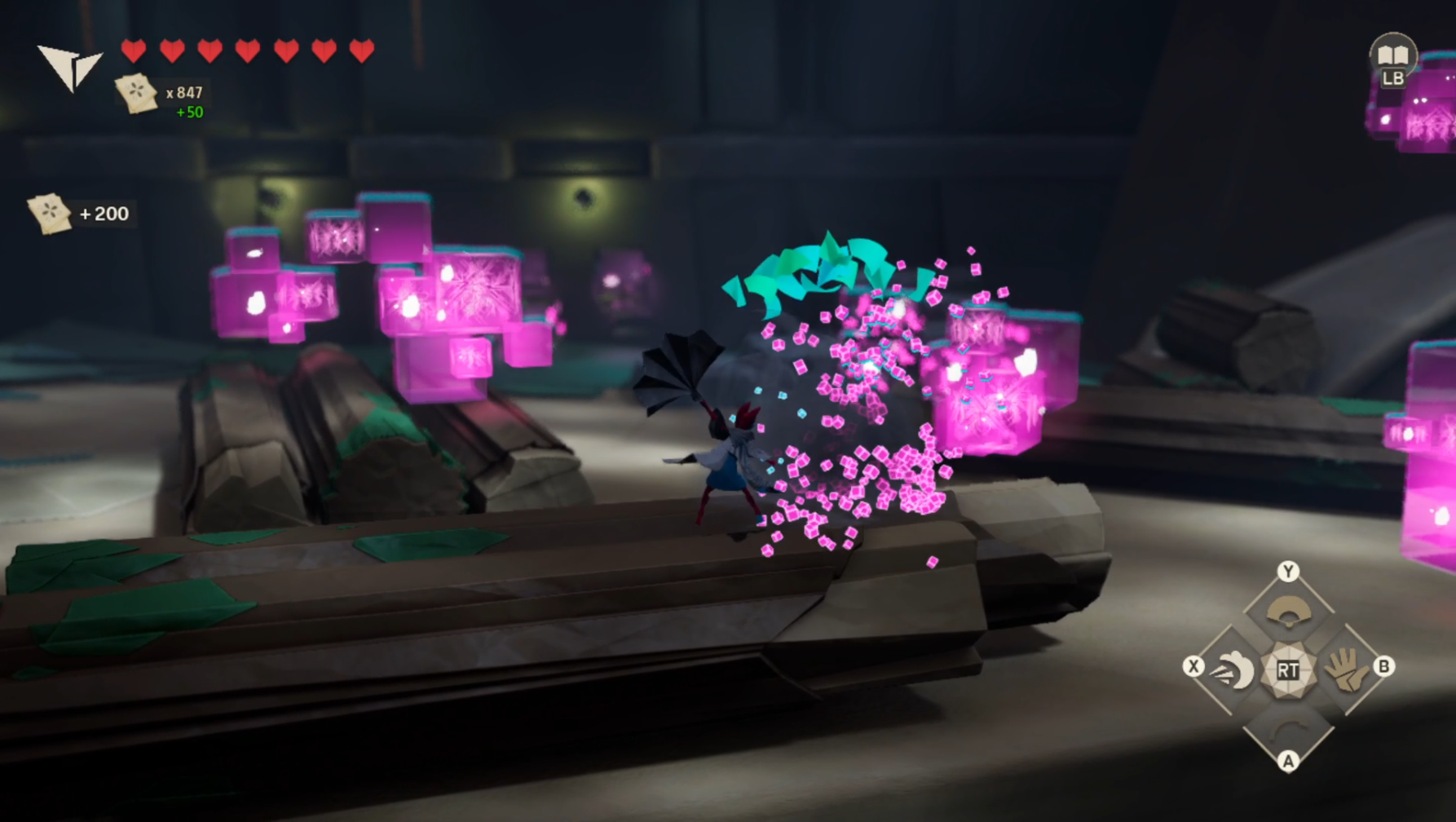
Hirogami’s gameplay is made up of platforming sections and combat arenas. Hiro has a double jump and his fan, which can hit enemies and destroy pink clusters of The Blight, earning him pieces of paper. He also starts with the ability to flatten himself into a plain sheet of paper, capable of sliding under obstacles or through cracks, as well as gliding and being lifted or moved by gusts of wind. Hiro doesn’t learn any new moves past his basic 3-hit combo with his fan, with each new animal form unlocked adding to his repertoire. At certain points on Hiro’s quest, he encounters animal spirits that have been corrupted by The Blight. Unlike regular Blight enemies, these corrupted foes cannot be hurt by Hiro’s fan and can only be beaten using environmental hazards or Hiro’s animal form abilities. Once defeated, Hiro unlocks that animal form and the unique abilities each one has, and the animal spirit will ask him to help save their loved ones from the Blight.
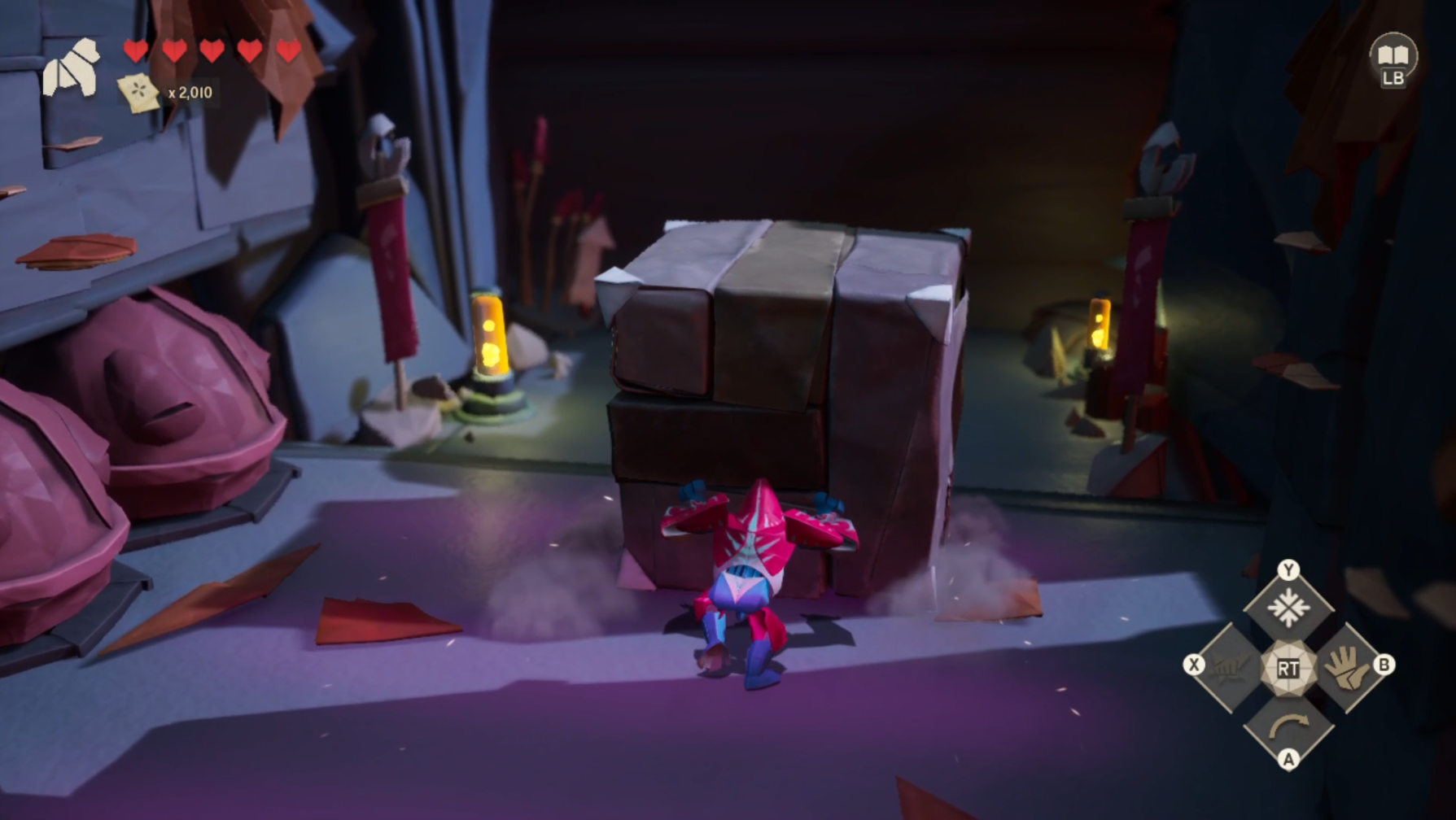
Hiro can transform into one of his 3 other forms, Frog, Armadillo, and Gorilla, by first changing into his paper form. From there, you press the corresponding button for the form you want. It’s a neat system that fully embodies the origami nature of Hirogami, giving the game a tactile nature. Each form plays differently and can be used in and out of combat. For example, the Armadillo curls up into a ball and spins, allowing it to move quickly across the ground for quick platforming sequences and to hit enemies.
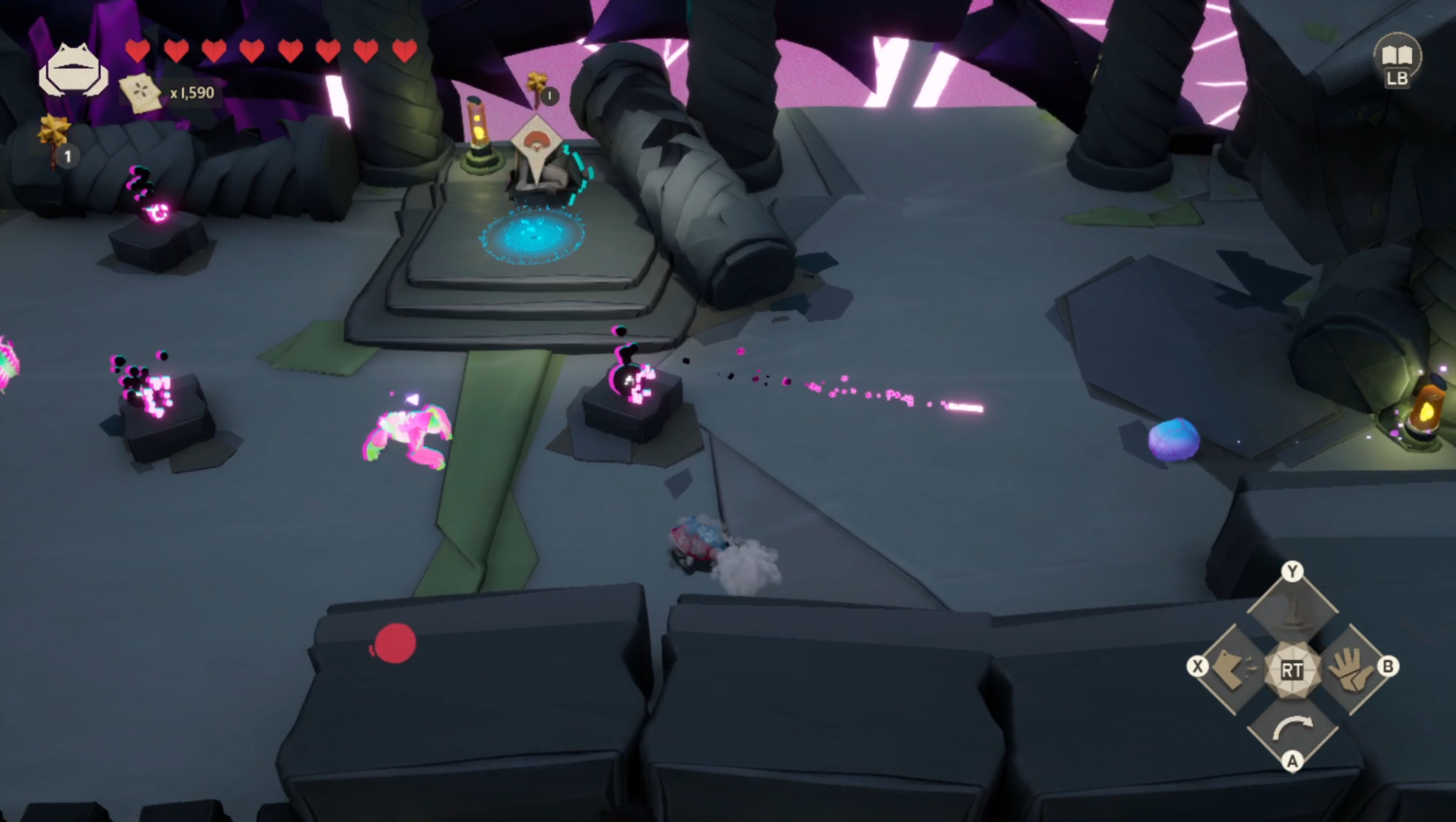
The enemy variety in Hirogami is shallow, with basic Blight enemies looking like little floating black orbs outlined in pink and cyan. Other than the attacks they have, there is nothing to distinguish them. Corrupted animals look the same with an iridescent colour scheme, until you knock some sense into them using one of your animal forms. Bosses are also just larger versions of the animals, but they do have different attacks with several phases to their fights.
Each level has several chests to find, adding to some fun side puzzles or platforming sections to test your skills. Most of them contain currencies, but occasionally you will be rewarded with a relic or diagrams you give to Ruz Pappy. With enough of the right currencies, you can turn the diagrams into charms that give you more health, improved abilities, and useful passives, and turn the relics into concept art or soundtracks. I had a great time with the game’s puzzles, but it would have been nice to have you swap between different forms in sequence, as opposed to focusing on one particular form.
Visuals
The art direction of Hirogami is its strongest element, bolstered by the game’s mechanical elements, like Hiro’s “folding” technique. The art team went to great lengths to build each level into a beautiful, rich environment constructed from paper that was just as enjoyable to explore as it was to look at. The lands you explore and traverse feel like real locations as opposed to abstract landscapes made out of craft materials, and this helps give the world of Hirogami a sense of place. Each of Hirogami’s biomes is nicely distinct without feeling detached from the rest. While grey rock features heavily throughout each level, a clever use of colour, lighting, and level design gives them their own nature, whether it is a grove of wild pink and blue mushrooms, to windswept mountain peaks with tufts of lush green grass gathered on narrow ledges and cliffs.
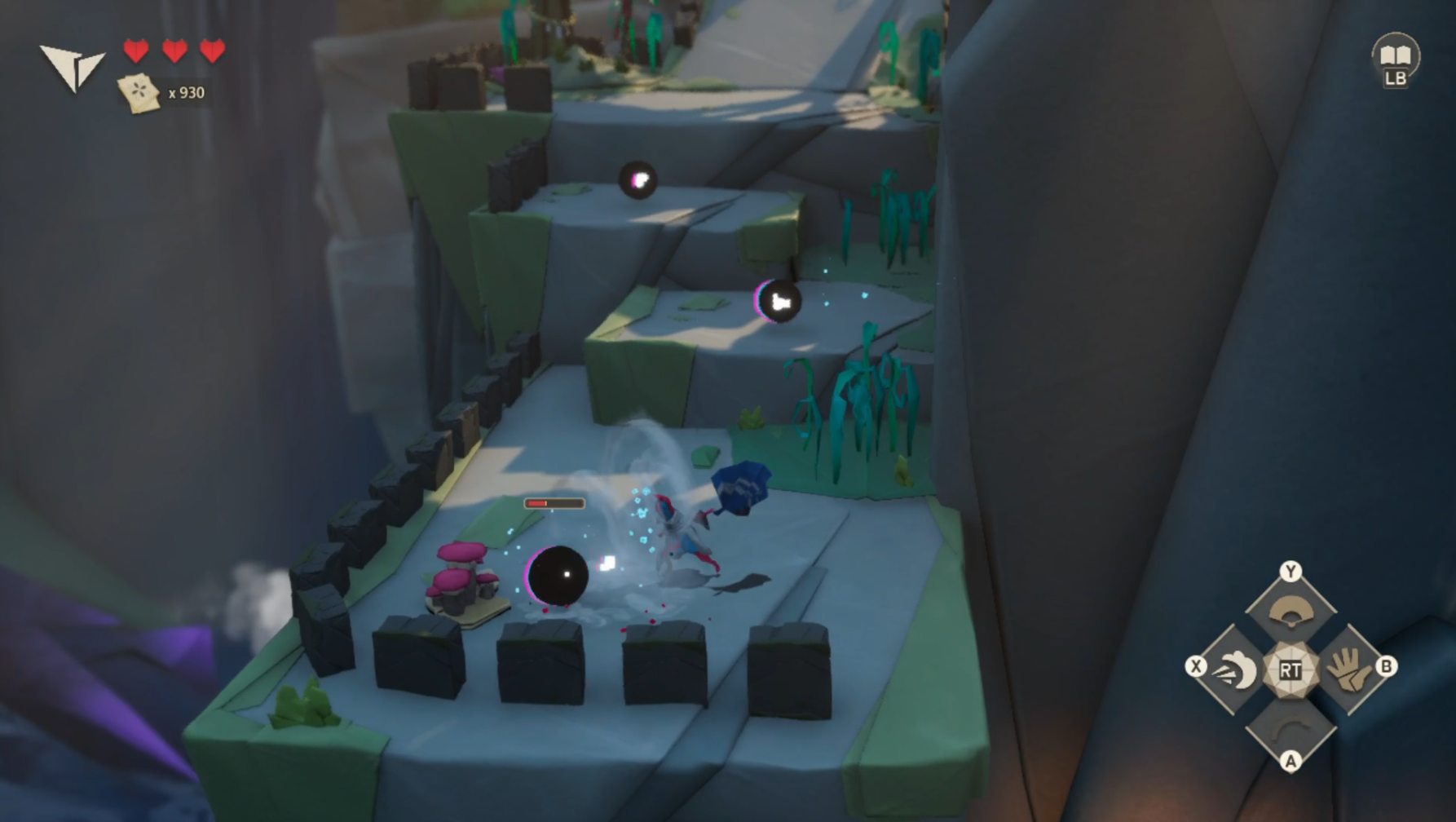
The few character models in the game are wonderful examples of the creativity found in Origami, and I really liked the silhouettes and colors of both Hiro and Shiori. The animations of these characters, as well as the animals you encounter, have a stop-motion look to them, enhancing the game’s hand-made feel. Hiro’s fan combo has a graceful air to it, and he moves with a ninja’s lightness; while in Gorilla form, there is a heaviness to all his movements and attacks, despite the fact that he is still made of paper. Hirogami also has some lovely particle effects, from the satisfying shatter of Blight pixels and flutter of paper fragments being gathered to Hiro, to the gentle bouncing and swaying of plants in the levels. The best example of this is when Hiro assembles something like a bridge in a level using collected parchments, summoning it into existence with a wave of his fan, as it takes shape in a matter of seconds.
Sound
The traditional Japanese music that makes up Hirogami’s soundtrack gives the world an old, gentle feel, one that matches the peaceful environments you’ll travel through. I don’t remember any one song, but every one of them worked to accompany my journey, allowing me to fully immerse myself in the experience.
In contrast to the subtle nature of Hirogami’s soundtrack, the game’s sound design is punchy and rich. Hiro grunts with exertion with each attack, while every time he transforms, it sounds like a dozen sheets of paper being chucked into the air. Blight enemies sound alien in comparison, humming and buzzing, firing lasers with the quintessential “pew-pew”. There is a lot of character in Hirogami, and most of it is delivered through its sound design, and that isn’t a bad thing, especially in a game with no voice acting.
Conclusion
Hirogami is a solid, polished 3D platformer that offers a good amount of replayability. Its art direction and sound design go to great lengths to build an Origami world, while its narrative falls a bit flat and doesn’t do anything interesting with the game’s themes. Basic combat is improved with Hiro’s different animal forms, while I found the puzzles and traversal satisfying from the start. The game’s camera does its best to be a constant nuisance, but even the bizarre angles and perspectives couldn’t ruin a good time. A bit frayed at the edges and with a few extra creases, Hirogami is a fun adventure that is worth your time and paper.

Hirogami is available September 3rd on PC and PS5.
Hirogami was reviewed on PC with a controller.
We would like to thank Kakehashi Games for the Hirogami review code.