
Have you ever been on one of those gift blacksmith courses where you get to make your own kitchen knife? Maybe an axe? I haven’t, although I have always wanted an axe, but I’m thinking after playing Blades of Fire I may just need to book one. I reckon I’d be a dab hand at it – if video games translate directly into real life skills that is.
Blades of Fire is a new action game from the team over at MercurySteam (the co-devs of Metroid Dread) where forging is the name of the game. Weapon degradation in games generally gets mixed feedback but Blades of Fire has fully committed, making it a core component of the gameplay loop. Have they been successful in making it fun? Let’s find out!
Steel Beats Stone
You play as Aran de Lira once a trusted warrior and childhood friend of Queen Nerea, growing up alongside her in the royal court. As the firstborn of the King’s Ward, Aran was trained in combat and strategy, destined to serve the kingdom. However, everything changed when Nerea ascended the throne and unleashed her curse, turning steel into stone.
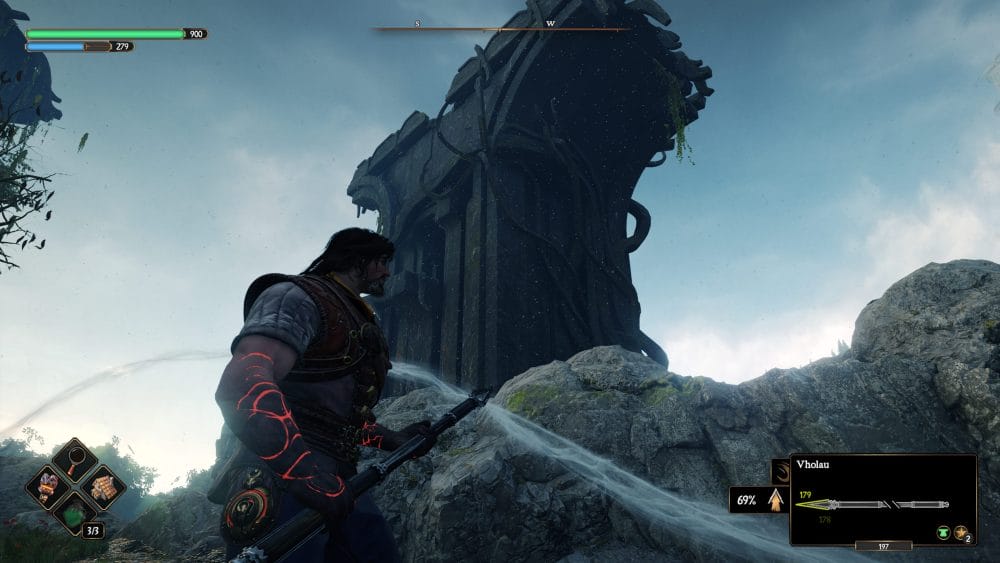
He’s accompanied by Adso de Zelk, a young scholar who helps you by cataloguing enemies and telling you about the history of the land. The enemy catalogues are particularly useful as they give you strategies for how to tackle tougher enemies, as some change their weak points throughout combat.
Together they are on a quest to kill the Queen and remove the curse from the land. The curse hasn’t affected the Queen’s forces allowing them to ransack the world and wipe out the remnants of the Forgers. This puts you square in their sights, as you have found yourself in possession a Forger’s Hammer allowing you to make your own weapons. It’s a relatively simple story, nothing too groundbraking if your a fan of medieval fantasy. The pacing can be a little odd at times, with elements being introduced quite suddenly. At one point we decided we weren’t going to kill the Queen just yet, as someone else needed their head smashed in first – which was a shock as I wasn’t really sure who this person was.
There’s a huge amount of worldbuilding going on in with Adso drawing pictures of locations and giving you information on how we got here. This is in his journal entries about the world and the enemies, which is gorgeous, but also not my favourite way of engaging with a story so probably why I missed a few plot points before they were on the tip of my spear.
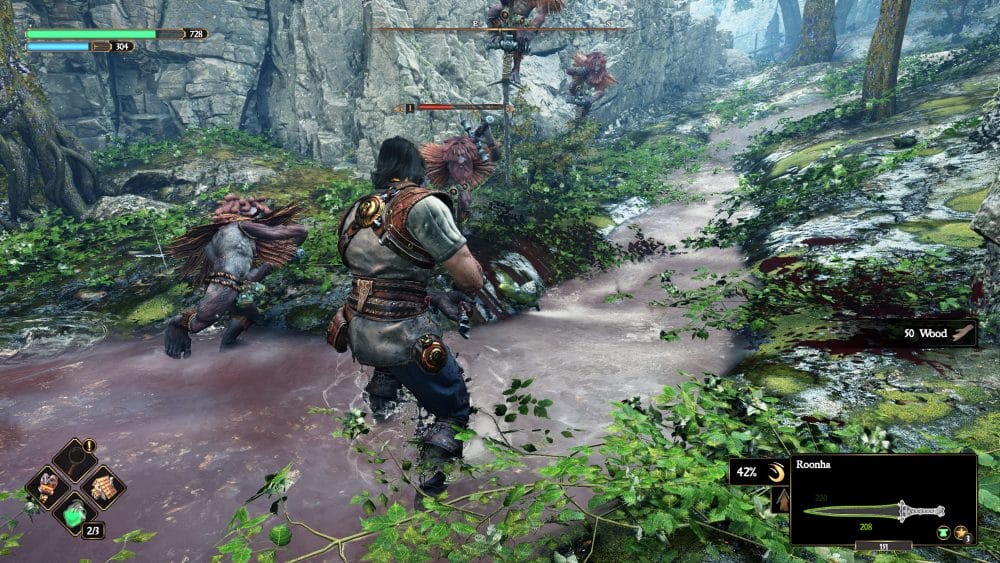
There also appears to be consequences for the decisions you make throughout the game. I’ve only done one playthrough, but at a specific point I progressed past something unintentionally and when I reloaded my save and went back to change things I got a very different outcome.
Forged In Steel
The story isn’t necessarily the main draw of Blades of Fire though. That would absolutely be the combat. The game has directional combat with each of the face buttons mapped to a specific one (good luck training your brain out of using B to dodge – many an early game death was had due to muscle memory), and you’ll need to use the full range of options to effectively take down enemies. Each one has different armour and weakness that you’ll need to overcome using the huge variety of weapons on offer. The dodging is also directional, with a heavy emphasis on timing. There are i-frames, but only if you dodge at the right time and in the right direction, and parries, but they are dictated by how you’ve forged your weapon and don’t open into ripostes. It is a bit of a learning curve, especially if you’re jumping in expecting a Soulsesque experience. That’s not what Blades of Fire is. The combat is heavier, more deliberate and when you get into the flow of it a hell of a lot of fun.
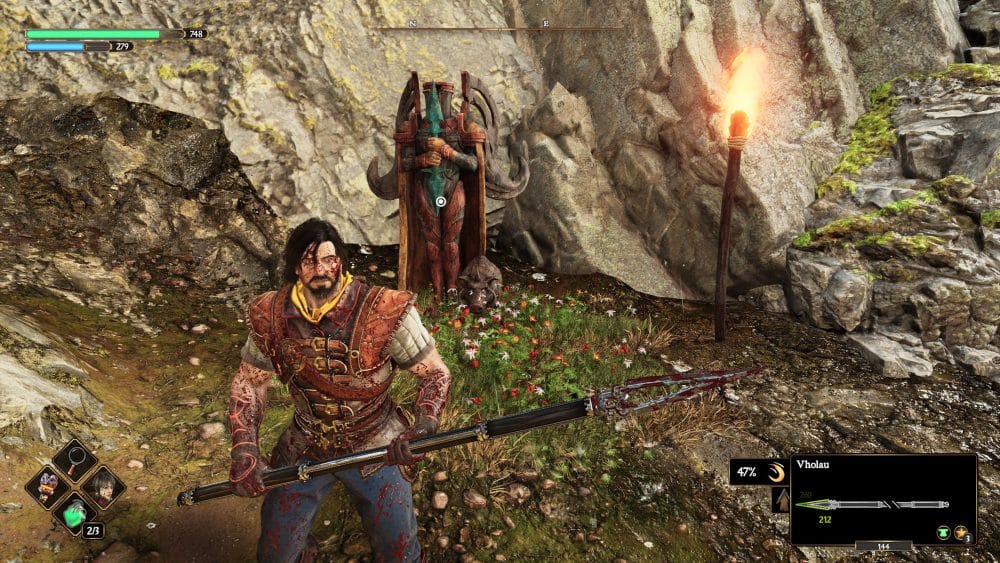
Speaking of weapons, you won’t be finding fancy weapons lying around waiting for you to pick up, you’ll need to make your own. The game hinges on a forging system (lore and gameplay wise) where you have to unlock new weapon scrolls by defeating various enemies and then forge them at anvils scattered around the world. You’ll also get crafting materials from enemies, which scale up the further you get into the game allowing you to make more durable weapons that output more damage. It’s worth noting there’s no leveling up here, this is not a RPG. You can find gems that upgrade your health and stamina and scrolls that upgrade your healing and amount of repair stars, but all the increases to your damage comes from the weapon forging system.
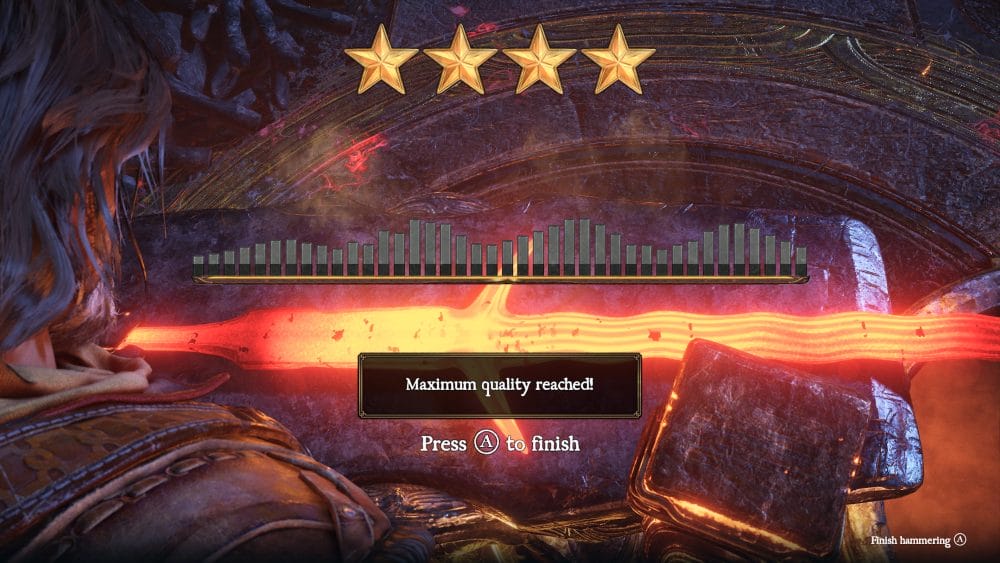
Speaking of the forging system – it is very fun. At first it seemed a bit overwhelming and most of my early weapons were, quite frankly, shit. But once you get the hang of it, it’s very engaging. You need to select the best materials for the type of weapon you’re making; change up the style of blade/pommel/handle; tweak the direction, strength and heat level you work the steel at. Each of these things changes the attributes of your weapon. Materials change the damage, parry timing and your stamina level, whilst working the steel carefully increases the amount of times you can repair your weapon – so pay attention if you’re crafting something you really like the stats of to make sure you get the most use out of it.
You can also imbue weapons with runes so they can damage specific types of enemies usually immune to damage and interact with other bits of the environment. The mechanism to do this is a bit of a story spoiler, so I won’t go into it much, but killing a lot of creatures is key. This will also increase the notoriety of each weapon (they all have names) and you can use ones close to breaking to gain even more materials.
World Crafting
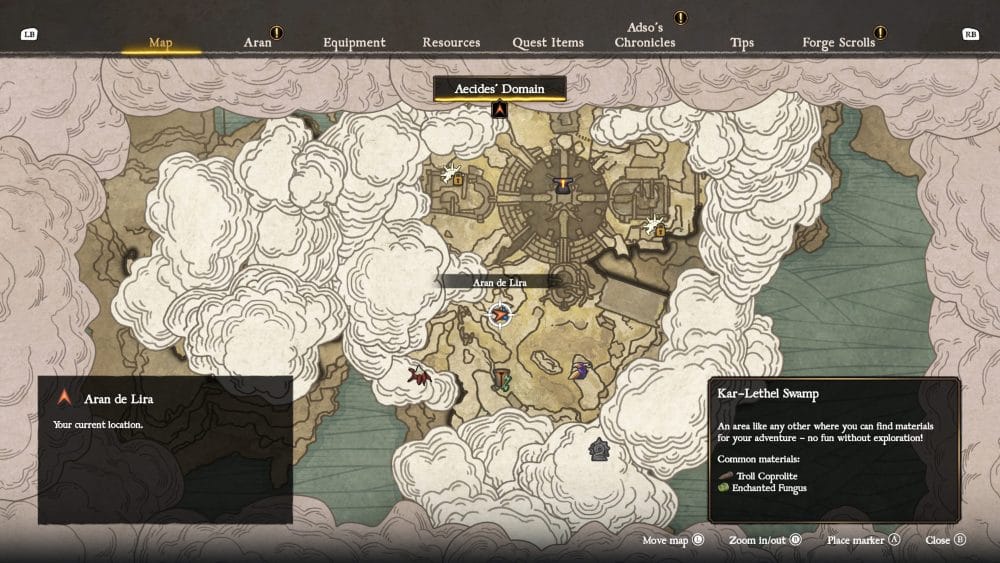
The world of Blades of Fire is beautiful, filled with weird and wonderful characters and enemies. There’s a whole host of different regions to get lost in. And you may actually get lost as the maps aren’t the most intuitive. There’s a lot of areas that seem like they’re leading to the next objective, but then arrive at a dead end. There’s a lot of shortcuts and secrets, and helpfully a map with markers but I still found some of the areas pretty unintuitive. Particularly the Crimson Keep. There’s so many shortcuts back to the front part of the keep, but there’s no real reason to go back – I found myself running in circles, especially annoying in this area because there’s a huge amount of enemies and the boss roams around! You can select an option in the menu to highlight the next objective, but sometime just finding the path too it is the problem.
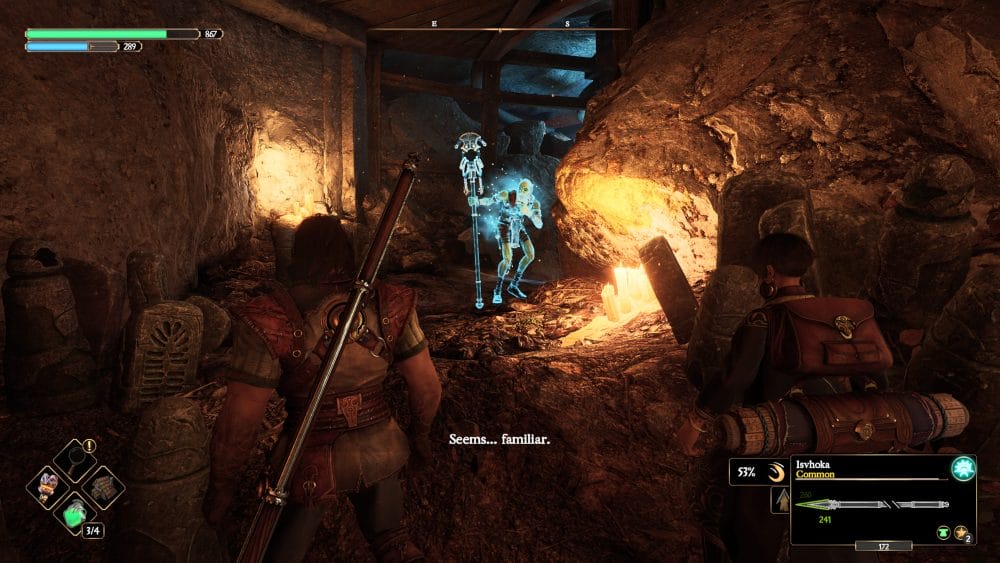
The next area, although a lot simpler also had a bit of a baffling design decision. An NPC shows you around, and in order to proceed you need to wait for him to remember how to interact with the environment. It’s fun in theory, but in practice you’re just standing there. Waiting. For him to tell you twice he thinks there’s something around here. It really kills the pacing in the whole area, and while the NPC is interesting and definitely adds to the story and worldbuilding, I feel it was a bit overdone.
Final Thoughts
I thoroughly enjoyed my time with Blades of Fire. A lot of people online seem to be comparing it to a Soulslike, which I just don’t see. The team over at MercurySteam have put a lot of time and effort making a very unique system that encourages a completely different approach to combat than I’ve really experienced before. I’m usually one to stick to one style of weapon, if not just one weapon, but Blades of Fire stops you from doing that. You are a master blacksmith and a master at arms and you need to use every tool available to you to save this cursed world.
Learning the lore of the world as you read through Adso’s notes on the enemies and regions was a great way to intertwine the story into the gameplay, and I’m glad they didn’t lean into the grumpy old man, naive young boy trope. Aran and Adso both give as good as they get, making fun of each others weaknesses and highlighting each others strengths. They made for a fun duo, and the way you can ask for a few hints forward, without them automatically being given was a great decision.
There’s a few level design issues that made some areas a little more frustrating than fun and occasionally there’s maybe a few too many enemies in one area for the pace of the combat and the story can suffer a bit in pacing and tone. But, all in all, it’s a fun experience that showcases that sometimes less is more when it comes to gameplay, and that a distinct one done well can be all you need. Even weapon durability.

Blades of Fire was reviewed on Xbox Series X, and releases on the 22nd of May for Xbox Series X/S, PS5 and PC via the Epic Game Store.
Gamer Social Club would like to thank the developers and publisher for the code.